

Why Is Nickel Plated Carbon Steel Wire Critical for High Temperature Environments
2026-03-12
High-temperature environments present unique challenges for materials, requiring solutions that maintain structural integrity while resisting degradation. Nickel Plated Carbon Steel Wire has emerged as an essential component in these demanding settings, and at Dingyan, we understand the engineering requirements that make this material indispensable across multiple industries.
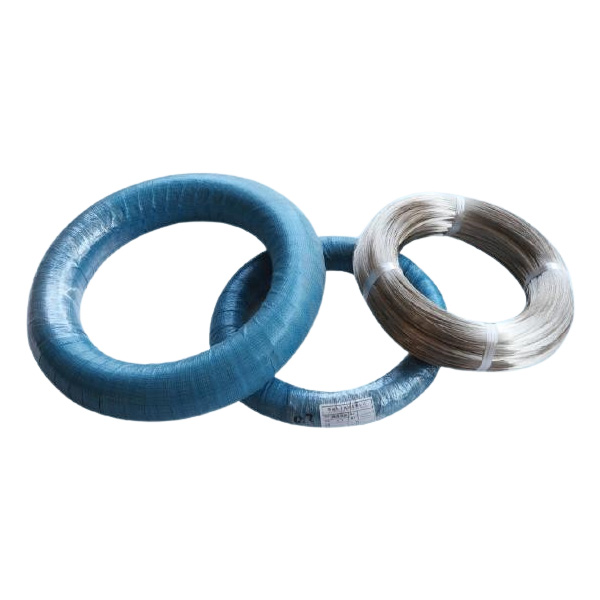
The Science Behind High Temperature Performance
When exposed to elevated temperatures, standard carbon steel wires undergo rapid oxidation and loss of mechanical properties. The nickel layer serves as a protective barrier that fundamentally changes how the wire behaves under thermal stress.
| Temperature Range | Performance Characteristic | Industrial Application |
|---|---|---|
| 300°C - 500°C | Oxidation resistance maintained | Heating elements, sensors |
| 500°C - 750°C | Structural integrity preserved | Furnace components, thermocouples |
| 750°C+ | Limited exposure with maintained conductivity | Specialized aerospace applications |
Critical Properties for Thermal Stability
Nickel Plated Carbon Steel Wire offers several metallurgical advantages that become particularly valuable in high-temperature scenarios:
-
Thermal Oxidation Barrier: The nickel layer forms a stable oxide film that prevents oxygen from reaching the carbon steel substrate
-
Coefficient of Thermal Expansion Matching: Nickel and steel expand at similar rates, preventing delamination during thermal cycling
-
Electrical Conductivity Retention: Unlike many materials that lose conductivity at high temperatures, the nickel maintains consistent electron flow
Industrial Applications Requiring High Temperature Wire
Industries ranging from automotive manufacturing to aerospace engineering rely on Nickel Plated Carbon Steel Wire for critical components. The material finds extensive use in exhaust systems, industrial furnaces, and temperature sensing equipment where failure is not an option.
Dingyan manufactures this specialized wire with precise quality controls that ensure consistent performance even under extreme operating conditions. Our production processes verify adhesion strength, plating thickness uniformity, and thermal stability before any wire leaves our facility.
Frequently Asked Questions
What temperature can Nickel Plated Carbon Steel Wire withstand before failure?
Nickel Plated Carbon Steel Wire typically maintains structural integrity up to approximately 750°C in continuous service applications, with short-term exposure possible at higher temperatures. The exact maximum temperature depends on several factors including the thickness of the nickel plating, the carbon content of the steel core, and the specific environmental conditions such as presence of corrosive elements or mechanical stress. For applications requiring sustained performance above 750°C, additional protective measures or alternative materials may be necessary, though the nickel plating significantly extends the useful temperature range compared to uncoated carbon steel.
How does nickel plating prevent oxidation at high temperatures compared to other coatings?
Nickel plating creates a metallurgically bonded barrier that actively forms a stable, adherent nickel oxide layer when exposed to high temperatures. Unlike zinc or tin coatings that melt or oxidize completely at elevated temperatures, nickel maintains its protective properties through a process called passivation. The nickel oxide layer that forms is extremely thin, non-porous, and self-limiting, meaning it stops growing once formed and continues protecting the underlying steel. This characteristic makes Nickel Plated Carbon Steel Wire uniquely suited for thermal cycling applications where the material repeatedly heats and cools, as the protective layer remains intact throughout these transitions.
Can Nickel Plated Carbon Steel Wire be used in both high temperature and corrosive environments simultaneously?
Yes, this combination represents one of the most valuable applications of Nickel Plated Carbon Steel Wire. The nickel coating provides exceptional resistance to both high-temperature oxidation and chemical corrosion, making it ideal for environments where heat and corrosive agents exist together. Industrial applications such as chemical processing equipment, marine engine components, and exhaust systems in coastal areas benefit from this dual protection. The nickel layer resists attack from many acids, alkalis, and salts even at elevated temperatures, while the carbon steel core maintains the mechanical strength necessary for structural applications. Dingyan offers various plating thickness options specifically engineered for combined high-temperature and corrosive service conditions.
Why Material Selection Matters
Choosing the right material for high-temperature applications directly impacts safety, maintenance costs, and equipment longevity. Nickel Plated Carbon Steel Wire provides an optimal balance between performance and economics, delivering stainless steel-like properties at a fraction of the cost.
Dingyan brings decades of metallurgical expertise to every spool of wire we produce, ensuring that your high-temperature applications perform reliably year after year.
Contact Us for Your High Temperature Wire Requirements
Selecting the correct specification for your specific application requires expert guidance. Dingyan engineers are ready to discuss your temperature requirements, environmental conditions, and performance expectations to recommend the optimal Nickel Plated Carbon Steel Wire solution for your project.
Contact Us Today for technical specifications, pricing, and sampling information. Let our team help you solve your high-temperature material challenges with precision-engineered wire products.