

Why Is Flame Retardant Cable Essential for Safer Marine and Industrial Electrical Systems?
2026-08-24
When electrical systems operate in environments where fire safety is critical, cable selection can directly affect equipment reliability, personnel safety, and emergency response. Flame Retardant Cable is designed to resist flame propagation and help limit the spread of fire along cable routes. This makes it particularly valuable in ships, offshore platforms, industrial facilities, transportation systems, and other installations where cables may run through multiple connected areas. For marine applications, international standards such as the IEC 60092 series specify construction and testing requirements for shipboard and offshore cables, while flame-spread performance is addressed through relevant IEC 60332 testing.
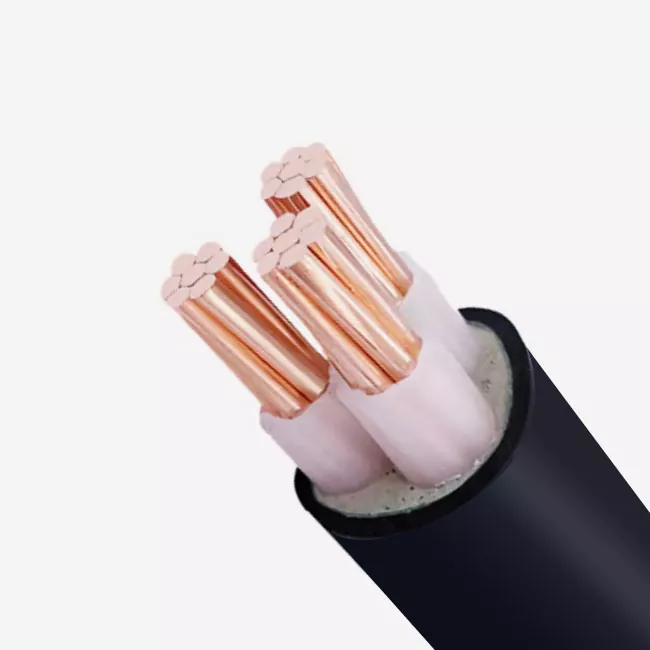
What Is a Flame Retardant Cable?
A Flame Retardant Cable uses specially selected insulation, sheathing materials, and cable construction to reduce the possibility of flame propagation. Instead of allowing a fire to travel rapidly along a cable installation, the cable is designed to restrict flame spread and support safer system operation.
It is important to distinguish flame retardancy from fire resistance. A flame-retardant cable focuses on limiting flame propagation, while a fire-resistant cable is designed to maintain electrical circuit integrity for a specified period under fire conditions. These are different performance objectives and should be selected according to the actual application.
Key Performance Characteristics
| Feature | Main Benefit |
|---|---|
| Flame retardancy | Helps limit flame propagation |
| Low-smoke construction | Can improve visibility and evacuation conditions |
| Halogen-free options | Can reduce corrosive/toxic combustion products |
| Mechanical protection | Helps withstand demanding installation environments |
| Electrical stability | Supports reliable power, control, and instrumentation |
| Custom construction | Allows adaptation to specific equipment and installation needs |
For marine systems, IEC 60092-350 covers general construction and test methods for power, control, and instrumentation cables used on ships and offshore units.
Why Does Flame Retardancy Matter?
A cable network can extend throughout an entire vessel or industrial facility. If a cable fire spreads from one section to another, the consequences can extend far beyond the original fault location.
A suitable Flame Retardant Cable can provide several important benefits:
-
Reduced flame propagation: Helps prevent fire from rapidly traveling along cable routes.
-
Improved personnel safety: Supports safer evacuation and emergency response.
-
Protection of critical circuits: Helps reduce the risk of fire-related damage to electrical infrastructure.
-
Higher system reliability: Appropriate materials and construction can improve performance in demanding environments.
-
Compliance support: Properly specified cables can help meet project-specific marine or industrial requirements.
For example, marine cable standards address both general cable construction and specific shipboard power-cable requirements. IEC 60092-353:2024 covers shipboard and offshore power cables rated at 1 kV and 3 kV, including cables designed to maintain circuit integrity during a fire.
How Does Flame Retardant Cable Improve Shipboard Safety?
Ships present special electrical challenges. Cables may pass through engine rooms, accommodation areas, control rooms, machinery spaces, and other compartments. Vibration, limited space, humidity, temperature changes, and complicated cable routing can increase the demands placed on electrical products.
This is why marine cable selection cannot simply focus on conductor size and voltage rating. Flame performance, insulation, sheath properties, mechanical protection, installation conditions, and applicable standards all need to be considered.
Marine electrical requirements may also distinguish between single-cable flame performance and flame-spread performance when cables are installed in groups. This is why selecting a cable based only on a basic flame test may not be sufficient for a particular shipboard installation.
Supporting Different Ship Types Through Customization
One major advantage of Qingdao Yilan Cable Co., Ltd. is its ability to support customized cable solutions for different ship types.
Different vessels can have significantly different electrical layouts and operating conditions. A cable solution for a cargo vessel may not have exactly the same requirements as one for a passenger ship, fishing vessel, yacht, workboat, offshore support vessel, or specialized marine platform.
Customization can cover factors such as:
-
Conductor configuration
-
Number of cores
-
Conductor cross-section
-
Insulation material
-
Outer sheath material
-
Armoring or shielding requirements
-
Rated voltage
-
Cable dimensions
-
Identification and marking
-
Application-specific mechanical and environmental requirements
This flexibility allows customers to develop a cable specification around the vessel rather than forcing an unsuitable standard product into an existing electrical design.
Which Applications Can Use Flame Retardant Cable?
Flame Retardant Cable can be considered for many applications where flame propagation presents a significant risk.
Typical applications include:
-
Marine power distribution
-
Ship control systems
-
Engine-room electrical systems
-
Offshore platforms
-
Navigation and communication-related installations
-
Industrial automation
-
Building electrical systems
-
Transportation infrastructure
-
Machinery and control equipment
For high-voltage marine applications, IEC 60092-354 specifies requirements for single- and three-core power cables with extruded solid insulation from 6 kV up to 30 kV.
Flame Retardant Cable vs. Fire Resistant Cable
These terms are sometimes used interchangeably, but they describe different cable performance requirements.
| Comparison | Flame Retardant Cable | Fire Resistant Cable |
|---|---|---|
| Primary purpose | Restrict flame propagation | Maintain circuit operation during fire |
| Main concern | Flame spread | Electrical continuity |
| Typical application | General fire-safe cable systems | Emergency and critical circuits |
| Fire performance | Resists propagation | Designed for defined fire exposure |
| Selection priority | Flame-spread requirements | Required survival time and circuit integrity |
Therefore, buyers should identify the actual project requirement before choosing between the two.
What Should Buyers Consider Before Ordering?
A professional cable specification should consider more than price. Before placing an order, buyers should clarify:
-
Required voltage rating
-
Number and size of conductors
-
Installation environment
-
Required flame performance
-
Smoke and halogen requirements
-
Temperature range
-
Flexibility or bending requirements
-
Armoring requirements
-
Applicable marine or industrial standards
-
Cable length and packaging
-
Vessel type and installation location
-
Customized construction requirements
For marine projects, this information helps the manufacturer recommend a construction that matches the actual operating environment.
Why Choose Qingdao Yilan Cable Co., Ltd.?
For customers sourcing cables for marine and industrial projects, Qingdao Yilan Cable Co., Ltd. combines product customization with application-oriented manufacturing support.
Its ability to provide ship-type customized Flame Retardant Cable solutions is especially valuable for projects involving different vessel structures, electrical systems, and installation environments. Rather than treating every vessel as the same, customized cable specifications can be developed according to the customer's technical requirements.
This approach can help customers achieve:
-
Better compatibility with existing cable systems
-
More suitable cable construction
-
Greater flexibility for different vessel types
-
Improved procurement efficiency
-
More consistent project specifications
-
Professional support from specification to production
Conclusion
Choosing the right Flame Retardant Cable is an important part of building a safer and more reliable electrical system. For marine applications, the decision should take into account flame performance, cable construction, environmental conditions, applicable standards, and the specific requirements of the vessel.
With Qingdao Yilan Cable Co., Ltd., customers can also benefit from customized solutions for different ship types, helping ensure that cable construction is better matched to real-world marine applications. Whether the project involves a cargo vessel, passenger ship, yacht, fishing vessel, offshore vessel, or another specialized ship, customized cable specifications can provide greater flexibility than relying solely on generic products.
If you are looking for reliable Flame Retardant Cable solutions or need a customized cable for a specific ship type, contact us today. Qingdao Yilan Cable Co., Ltd. can discuss your voltage, construction, installation, and vessel requirements and help develop a suitable cable solution for your project.