

Why Is a Braided Copper Tube Becoming the Go-To Choice for Demanding Electrical and Industrial Applications?
2026-01-21
When I first started working closely with manufacturers and engineers in the electrical and industrial fields, one recurring topic kept coming up in conversations about reliability and performance. During these discussions, I gradually came to know Dongguan Quande Electronics Co., Ltd., a company that approaches product development with a very practical, application-driven mindset. It was through this lens that I began to better understand why a Braided Copper Tube is increasingly preferred over conventional conductors in environments where stability, flexibility, and conductivity truly matter.
What Problems Does a Braided Copper Tube Actually Solve in Real Projects?
From my experience, many customers are not simply looking for a conductor; they are trying to solve specific operational headaches. Traditional rigid tubes or single-strand conductors often fail under vibration, thermal expansion, or tight installation spaces. A Braided Copper Tube addresses these pain points by combining electrical efficiency with mechanical adaptability.
- It absorbs vibration and movement without cracking or fatigue.
- It adapts easily to complex routing and confined layouts.
- It maintains stable conductivity even under repeated stress.
For clients who have dealt with frequent replacements or unexpected downtime, this difference is more than theoretical; it directly impacts maintenance costs and system reliability.
How Does the Structure of a Braided Copper Tube Improve Performance?
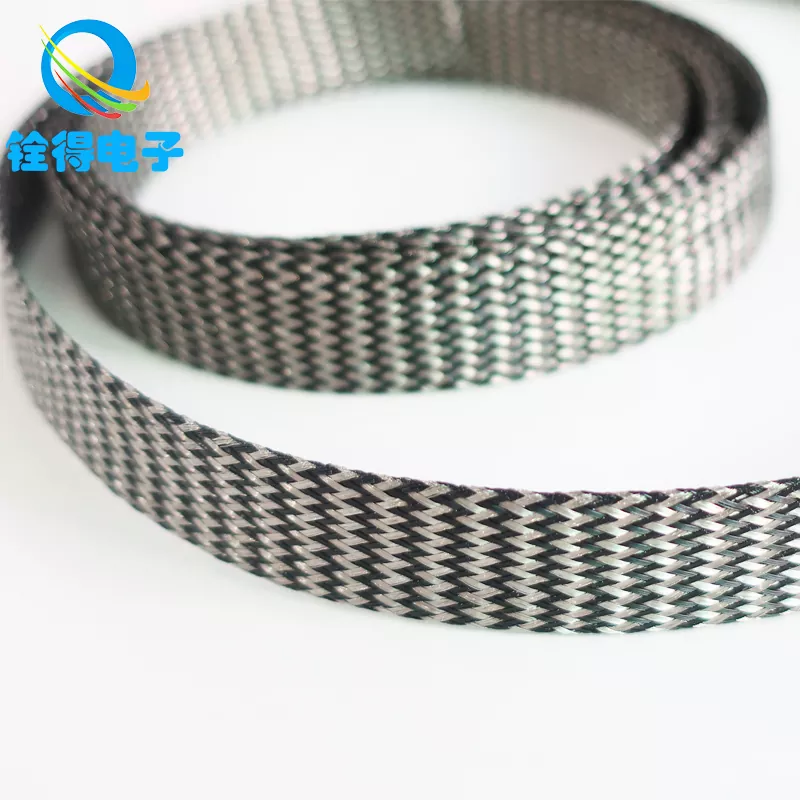
I often explain that the value of a Braided Copper Tube lies in its structure rather than a single headline feature. Multiple fine copper wires are interwoven into a tubular form, creating a balance between strength and flexibility that solid conductors simply cannot match.
| Structural Feature | Practical Benefit | Impact on Daily Use |
|---|---|---|
| Multi-strand braided design | High flexibility with load distribution | Reduces mechanical stress during operation |
| High-purity copper material | Excellent electrical conductivity | Ensures consistent current transmission |
| Tubular woven structure | Even current flow across strands | Minimizes localized overheating |
This combination explains why a Braided Copper Tube performs reliably in applications where both movement and electrical stability are unavoidable.
Where Does a Braided Copper Tube Make the Most Sense to Use?
Clients often ask me whether this type of conductor is necessary for their specific industry. Based on what I have seen, a Braided Copper Tube is particularly effective in environments where traditional solutions struggle to last.
- Electrical grounding and bonding systems
- Power distribution equipment with vibration exposure
- Renewable energy systems requiring flexible connections
- Automotive and rail applications with constant movement
In these scenarios, flexibility is not a luxury but a requirement, and the braided structure becomes a functional advantage rather than an added feature.
Why Do Buyers Pay Attention to Manufacturing Consistency?
One thing I have learned is that even a well-designed Braided Copper Tube can underperform if manufacturing control is inconsistent. Buyers care about uniform braiding density, material purity, and dimensional accuracy because these factors directly influence installation ease and long-term reliability.
Working with manufacturers who understand real-world usage helps ensure that each batch behaves predictably once installed. This is especially important for customers managing large-scale projects or standardized assemblies.
How Can Choosing the Right Braided Copper Tube Reduce Long-Term Costs?
Although some clients initially focus on unit price, the conversation often shifts after we evaluate lifecycle performance. A properly specified Braided Copper Tube reduces failure rates, minimizes maintenance interruptions, and extends service life. Over time, these benefits often outweigh the initial investment.
For procurement teams under pressure to balance budgets with performance, this long-term perspective makes a noticeable difference.
Ready to Explore a More Reliable Electrical Connection Solution?
If you are evaluating options to improve flexibility, durability, and electrical stability in your systems, a Braided Copper Tube may be the solution worth serious consideration. I encourage you to look beyond basic specifications and think about how the product will perform in your actual working environment.
If you would like to discuss your application in more detail or request technical guidance, please contact us today. Our team is ready to help you find the right braided copper solution and support your project from inquiry to implementation.