

Why Does the Right Cable Roller Make Cable Installation Safer and More Efficient?
2026-04-08
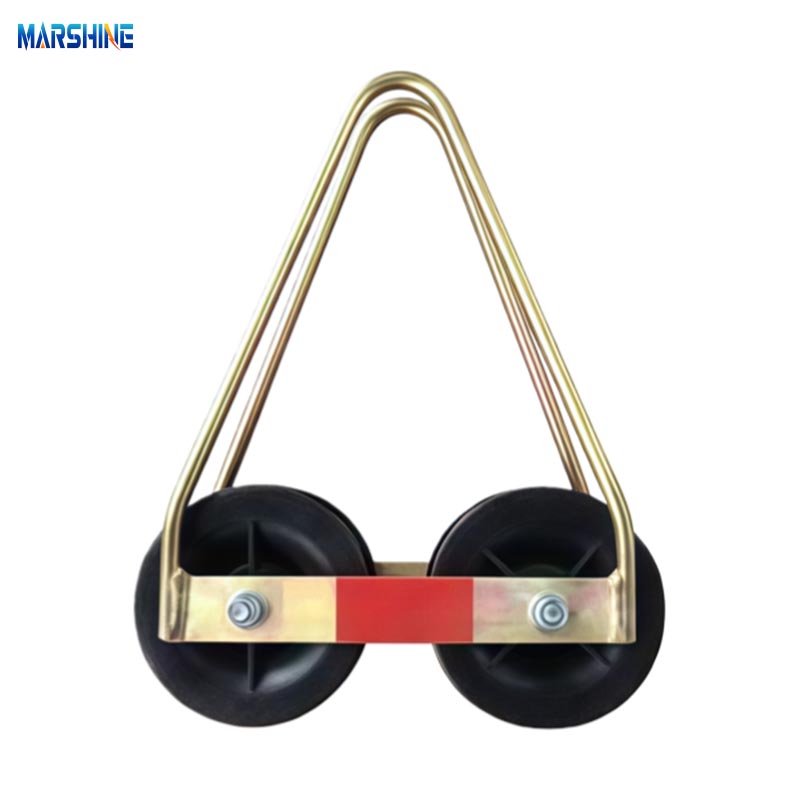
When I look at modern cable installation work, I see one recurring problem that too many contractors underestimate: cable damage caused by poor guidance during pulling. That is exactly why I pay close attention to equipment like the Cable Roller. In many field applications, I have found that choosing the right guiding tool can significantly improve cable control, reduce friction, and lower the chance of jacket wear or bending stress. Over time, I have also come to appreciate how Ningbo Marshine Power Technology Co., Ltd. approaches practical cable handling solutions for demanding utility and infrastructure projects, especially when installation teams need stable guidance across straight runs, corners, trench entries, and duct openings.
What Problems Usually Appear During Cable Pulling Work?
I often notice that buyers focus heavily on the cable itself, the pulling machine, or the winch capacity, but they do not always spend enough time on the support path. That is where installation problems begin. When a cable is dragged directly over rough ground, concrete edges, trench lips, or narrow duct entrances, the outer sheath can suffer avoidable abrasion. Even worse, poor alignment can create side pressure that increases pulling resistance and makes the job slower and less predictable.
From a practical point of view, the most common pain points include:
- Excessive friction during long-distance cable pulling
- Cable jacket wear caused by direct contact with hard surfaces
- Misalignment at corners, duct mouths, and entry points
- Labor inefficiency when teams must constantly reposition temporary supports
- Higher rework costs if the cable is damaged before commissioning
I always tell buyers that these are not minor site inconveniences. They directly affect installation speed, cable integrity, labor cost, and project delivery confidence.
How Can a Cable Roller Reduce Friction and Protect the Cable?
In simple terms, a well-designed Cable Roller creates a controlled path for the cable to move along. Instead of scraping against the ground or structural edges, the cable rolls over a guided surface that helps reduce drag and maintain direction. This matters whether I am working with power cable, communication cable, or fiber-related line installation.
The value becomes even more obvious in projects where cables are heavy, expensive, or sensitive to bending and outer-sheath damage. A roller helps me keep the cable elevated, aligned, and supported. That support reduces unnecessary contact pressure, makes pulling force more manageable, and keeps the installation flow more consistent.
Here is how I usually explain the benefit to a buyer:
| Installation Challenge | What Happens Without Proper Guidance | How a Roller Helps |
|---|---|---|
| Surface friction | Cable drags on concrete, soil, or trench edges | Provides a rolling path that reduces resistance |
| Direction control | Cable shifts off line and creates side stress | Keeps the cable moving in a guided direction |
| Entry-point damage | Cable rubs at duct or manhole openings | Protects the cable at vulnerable transition points |
| Corner pulling | Cable bends sharply and wears faster | Improves turning control and lowers abrasion risk |
| Labor efficiency | Frequent manual adjustment slows the job | Creates a smoother and more repeatable setup |
Why Do Professional Buyers Care About Roller Structure and Material?
I have learned that not all rollers perform the same way in the field. Buyers who deal with utility construction, underground installation, or line-stringing work usually care about much more than appearance. They pay attention to frame strength, roller material, bearing performance, and whether the tool fits the actual route conditions.
In my experience, a buyer typically wants to know:
- Will the frame remain stable under repeated site use?
- Can the roller handle outdoor exposure and rough environments?
- Is the rolling action smooth enough to reduce drag effectively?
- Does the design suit straight runs, corners, or entry protection?
- Will it work with different cable sizes and installation scenarios?
These are reasonable questions, because the real value of a roller is not in a catalog photo. It is in how reliably it performs on actual job sites where terrain, cable weight, and environmental exposure can quickly reveal weak points.
Which Features Should I Check Before Buying a Cable Roller?
When I evaluate a Cable Roller, I do not start with price alone. I start with job conditions. A lower-cost option that cannot hold alignment, resist wear, or support repeated use may lead to higher total project cost later. I usually recommend checking these features first:
- Frame durability so the unit can withstand job-site handling and repeated deployment
- Smooth rolling performance to help reduce pulling resistance
- Cable-friendly contact design to minimize sheath damage during movement
- Adaptability for trench work, duct entrances, corners, and straight pulling paths
- Operational convenience so crews can position and use the roller efficiently
For buyers comparing suppliers, I also suggest asking whether the manufacturer offers different roller configurations for different installation points. That detail matters a lot because one project may need ground rollers, corner rollers, and entrance protection rollers together rather than a single universal type.
How Do Different Job Sites Require Different Roller Types?
One thing I always emphasize is that cable installation is not a one-condition task. A straight trench run has different support needs from a duct entry. A turning point requires different guidance from an open flat section. Because of that, I prefer suppliers that understand application-based configuration instead of treating every project the same way.
Below is a practical way I think about roller selection:
| Job-Site Condition | Typical Requirement | Suitable Roller Focus |
|---|---|---|
| Straight ground pulling | Stable support along the route | Ground guidance and smooth rolling |
| Route turns and directional change | Controlled cable movement around corners | Corner guidance and side protection |
| Duct or manhole entry | Protection at transition points | Entrance protection design |
| Uneven outdoor environment | Durability under changing conditions | Weather-resistant structure |
| Mixed cable installation tasks | Flexible use across multiple applications | Multi-scenario compatibility |
This is exactly why serious buyers usually prefer a supplier that can support a broader installation toolkit rather than just sell one isolated product.
Why Does Product Reliability Matter More Than a Low Purchase Price?
I understand why many buyers compare quotations first. Budget pressure is real. But if I am being honest, a roller that fails early or performs poorly can create costs that far exceed the purchase difference. A damaged cable, a delayed crew, or repeated pulling adjustments can become far more expensive than the initial savings.
That is why I usually think in terms of operational value rather than unit price alone. A more dependable roller can help improve:
- Installation speed
- Cable protection
- Crew efficiency
- Site safety and control
- Consistency across repeated projects
For distributors and project buyers, this also affects customer trust. When the installation tools perform well, the project looks more professional, and the end user is less likely to face costly problems later.
How Can the Right Supplier Support Long-Term Project Success?
I do not choose a supplier only by looking at one product image or one short specification line. I want to see whether the supplier understands how cable installation works in the field. That includes knowing the difference between corner control, entry protection, and general route support. It also includes offering practical product options that help buyers build a complete pulling solution.
That is one reason many buyers pay attention to manufacturers with a focused product range in cable installation equipment. A supplier that works closely with pulling winches, stringing blocks, cable tools, and guiding systems is often better positioned to understand how each part should support the full workflow.
When I review suppliers, I usually look for these signs:
- Clear understanding of application-specific cable handling needs
- Product range that supports real installation scenarios
- Stable manufacturing quality and practical design logic
- Responsiveness to project requirements and buyer questions
- Ability to support repeated procurement, not just one-time sales
What Makes Ningbo Marshine Power Technology Co., Ltd. Worth Considering?
From my perspective, one of the most useful things about Ningbo Marshine Power Technology Co., Ltd. is that the company is not presenting cable support as an abstract idea. Instead, it is positioned around practical installation needs. For buyers who want a more reliable cable handling workflow, that approach matters. I appreciate suppliers that think in terms of field function rather than just product naming.
In projects where route control, entry protection, directional guidance, and installation efficiency all matter, a dependable Cable Roller becomes more than an accessory. It becomes part of the system that helps crews work more smoothly and helps buyers reduce avoidable cable risk.
That is why I see real value in choosing a supplier that understands both product durability and installation logic. When the roller is selected correctly, the project becomes easier to manage, the cable path becomes more controlled, and the end result is simply more dependable.
Why Should You Act Before Your Next Cable Installation Project Begins?
If you are planning an upcoming utility, power, telecom, or infrastructure installation project, this is the right time to review whether your current cable guidance setup is truly efficient enough. The right Cable Roller can help you reduce friction, protect cable surfaces, improve route control, and support smoother site execution from start to finish. If you want to explore a more suitable solution for your project, contact us today and send your inquiry to Ningbo Marshine Power Technology Co., Ltd.. A better installation result often starts with better guidance equipment, and your next order can begin with one practical conversation.