

Why Does High Thermal Conductivity Red Copper Coil Matter for Efficient Heat Transfer?
2026-09-30
High Thermal Conductivity Red Copper Coil is an important material for applications where rapid and reliable heat transfer is essential. Red copper combines excellent thermal conductivity with good ductility, making it suitable for heat exchangers, refrigeration systems, HVAC equipment, heating systems, and other thermal-management components. High-purity copper can provide thermal conductivity in the range of approximately 386–401 W/m·K, depending on material grade and test conditions.
For manufacturers, the value of a copper coil is not only its ability to transfer heat. Its continuous coil form also supports efficient cutting, bending, forming, and automated processing. This makes it easier to produce components with consistent dimensions while reducing unnecessary joints during fabrication. Wenzhou Zenko Metal Co., Ltd. focuses on precision metal manufacturing and copper products, providing solutions for customers requiring reliable material performance and customized processing.
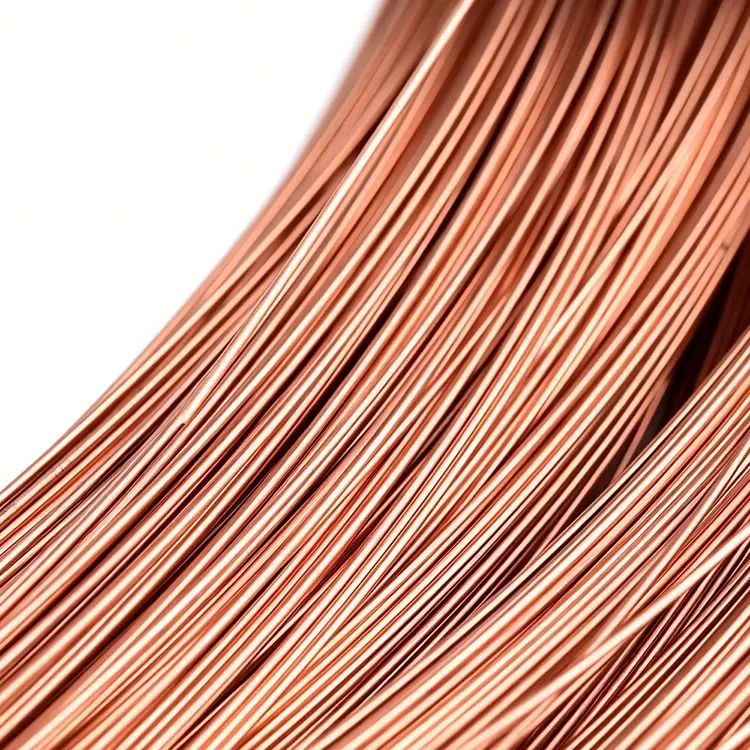
What Makes High Thermal Conductivity Red Copper Coil Effective?
The main advantage of High Thermal Conductivity Red Copper Coil comes from the natural properties of high-purity copper. Copper transfers heat rapidly, helping thermal energy move efficiently from hotter areas to cooler areas.
Its key characteristics include:
- High thermal conductivity: Supports rapid heat transfer in thermal equipment.
- Good electrical conductivity: Makes copper useful in electrical and electrothermal applications.
- Excellent ductility: Allows the material to be bent and formed into different configurations.
- Good machinability: Suitable for cutting, forming, bending, and other secondary processes.
- Continuous coil structure: Provides long material lengths and can reduce the number of connections.
- Reliable dimensional consistency: Precision processing can support stable downstream manufacturing.
For applications involving heat exchange, these characteristics can contribute to faster thermal response and more compact component designs.
How Does Copper Coil Improve Heat Transfer?
A thermal system needs to move heat efficiently while maintaining stable operating conditions. The material used for the heat-transfer component therefore has a direct influence on system performance.
When High Thermal Conductivity Red Copper Coil is used in a suitable design, heat can move efficiently through the copper wall. In coil-based heat exchangers, the large effective surface area of the coil also helps facilitate heat exchange between the copper and the surrounding medium.
A high-conductivity copper coil can be particularly useful when equipment requires:
- Fast thermal response
- Stable temperature control
- Efficient heat exchange
- Compact component structures
- Flexible tube or coil configurations
Research involving a helical coil made from high-thermal-conductivity red copper has reported a thermal conductivity of approximately 386.4 W/m·K at room temperature, demonstrating why red copper is widely considered for thermal-transfer applications.
Where Is High Thermal Conductivity Red Copper Coil Used?
The application range is broad because copper combines thermal performance with good forming characteristics.
| Application | Main Function | Key Benefit |
|---|---|---|
| HVAC systems | Heat transfer | Efficient thermal exchange |
| Refrigeration equipment | Evaporator/condenser components | Rapid heat movement |
| Heat exchangers | Fluid-to-fluid heat transfer | High conductivity |
| Solar heating systems | Thermal circulation | Efficient energy transfer |
| Water heating equipment | Heat transfer | Fast thermal response |
| Industrial cooling | Thermal management | Stable heat dissipation |
| Electrical equipment | Heat and current conduction | Dual conductivity |
Copper coils are also used in refrigeration, air-conditioning, solar, heating, water-supply, and heat-exchanger applications.
Why Does Coil Form Matter?
A flat copper sheet and a copper coil may use similar copper materials, but their manufacturing advantages can be different.
The continuous form of a coil allows manufacturers to feed material into automated production processes. Depending on the product design, the material can be uncoiled, cut, bent, stamped, or formed into specific components.
This can offer several practical benefits:
- Fewer interruptions during continuous processing
- Flexible length selection
- Better suitability for automated manufacturing
- Reduced need for unnecessary joints
- Easier adaptation to different component designs
For manufacturers producing large quantities of thermal components, these characteristics can help simplify production and improve material utilization.
High Thermal Conductivity Red Copper Coil vs. Other Metals
Material selection should always depend on the actual application. Copper is especially attractive when thermal conductivity and formability are major requirements.
Compared with steel, red copper generally provides much higher thermal conductivity. Aluminum can also offer good thermal performance and lower weight, but copper provides a particularly strong combination of thermal conductivity, electrical conductivity, ductility, and processing flexibility.
Therefore, the choice should consider more than material price. Engineers should evaluate thermal requirements, weight, mechanical properties, corrosion conditions, processing methods, dimensions, and total manufacturing cost.
What Should Buyers Check Before Ordering?
Selecting the right High Thermal Conductivity Red Copper Coil requires attention to both material and manufacturing requirements.
1. Copper Grade
Different copper grades provide different combinations of purity, conductivity, mechanical properties, and processing characteristics. T2 and phosphorus-deoxidized copper grades such as TP2/C12200 are commonly used in applications requiring good conductivity and forming performance.
2. Dimensions
Important specifications may include:
- Coil width
- Material thickness
- Inner and outer diameter
- Coil weight
- Required length
- Dimensional tolerances
3. Surface Quality
For precision applications, surface condition can affect subsequent forming, welding, brazing, and assembly processes. Buyers should therefore define surface requirements before production.
4. Processing Requirements
Some projects require cutting, bending, forming, annealing, or other customized processing. Confirming these requirements in advance can help ensure that the finished coil matches the downstream production process.
How Can Wenzhou Zenko Metal Support Custom Requirements?
Wenzhou Zenko Metal Co., Ltd. was established in 2017 and specializes in precision metal tubes, copper capillary tubes, fittings, customized components, and precision machining. The company provides manufacturing and export services for customers with different dimensional and processing requirements.
Its experience in red copper products is particularly relevant to applications involving precision tubing and thermal-transfer systems. The company's product information highlights high-purity red copper, flexible coil configurations, customized dimensions, and processing services for refrigeration, HVAC, heating, solar, and heat-exchanger applications.
For B2B buyers, this means product selection can be discussed according to the actual application instead of relying only on a standard specification. Material grade, dimensions, coil configuration, processing method, and packaging can all be considered together.
Why Is the Right Copper Coil Important for Long-Term Performance?
Thermal equipment often operates continuously, so material consistency is important. A suitable copper coil should not only transfer heat effectively but also maintain reliable forming and connection performance during manufacturing and installation.
The right combination of copper purity, dimensions, surface quality, mechanical properties, and processing can help manufacturers achieve stable component production and predictable thermal performance.
For this reason, High Thermal Conductivity Red Copper Coil is more than a raw material. It can serve as an important functional component in systems where efficient heat transfer, flexible processing, and dependable manufacturing are all required.
Choose the Right Copper Coil for Your Application
Whether you are sourcing copper coils for HVAC equipment, refrigeration systems, heat exchangers, solar heating, water heating, or customized industrial components, specification matching is essential.
Wenzhou Zenko Metal Co., Ltd. can provide precision copper solutions based on application requirements, dimensions, material selection, and customized processing needs. If you are looking for a reliable High Thermal Conductivity Red Copper Coil solution for your next project, contact us to discuss your specifications and manufacturing requirements.