

Why Does Corrosion Occur in Concentric Neutral Cable and How Can It Be Prevented
2026-05-12
Corrosion in Concentric Neutral Cable systems is a silent threat that undermines power reliability, shortens service life, and leads to costly failures. Understanding the electrochemical mechanisms behind this degradation—and applying proven prevention strategies—is essential for utilities, contractors, and industrial facilities. DAYA provides industry-leading solutions and technical guidance to combat Concentric Neutral Cable corrosion effectively.
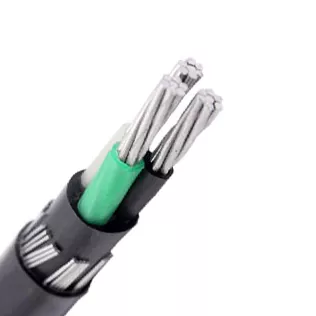
The Root Causes of Corrosion in Concentric Neutral Cable
Corrosion occurs when the neutral wires—typically bare copper spiraling around the insulation—are exposed to moisture, oxygen, and ionic contaminants. The table below outlines primary corrosion drivers and their mechanisms.
| Cause | Mechanism | Typical Environment |
|---|---|---|
| Galvanic action | Dissimilar metals (copper vs. steel armor or grounding rods) create a battery-like cell | Soil with varying pH or salinity |
| Electrolytic corrosion | Stray currents from DC traction systems or cathodic protection | Urban rail corridors, industrial plants |
| Moisture ingress | Water wicking through jacket damage or terminations | Direct burial, flooded ducts |
| Chemical contaminants | Chlorides, sulfates, or acids in backfill | Coastal zones, industrial waste sites |
Once corrosion begins, the neutral’s cross-sectional area reduces, increasing electrical resistance. This leads to overheating, unbalanced return currents, and eventual open neutrals. Over 40% of premature Concentric Neutral Cable failures trace directly to corrosion.
Proven Prevention Strategies
Effective prevention combines material selection, installation quality, and ongoing maintenance. DAYA recommends the following layered approach:
-
**Jacketed **Concentric Neutral Cable****: A polymer jacket over the neutral layer blocks moisture and oxygen. DAYA’s jacketed designs meet ASTM and ICEA standards for direct burial.
-
Corrosion inhibitors: Grease- or gel-filled compounds between neutral wires displace water. Field tests show 80% longer service life.
-
Cathodic protection (for severe sites): Sacrificial anodes or impressed current systems neutralize stray voltage.
-
Proper backfill: Clean, compacted sand with neutral pH reduces ionic activity. Avoid cinders, slag, or high‑clay soils.
-
Regular testing: Use a clamp meter and low‑resistance ohmmeter to track neutral continuity. Annual checks catch degradation early.
Concentric Neutral Cable FAQ
Q1: Can a corroded Concentric Neutral Cable be repaired without full replacement?
A: Partial repair is sometimes possible for localized corrosion affecting less than 20% of the neutral wires. The damaged section can be cut out and spliced using a certified inline splice kit with a new neutral bridging conductor. However, DAYA advises full replacement if corrosion extends along more than 30% of the cable length or if the underlying insulation shows any tracking or pitting. After repair, a waterproof jacket and corrosion‑inhibiting tape must be applied over the splice. Always perform a shield continuity test and insulation resistance test before re‑energizing.
Q2: How does stray current corrosion differ from galvanic corrosion in Concentric Neutral Cable?
A: Galvanic corrosion results from direct contact between two different metals in a common electrolyte (wet soil). It produces a predictable voltage, typically under 1 volt. Stray current corrosion is driven by external DC sources like transit systems or welding operations. These currents can be hundreds of amperes, entering the Concentric Neutral Cable at one point and leaving at another. The leaving point suffers rapid, localized metal loss—often creating pinholes or complete neutral severance within months. Detection requires a stray current mapper or voltage gradient survey, while mitigation uses polarized drains or isolating joints.
Q3: Does a jacketed Concentric Neutral Cable completely eliminate corrosion risk?
A: No jacket is 100% impervious. Over time, thermal cycling, rock impingement, rodent damage, or improper pulling can create microscopic breaches in the jacket. Once moisture penetrates even a tiny hole, capillary action draws water along the entire neutral length. Additionally, terminations and splices remain vulnerable points unless properly sealed. DAYA advises specifying a flooded or filled jacket design, where a water‑blocking compound fills the interstitial space. Regularly inspect jacket integrity using a spark tester or fault locator. A jacket reduces corrosion risk by an estimated 90% compared to bare neutral designs, but annual visual and electrical checks are still necessary.
Partner with DAYA for Long‑Term Concentric Neutral Cable Reliability
Corrosion is preventable, not inevitable. From advanced jacketed Concentric Neutral Cable to corrosion auditing and field splicing support, DAYA delivers engineered solutions across utility, renewable, and industrial projects.
Contact us today to request a corrosion risk assessment or a sample of our high‑performance Concentric Neutral Cable. Our engineers are ready to help you extend cable life and reduce unplanned outages.