

Why Does Choosing the Right Copper Braid Still Matter in Modern Electrical Systems?
2026-01-28
When I first started working with grounding and flexible conductivity solutions, I quickly learned that not all braids perform the same in real-world conditions. Over the years, while collaborating closely with Dongguan Quande Electronics Co., Ltd., I’ve seen how a well-designed Copper Braid can quietly solve problems that otherwise lead to signal loss, overheating, or premature equipment failure. This is exactly why I want to walk you through how Copper Braid works, where its real advantages lie, and how to select the right option without guesswork.
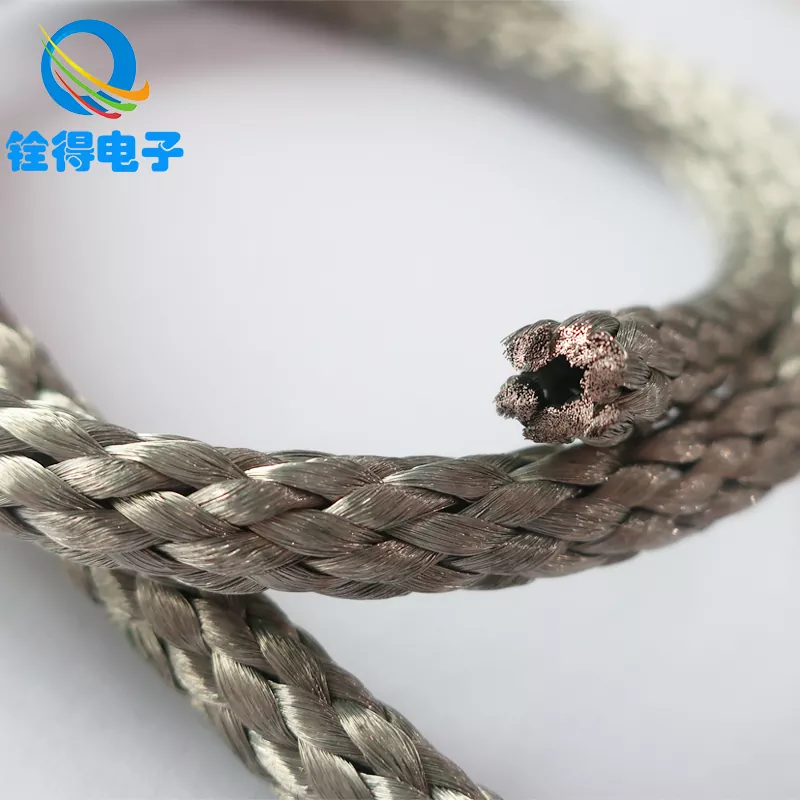
What Problems Does Copper Braid Actually Solve in Daily Applications?
In many installations, rigid conductors look fine on paper but struggle under vibration, thermal expansion, or tight layouts. I’ve seen clients replace solid conductors repeatedly, only to realize the issue was flexibility rather than material quality. A properly engineered Copper Braid addresses these pain points by combining conductivity with mechanical adaptability.
- Absorbs vibration without cracking or loosening connections
- Maintains stable conductivity during repeated movement
- Reduces electromagnetic interference in sensitive systems
- Improves grounding reliability in compact assemblies
How Does a High-Quality Copper Braid Improve Electrical Performance Over Time?
From my experience, long-term performance depends less on thickness alone and more on structure and purity. At Dongguan Quande Electronics Co., Ltd., the focus has always been on consistent strand weaving and controlled copper quality. This approach ensures that Copper Braid maintains low resistance even after extended use.
| Performance Factor | Why It Matters in Practice |
|---|---|
| Strand Density | Ensures even current distribution and minimizes hot spots |
| Flexibility | Allows installation in confined spaces without stressing terminals |
| Copper Purity | Supports stable conductivity and reduces oxidation risk |
| Weaving Consistency | Improves mechanical strength under repeated motion |
Why Is Copper Braid Preferred for Grounding and Shielding Applications?
Grounding is one area where shortcuts almost always backfire. I’ve worked on systems where inconsistent grounding caused intermittent faults that were difficult to trace. Using Copper Braid instead of rigid grounding straps made a measurable difference in stability and safety.
The braided structure increases surface area, which helps dissipate unwanted electrical noise. This is especially useful in power cabinets, renewable energy systems, and industrial control equipment where reliable grounding is non-negotiable.
How Can You Match the Right Copper Braid to Your Specific Use Case?
Not every application requires the same braid width or thickness. I usually recommend starting with the operating environment rather than the current rating alone. Temperature variation, movement frequency, and installation constraints should all influence the final choice.
| Application Scenario | Recommended Focus |
|---|---|
| Industrial Machinery | High flexibility and vibration resistance |
| Power Distribution Cabinets | Low resistance and consistent grounding |
| Renewable Energy Systems | Corrosion resistance and long service life |
| Electronic Enclosures | Effective EMI shielding performance |
What Makes a Reliable Copper Braid Supplier Worth Working With?
Beyond the product itself, I’ve learned that technical support and customization matter just as much. Working with Dongguan Quande Electronics Co., Ltd. has shown me how tailored braid sizes, controlled production, and responsive communication can simplify procurement and reduce installation errors.
A dependable supplier understands that Copper Braid is not a one-size-fits-all component but a functional solution that must integrate smoothly into your system design.
Are You Ready to Improve Your System Reliability with the Right Copper Braid?
If you’re dealing with grounding instability, installation limitations, or long-term durability concerns, it may be time to reassess your current solution. Choosing the right Copper Braid can quietly enhance performance while reducing maintenance costs.
If you’d like to discuss your application or request a tailored solution, feel free to contact us and leave an inquiry. Our team is ready to help you find a Copper Braid solution that truly fits your project requirements.