

Why Does a Well-Designed Ground Wire Still Decide Electrical Safety?
2026-02-03
When I first started evaluating grounding solutions for industrial and electronic systems, I quickly realized that reliability rarely comes from a single component. It comes from experience, manufacturing discipline, and a deep understanding of how electricity behaves in real environments. That was also how I came to know Dongguan Quande Electronics Co., Ltd. — not through loud marketing claims, but through consistent performance in projects where a dependable Ground Wire truly mattered.
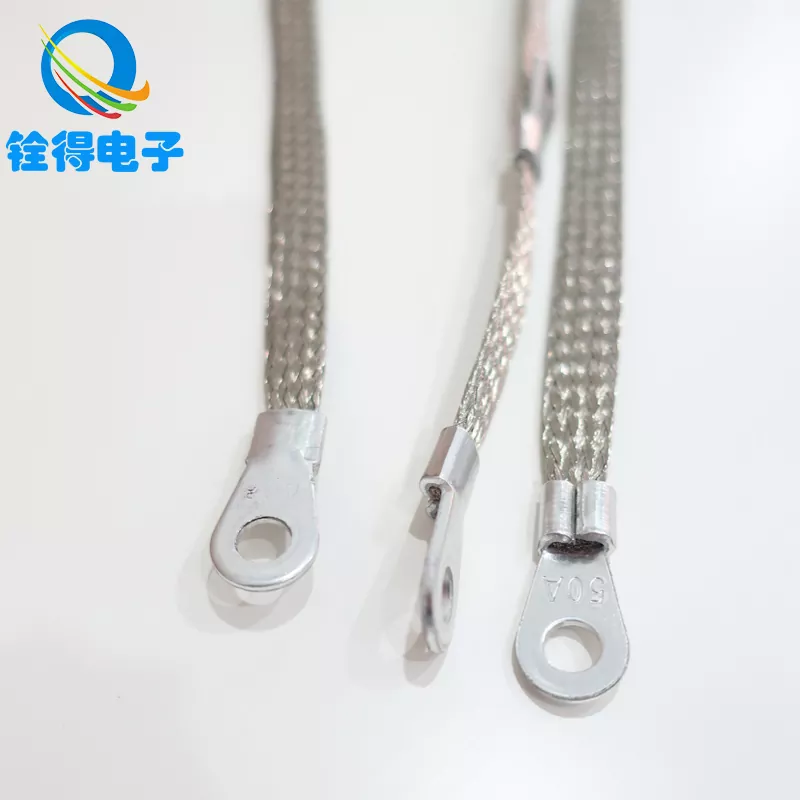
What Problems Does a Ground Wire Actually Solve in Daily Applications?
Many engineers and buyers I speak with initially see grounding as a regulatory checkbox. In reality, a properly designed Ground Wire protects people, equipment, and long-term system stability. Without it, electrical noise, fault currents, and static discharge can quietly damage devices long before visible failure appears.
- It provides a controlled path for fault current to reduce shock risk.
- It stabilizes voltage levels in sensitive electronic systems.
- It minimizes electromagnetic interference in complex assemblies.
- It protects equipment from transient surges and static buildup.
In my experience, customers rarely complain about grounding when it is done right — but they remember it immediately when it is not.
How Does Material Choice Affect the Performance of a Ground Wire?
Not all grounding conductors behave the same way under load, vibration, or long-term use. A Ground Wire must balance conductivity, flexibility, and mechanical durability. This is where braided structures and refined copper processing show their advantages.
| Design Factor | Why It Matters |
|---|---|
| High-purity copper | Ensures low resistance and stable current flow |
| Braided structure | Improves flexibility and vibration resistance |
| Consistent strand tension | Maintains electrical integrity over time |
| Surface treatment | Enhances corrosion resistance in harsh environments |
From what I have observed, manufacturers that control these details internally are far more likely to deliver grounding solutions that perform consistently across different applications.
Why Is Flexibility Critical for a Modern Ground Wire?
As equipment becomes more compact and installation spaces tighter, flexibility is no longer optional. A rigid conductor may meet electrical specifications but fail mechanically. A flexible Ground Wire adapts to movement, thermal expansion, and assembly constraints without stressing connection points.
- Reduces fatigue in dynamic or vibrating systems
- Simplifies installation in confined layouts
- Maintains contact reliability over repeated cycles
This is especially important in automotive, renewable energy, and industrial automation environments where motion is part of daily operation.
How Can a Ground Wire Be Customized for Different Industries?
One lesson I have learned is that no single grounding solution fits every scenario. A Ground Wire may need different lengths, terminal types, strand counts, or insulation treatments depending on where it is used. Customization is not about complexity — it is about suitability.
| Application Area | Common Grounding Needs |
|---|---|
| Industrial equipment | High current capacity and vibration tolerance |
| Power distribution | Low resistance and thermal stability |
| Electronics assemblies | Noise reduction and compact routing |
| Renewable energy systems | Weather resistance and long service life |
The ability to adjust these parameters without sacrificing quality often separates a long-term supplier from a short-term vendor.
What Should Buyers Look for When Selecting a Ground Wire Supplier?
From my perspective, technical specifications alone are not enough. A reliable Ground Wire comes from a supplier who understands compliance requirements, testing standards, and production consistency. Clear communication and traceable quality control also make a real difference after installation.
- Documented material sourcing and inspection processes
- Stable production capability for repeat orders
- Experience across multiple application fields
- Support for customized grounding solutions
These factors reduce risk not only during installation, but throughout the entire lifecycle of the system.
Are You Ready to Improve System Safety with the Right Ground Wire?
After working through numerous grounding challenges, I am convinced that investing in the right Ground Wire is one of the most practical ways to enhance electrical safety and system reliability. If you are evaluating grounding options or planning a new project, it is worth discussing your requirements with a manufacturer that understands both performance and application realities.
If you would like to explore suitable grounding solutions or request a tailored recommendation, please contact us today. The team at Dongguan Quande Electronics Co., Ltd. is ready to help you find a dependable Ground Wire solution that fits your system and your long-term goals.