

Why do High-Voltage Cables Need so Much Insulation?
2026-02-09
In high-voltage power systems, electrical stress rises nonlinearly as voltage levels increase. When energy is transmitted at elevated voltages, the electric field surrounding the conductor becomes significantly stronger, creating a higher risk of partial discharge, surface tracking, and dielectric breakdown. This is the primary reason why a High-Voltage Cable requires substantially thicker and more sophisticated insulation compared with low-voltage designs. The insulation is not only a barrier but a controlled medium that manages field distribution and prevents ionization of surrounding air or materials.
From our engineering perspective, insulation must withstand long-term thermal aging, voltage surges, and transient overloading conditions. In our factory, material selection focuses on proven dielectric compounds that can operate reliably for decades under continuous electrical stress. Our design philosophy emphasizes stability, consistency, and predictable performance under real grid conditions rather than laboratory-only benchmarks.
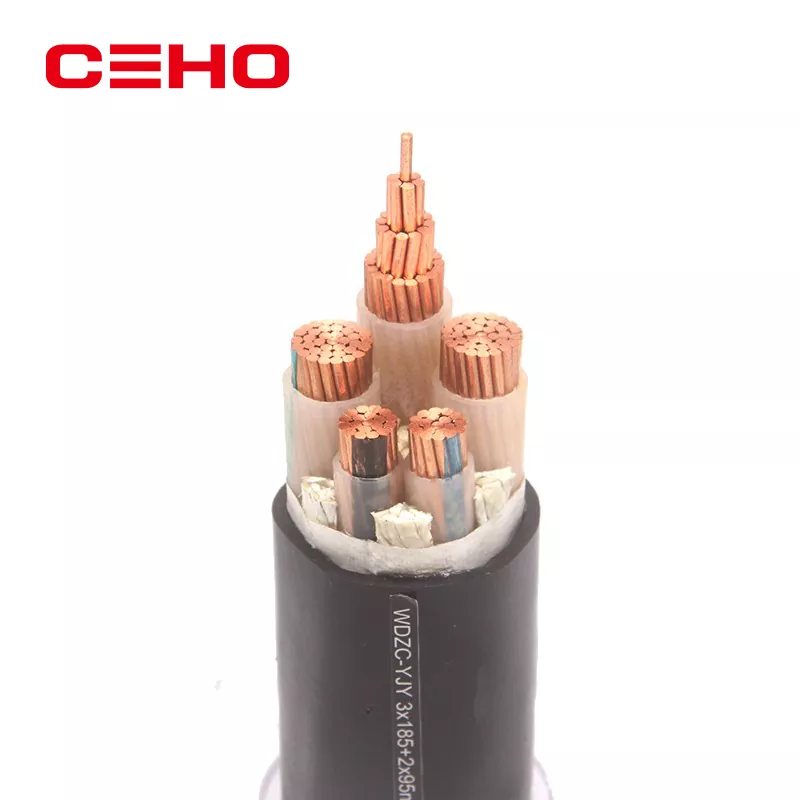
Why is insulation critical for preventing heat buildup and energy loss?
As voltage and current interact, resistive heating becomes unavoidable. Without adequate insulation, excessive heat accumulation can accelerate conductor oxidation, reduce mechanical strength, and shorten service life. Proper insulation works as both an electrical and thermal control layer, allowing heat to dissipate evenly while maintaining dielectric integrity. In transmission and distribution networks, a poorly insulated Cable can become a hidden point of failure long before visible damage appears.
Our production approach integrates thermal endurance testing into every development cycle. Our materials are rated for continuous operation at elevated temperatures while maintaining dimensional stability. Our factory follows strict curing and extrusion controls to ensure uniform insulation thickness, which is essential for consistent heat distribution along the entire length of the product.
Why do environmental conditions demand thicker insulation layers?
High-voltage installations are often exposed to harsh environments including UV radiation, moisture ingress, chemical contaminants, and mechanical vibration. Each of these factors can degrade insulation performance over time if not properly addressed. A High-Voltage Cable installed outdoors or underground must resist water treeing, ozone exposure, and soil-related chemical reactions. These risks explain why insulation systems are engineered with multiple protective layers rather than a single barrier.
At Ceho Power Technology Group Co., Ltd., our environmental qualification process simulates long-term exposure scenarios to validate material resilience. Our experience shows that robust insulation design directly reduces maintenance frequency and unexpected downtime. Our commitment to durability ensures our products remain stable across diverse climates and installation conditions.
Why do international standards specify strict insulation thickness requirements?
Global standards such as IEC and IEEE define minimum insulation thickness based on voltage class, installation method, and service environment. These specifications exist to ensure predictable safety margins and interoperability across power systems. A compliant Cable must meet dielectric strength, impulse voltage resistance, and aging performance criteria. Insulation thickness is calculated not as a safety guess but as a scientifically derived parameter backed by decades of field data.
Our technical team aligns product development with these standards from the earliest design phase. Our documentation, routine testing, and type testing are structured to meet regulatory expectations in major markets. Ceho Power Technology Group Co., Ltd. maintains a quality framework that ensures consistent compliance while allowing customization for project-specific requirements.
Why does insulation design directly affect long-term system reliability?
Insulation is the first line of defense against system failure. When designed correctly, it minimizes the risk of short circuits, electrical leakage, and catastrophic faults. Over the service life of a High-Voltage Cable, insulation performance determines whether the asset operates reliably or becomes a liability. Field studies consistently show that insulation degradation is the leading cause of premature failures in high-voltage infrastructure.
Our engineering teams prioritize long-term reliability metrics such as aging curves, moisture resistance, and mechanical flexibility. Our factory applies continuous monitoring during production to reduce defects and variability. This disciplined approach ensures that our insulation systems deliver stable performance throughout extended service cycles.
Why do material parameters matter so much in insulation performance?
| Insulation Material | XLPE Compound |
| Rated Voltage Range | Up to 220 kV |
| Operating Temperature | Minus 20 to 90 degrees Celsius |
| Dielectric Strength | Greater than 25 kV per millimeter |
These parameters directly influence how insulation behaves under continuous electrical stress. Our selection criteria balance electrical, thermal, and mechanical performance to achieve long-term stability.
Why does manufacturing precision influence insulation consistency?
| Process Stage | Key Control Factor |
| Extrusion | Uniform wall thickness |
| Curing | Controlled cross-linking |
| Testing | Partial discharge monitoring |
Precision manufacturing ensures that insulation performs as designed across the entire product length. Ceho integrates process control and inspection to minimize variation and maximize reliability.
FAQ
Q1: What electrical risks occur if insulation is insufficient at high voltages?
When insulation thickness is inadequate, strong electric fields can concentrate at weak points, leading to partial discharge, surface tracking, and eventual dielectric failure that may cause sudden outages or permanent equipment damage.
Q2: How does insulation help extend service life in high-voltage power systems?
Proper insulation slows thermal aging, blocks moisture penetration, and resists environmental stress, allowing the system to maintain stable electrical and mechanical performance over long-term continuous operation.
Q3: Why is insulation thickness calculated rather than simply increased?
Insulation design is based on precise electrical modeling and international standards to balance safety margins, heat dissipation, and material efficiency, ensuring reliable performance without unnecessary material stress or cost escalation.
Conclusion
In summary, extensive insulation in high-voltage applications is not excessive but essential. It protects against electrical stress, heat, environmental damage, and long-term aging while ensuring compliance with global standards. Our expertise, our manufacturing discipline, and our focus on reliability allow us to deliver solutions that support stable power transmission worldwide. For project consultation, technical specifications, or tailored solutions, contact our team today and let our experience support your next installation.