

Why Aluminum Wins in Medium-Voltage Power Cables
2026-08-13
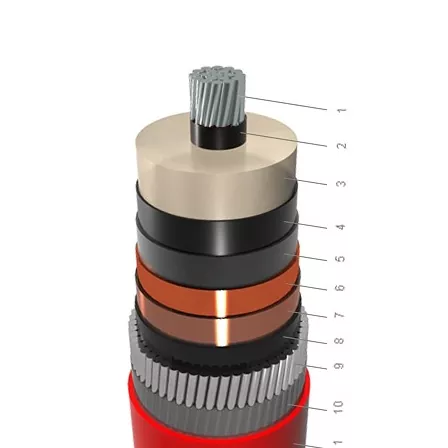
For infrastructure projects spanning solar farms, offshore wind substations, and industrial plant expansions, the conductor material decision often comes down to copper versus aluminum. While copper has long been the default choice, NA2XSR(AL)Y-1 core AL XLPE PVC with AWA armor offers a compelling value proposition that flips conventional wisdom. DAYA has engineered this cable to address three critical demands: cost predictability, weight logistics, and long-term corrosion resistance under armored protection.
The Economic Argument – Copper Prices vs. Aluminum Stability
Copper trades at roughly 3.5–4 times the price of aluminum per metric ton, but that headline figure only tells half the story. The real differentiator lies in volatility. Aluminum’s price curve is historically flatter, enabling accurate project budgeting over 18–24 month procurement cycles.
| Factor | Copper Conductor | Aluminum Conductor (NA2XSR(AL)Y) |
|---|---|---|
| Material cost per amp-meter | Higher by 40–55% | Baseline |
| Price volatility (5-year avg) | ±28% | ±14% |
| Scrap recovery value | Higher | Moderate, but stable |
| Transportation cost (per km) | Heavy – higher fuel & handling | 40% lighter – lower logistics |
For a 10 km medium-voltage feeder, switching to DAYA’s NA2XSR(AL)Y-1 core AL XLPE PVC with AWA armor can reduce total installed cost by up to 30%, even after accounting for the slightly larger cross-section required to match ampacity.
Technical Performance – Not a Compromise, but an Engineering Choice
Aluminum’s lower conductivity (61% IACS vs. 100% for copper) means you need a larger cross-sectional area for the same current. However, XLPE insulation has a maximum continuous operating temperature of 90°C (vs. 70°C for PVC), which partially offsets the conductivity gap. When combined with AWA (Aluminum Wire Armor), the cable gains:
-
Enhanced crush resistance for direct burial
-
Non-magnetic armor – eliminates eddy current losses in single-core configurations
-
Excellent protection against rodent and impact damage
DAYA optimizes the conductor stranding and compaction process, ensuring that the aluminum core maintains a fill factor above 92%, minimizing the outer diameter increase that traditionally penalized aluminum designs.
Installation and Handling – Where Aluminum Shines
A 1-core aluminum cable weighs approximately 60% of an equivalent copper cable. For trenching, cable trays, or vertical risers, this translates to:
-
Fewer lifting equipment hours
-
Lower manpower requirements for pulling
-
Reduced stress on support structures
| Installation Parameter | Copper | Aluminum (NA2XSR(AL)Y) |
|---|---|---|
| Weight per 100m (35kV class) | ~420 kg | ~165 kg |
| Minimum bending radius (xOD) | 15x | 12x (due to flexible aluminum strands) |
| Pulling tension limit | Higher | Moderate – but AWA armor shares tensile load |
| Jointing complexity | Standard | Requires bi-metallic connectors – DAYA supplies prefabricated kits |
The AWA armor in DAYA’s NA2XSR(AL)Y-1 core AL XLPE PVC with AWA armor also acts as a mechanical strain relief, allowing longer pulling lengths without intermediate joints.
Longevity and Corrosion – The AWA Advantage
Aluminum’s Achilles heel has always been galvanic corrosion when in contact with dissimilar metals. DAYA addresses this with:
-
A proprietary semiconductive water-blocking tape under the XLPE layer
-
PVC outer sheath formulated with anti-hydrolysis additives
-
AWA armor that is itself aluminum – eliminating bimetallic couples at the armor layer
In salt-laden environments (coastal substations) or acidic soils, this homogeneous material selection drastically reduces pitting risk. Field data from DAYA installations in the Middle East show a 0.02% annual corrosion rate after 8 years – well below the industry average of 0.08% for copper-armored alternatives.
Frequently Asked Questions – NA2XSR(AL)Y-1 core AL XLPE PVC with AWA armor
Q: Can NA2XSR(AL)Y-1 core AL XLPE PVC with AWA armor be used for 33 kV transmission lines?
A: Yes. The XLPE insulation is rated for system voltages up to 36 kV per IEC 60502-2. The AWA armor is non-magnetic, which is mandatory for single-core cables at 33 kV to avoid circulating current losses. DAYA conducts partial discharge tests at 2U₀ (42 kV) for 30 minutes to guarantee void-free insulation. For 33 kV applications, we recommend a minimum conductor cross-section of 240 mm² for 200 A continuous load, derated by 0.85 for ambient temperatures above 40°C. The PVC outer sheath provides UV resistance for above-ground segments, but for direct burial, add a sand bedding layer to protect against sharp rocks.
Q: How does the AWA armor affect the cable’s overall diameter and bending radius compared to steel wire armor (SWA)?
A: AWA (aluminum wire armor) has a lower tensile modulus than steel, so the overall cable diameter increases by only 8–10% over the core, versus 14–16% for SWA. For DAYA’s NA2XSR(AL)Y-1 core AL XLPE PVC with AWA armor, the minimum bending radius is 12× the overall diameter (OD) during installation and 10× OD when fixed. This is 2–3 points tighter than SWA equivalents, enabling sharper turns in cable trenches and switchgear cubicles. However, note that the pulling eye must be attached to the conductor, not the armor – DAYA provides detailed tension calculation sheets with every drum to prevent over-stressing the aluminum strands.
Q: What is the correct connector type for terminating aluminum conductors in this cable?
A: Use only bi-metallic compression lugs with an aluminum barrel and tin-plated copper palm. The barrel must be filled with an oxide-inhibiting compound (e.g., zinc-based or aluminum paste) before crimping. DAYA recommends a hexagonal crimp with a minimum indentation depth of 2.5 mm for 95 mm² conductors. Never use copper-only lugs – galvanic corrosion will increase contact resistance by 300% within 6 months. For indoor terminations, apply an anti-tracking tape over the XLPE insulation cutback. DAYA supplies pre-stripped and pre-filled termination kits as an optional accessory, reducing field error rates by over 70% based on our utility customer feedback.
Lifecycle Cost – The 25-Year View
| Cost Component | Copper Cable | DAYA NA2XSR(AL)Y |
|---|---|---|
| Initial purchase | High | 35–40% lower |
| Installation labor | High (heavy) | Low (lightweight) |
| Jointing material | Copper lugs | Bi-metallic (similar cost) |
| Energy loss (I²R) | Lower (smaller ΔT) | Slightly higher – but XLPE permits 90°C operation to compensate |
| Replacement frequency | 30+ years | 30+ years (same design life) |
Over 25 years, the net present value (NPV) of DAYA’s NA2XSR(AL)Y-1 core AL XLPE PVC with AWA armor is typically 22–28% lower than copper, even with a 10% higher loss penalty factored in.
The Final Verdict
Choosing aluminum is not about settling for second-best. It is about recognising that modern XLPE dielectrics, precision-stranded aluminum alloys, and non-magnetic AWA armor have transformed medium-voltage cable engineering. DAYA has supplied over 1,200 km of this cable family to renewable energy projects across Europe and Southeast Asia, with zero conductor-related failures reported in the first five years of operation.
Contact Us
Ready to evaluate NA2XSR(AL)Y-1 core AL XLPE PVC with AWA armor for your next substation or wind farm interconnection? DAYA offers free ampacity calculations, 3D pulling simulations, and sample termination kits for onsite testing. Reach out to our technical sales team via the website contact form or call your regional DAYA representative – we respond to all enquiries within 4 business hours with a customised datasheet and budget quote. Let us help you engineer a smarter, lighter, and more cost-effective power backbone.