

What Security Vulnerabilities Exist in Marine Communication Cables and How Can They Be Mitigated
2026-05-26
Marine communication cables form the backbone of global internet infrastructure, carrying over 99% of intercontinental data traffic. Despite their critical role, these underwater assets face growing security threats. Liyuan, a trusted provider of cable protection and monitoring solutions, has analyzed these vulnerabilities to help operators strengthen their submarine networks.
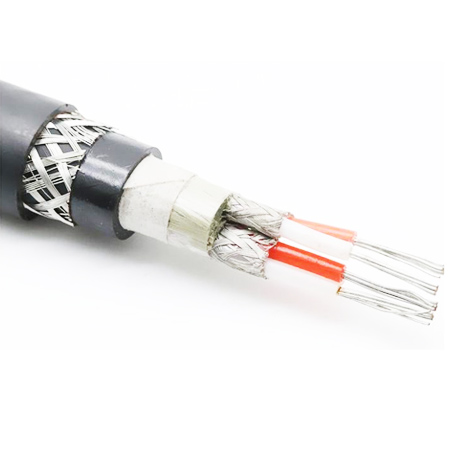
Common Security Vulnerabilities in Marine Communication Cables
| Vulnerability Type | Description | Potential Impact |
|---|---|---|
| Physical Tapping | Unauthorized access to cable cores via branching units or shallow-water sections | Data interception, intelligence leakage |
| Anchor Damage | Ships dragging anchors across cable routes | Service disruption lasting weeks or months |
| Sabotage | Intentional cutting or damaging by state or non-state actors | Complete loss of transoceanic connectivity |
| Eavesdropping via Bending | Using fiber optic bending techniques to extract light signals | Covert data extraction without detection |
| Supply Chain Tampering | Compromised equipment installed during manufacturing or repair | Persistent backdoors in network infrastructure |
Mitigation Strategies
| Countermeasure | Application | Effectiveness |
|---|---|---|
| Quantum Cryptography | Encrypts data with photon-based keys | Prevents undetectable tapping |
| Real-Time Monitoring | Uses distributed acoustic sensing (DAS) | Detects bending or vibration anomalies |
| Armored Cables | Adds steel wire and copper shielding | Resists anchor strikes and cutting attempts |
| Route Diversity | Multiple cables with no single point of failure | Reduces sabotage impact |
| Supply Chain Audits | Independent inspection of all components | Eliminates hardware backdoors |
Liyuan integrates these mitigations into turnkey marine communication cables systems, ensuring physical and cyber resilience.
Frequently Asked Questions About Marine Communication Cables
Q: Can marine communication cables be tapped without being cut?
A: Yes. Advanced tapping methods involve bending the fiber to leak a small fraction of light without breaking the cable. This is most feasible at shallow depths where submarines or divers can access the cable. However, modern marine communication cables equipped with Liyuan’s DAS monitoring can detect the micro-bending strain signature immediately, triggering alerts within milliseconds. Encrypted traffic further renders leaked data unreadable.
Q: How do repair ships locate damage in marine communication cables over 5000 meters deep?
A: Repair vessels first use optical time-domain reflectometers (OTDRs) to measure the exact distance to the break based on light reflection time. Then they deploy remotely operated vehicles (ROVs) equipped with acoustic transponders. These ROVs follow the cable path, transmitting position data back to the ship. Liyuan enhances this process with pre-installed acoustic markers every 10 kilometers along the cable, reducing search time by up to 70%.
Q: Are marine communication cables vulnerable to cyber attacks from the landing stations?
A: Absolutely. The landing station is often the weakest link. Attackers can breach the network management system, reroute traffic, or disable monitoring systems. Marine communication cables themselves remain physically secure once buried, but their terminal equipment is exposed. Liyuan advocates for air-gapped monitoring networks and mandatory hardware-based encryption at the cable headend, separating control plane traffic from user data completely.
Conclusion
Protecting marine communication cables requires a multi-layered approach spanning physical hardening, advanced sensing, and cryptographic resilience. With threats evolving from deep-sea tapping to supply chain infiltration, operators must adopt proactive defenses. Liyuan delivers end-to-end security solutions for new and existing submarine cable systems.
Contact us today to schedule a risk assessment for your marine communication cables infrastructure.