

What Safety Standards Govern the Manufacture and Use of Copper PVC Insulated Cable
2026-01-21
When specifying Copper PVC Insulated Cable for any electrical installation, safety is the non-negotiable cornerstone. For professionals and procurement managers, understanding the rigorous safety standards that govern these cables is crucial for ensuring project integrity, compliance, and long-term reliability. At Yilan, we prioritize transparency and adherence to these global benchmarks, ensuring every meter of cable we produce meets the highest safety mandates.
The manufacture and application of Copper PVC Insulated Cable are controlled by a framework of international and national standards. These standards define critical parameters such as conductor purity, insulation thickness, flame retardancy, and permissible current load.
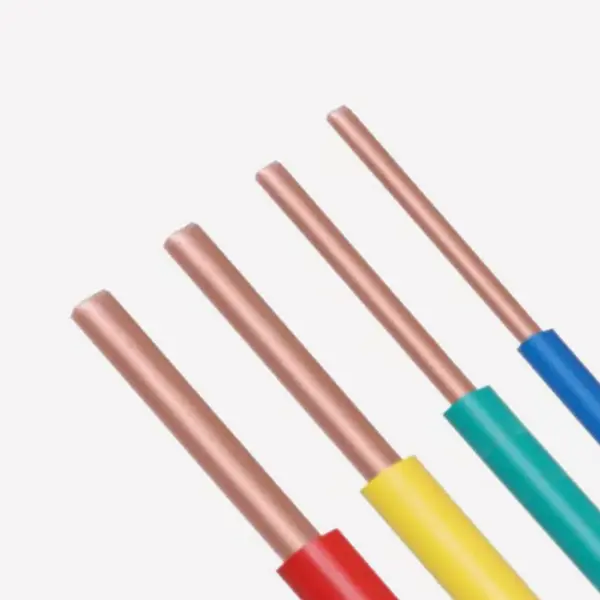
Key standards include:
-
IEC 60227 & IEC 60245: International Electrochemical Commission standards for rated voltages up to 450/750V, covering construction, dimensions, and test methods.
-
BS EN 50525 Series: The British and European harmonized standards, specifying requirements for low-voltage energy cables.
-
UL 83 & UL 44: Underwriters Laboratories standards for safety in the USA and Canada, focusing on flame resistance and electrical properties.
-
ASTM B3: Standard specification for soft or annealed copper wire.
The following table summarizes the core aspects these standards regulate:
| Standard Aspect | Governed Requirement | Purpose |
|---|---|---|
| Conductor | Material purity, resistance, and sizing | Ensures efficient current carrying capacity and minimal voltage drop. |
| PVC Insulation | Thickness, dielectric strength, and temperature rating (e.g., 70°C) | Protects against electrical shock and short circuits; withstands operational heat. |
| Flame Retardancy | Compliance with tests like IEC 60332-1 | Limits flame propagation, enhancing fire safety in buildings. |
| Overall Cable | Marking, durability, and rigorous type testing | Guarantees traceability, performance under mechanical stress, and overall reliability. |
Copper PVC Insulated Cable FAQ
Q: What does the voltage rating (e.g., 450/750V) on a Copper PVC Insulated Cable mean?
A: This rating indicates the cable's designed operating voltage. The first number (450V) refers to the maximum voltage between the conductor and earth (ground). The second number (750V) is the maximum voltage between conductors. Using a cable with an appropriate voltage rating is critical for safe, long-term operation.
Q: Can Yilan's Copper PVC Insulated Cable be used for outdoor installations?
A: Standard PVC insulation has good general-purpose resistance but is not typically recommended for prolonged direct sunlight or burial without additional protection. For outdoor use, look for cables with specific UV-resistant jackets or consult Yilan for our range of weather-resistant cabling solutions.
Q: How does compliance with these standards impact the total cost of a project?
A: While compliant Copper PVC Insulated Cable may have a higher initial cost than non-standard alternatives, it significantly reduces long-term risks. It ensures system safety, minimizes failure rates, avoids costly rework, and ensures adherence to legal and insurance requirements, providing superior value over the project's lifecycle.
Adhering to these complex safety standards is not just about compliance—it's about committing to quality and safety from the ground up. Yilan embeds these principles into every stage of production, delivering Copper PVC Insulated Cable that professionals can trust for critical applications.
Contact us today to request a detailed specifications sheet or to consult with our technical team on selecting the right standard-compliant cable for your next project.