

What role does braided copper wire play in modern automotive wiring systems
2026-02-28
Modern vehicles contain miles of wiring that must withstand constant vibration, temperature fluctuations, and exposure to automotive fluids. Braided copper wire has emerged as an essential component in these demanding environments. At Dongjue, we manufacture braided copper wire specifically engineered to meet the rigorous requirements of contemporary automotive electrical systems.
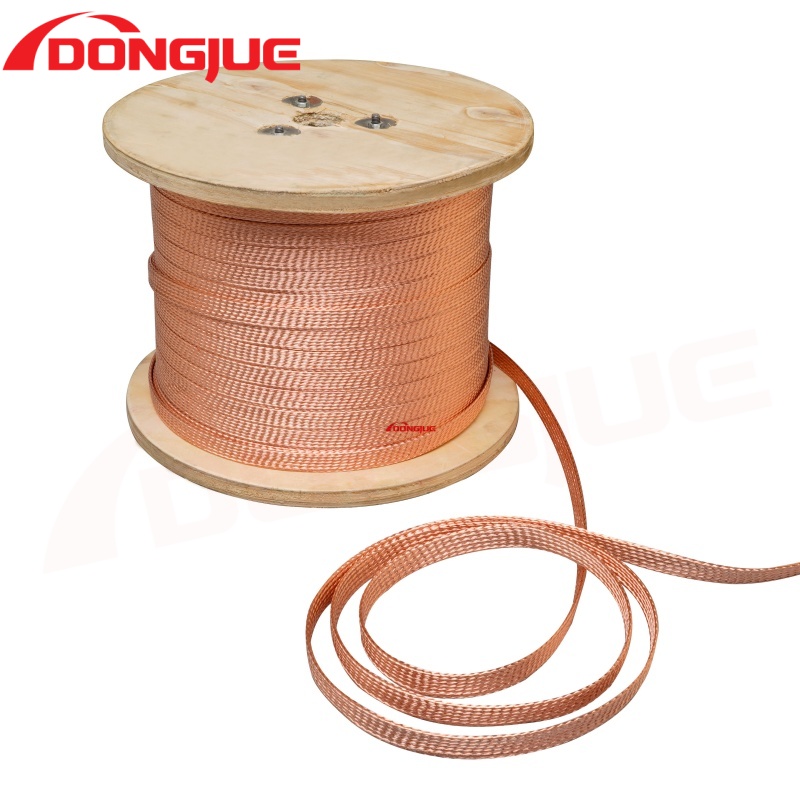
Essential Functions in Vehicle Electrical Architecture
Braided copper wire serves multiple critical functions in today's vehicles, from electric cars to traditional internal combustion models. Its unique construction provides advantages that solid or standard stranded wires cannot match.
| Function | Application Area | Benefit Provided |
|---|---|---|
| Grounding Straps | Engine blocks, chassis connections | Low impedance path with vibration resistance |
| EMI Shielding | Sensor wiring, entertainment systems | Electromagnetic interference protection |
| Flexible Connections | Alternators, starters, battery terminals | Accommodates engine movement and thermal expansion |
| High-Current Paths | Hybrid/electric vehicle battery packs | Efficient power distribution with minimal heat generation |
Why Automotive Engineers Specify Braided Copper Wire
The automotive sector presents unique challenges that make braided copper wire particularly valuable. Engine compartments experience constant motion, and traditional wire strands can fatigue and break over time. The woven construction of braided copper wire distributes stress across multiple interwoven strands, significantly extending service life.
Dongjue produces braided copper wire with precise specifications to match each automotive application. Our manufacturing process ensures consistent strand counts and weave density for predictable electrical performance.
Comparison with Alternative Wiring Solutions
To understand why braided copper wire dominates certain automotive applications, consider this comparison:
| Feature | Braided Copper Wire | Solid Copper Wire | Standard Stranded Wire |
|---|---|---|---|
| Flexibility | Excellent | Poor | Good |
| Vibration Resistance | Superior | Low | Moderate |
| Surface Area | High | Low | Medium |
| Current Carrying Capacity | Excellent | Good | Good |
| EMI Shielding | Built-in | None | Requires addition |
FAQ: Braided Copper Wire in Automotive Systems
Q: Why is braided copper wire better than standard wire for engine grounding?
A: Braided copper wire provides superior vibration resistance and flexibility compared to standard wire constructions. Engine movement creates constant flexing in ground connections, and standard wire strands eventually work-harden and fracture. The woven pattern of braided copper wire allows individual strands to move independently, distributing mechanical stress across thousands of contact points. Additionally, the flattened profile commonly used in braided copper wire ground straps offers maximum surface contact with engine components for the lowest possible resistance path.
Q: How does braided copper wire protect sensitive automotive electronics?
A: Modern vehicles contain dozens of electronic control units that can interfere with each other through electromagnetic radiation. Braided copper wire acts as a natural Faraday cage when used as shielding around signal cables. The dense weave pattern creates multiple paths for electromagnetic waves to encounter and dissipate before reaching internal conductors. Dongjue manufactures braided copper wire with specific coverage percentages to meet OEM shielding requirements, ensuring that infotainment systems, safety sensors, and critical control modules operate without interference.
Q: What specifications matter most when selecting braided copper wire for automotive use?
A: Several critical specifications determine the performance of braided copper wire in vehicles. Strand count and wire gauge per strand affect both flexibility and current capacity. Weave density, measured in picks per inch, impacts mechanical strength and shielding effectiveness. Material composition matters significantly—braided copper wire may use pure copper, tinned copper for corrosion resistance, or copper alloys for specialized applications. Temperature rating is essential, as engine compartments regularly exceed 125°C. Dongjue provides detailed specification sheets for all braided copper wire products to help engineers select the exact configuration for their application requirements.
Industry Standards and Compliance
Automotive manufacturers require braided copper wire that meets strict industry specifications. Dongjue produces braided copper wire in accordance with SAE and ISO standards applicable to automotive electrical systems. Our quality control processes ensure consistent performance across every production run.
Conclusion
Braided copper wire has become indispensable in modern automotive manufacturing. Its unique combination of flexibility, durability, and electrical performance solves problems that other wiring configurations cannot address effectively. From basic grounding applications to complex EMI shielding requirements, braided copper wire continues to enable the sophisticated electrical systems that define today's vehicles.
Contact us today to discuss your automotive wiring requirements with our engineering team. We will help you select the optimal braided copper wire configuration for your specific application and provide samples for testing and validation.