

What Makes Airplane ESC Essential for Modern RC Aircraft Performance?
2026-05-18
In the world of RC aviation, precision, stability, and power management are critical for achieving smooth and reliable flight performance. One of the most important electronic components behind every successful RC airplane is the Airplane ESC. Whether you are flying a beginner trainer aircraft or a high-speed aerobatic plane, the ESC directly affects throttle response, motor efficiency, flight safety, and overall aircraft control.
As RC aircraft technology continues to evolve, hobbyists and professional pilots are demanding higher-quality ESC systems that offer durability, intelligent control, and efficient power conversion. This is where Flash Hobby Technology Co.,Limited plays an important role by providing advanced Airplane ESC solutions designed for modern RC aircraft applications.
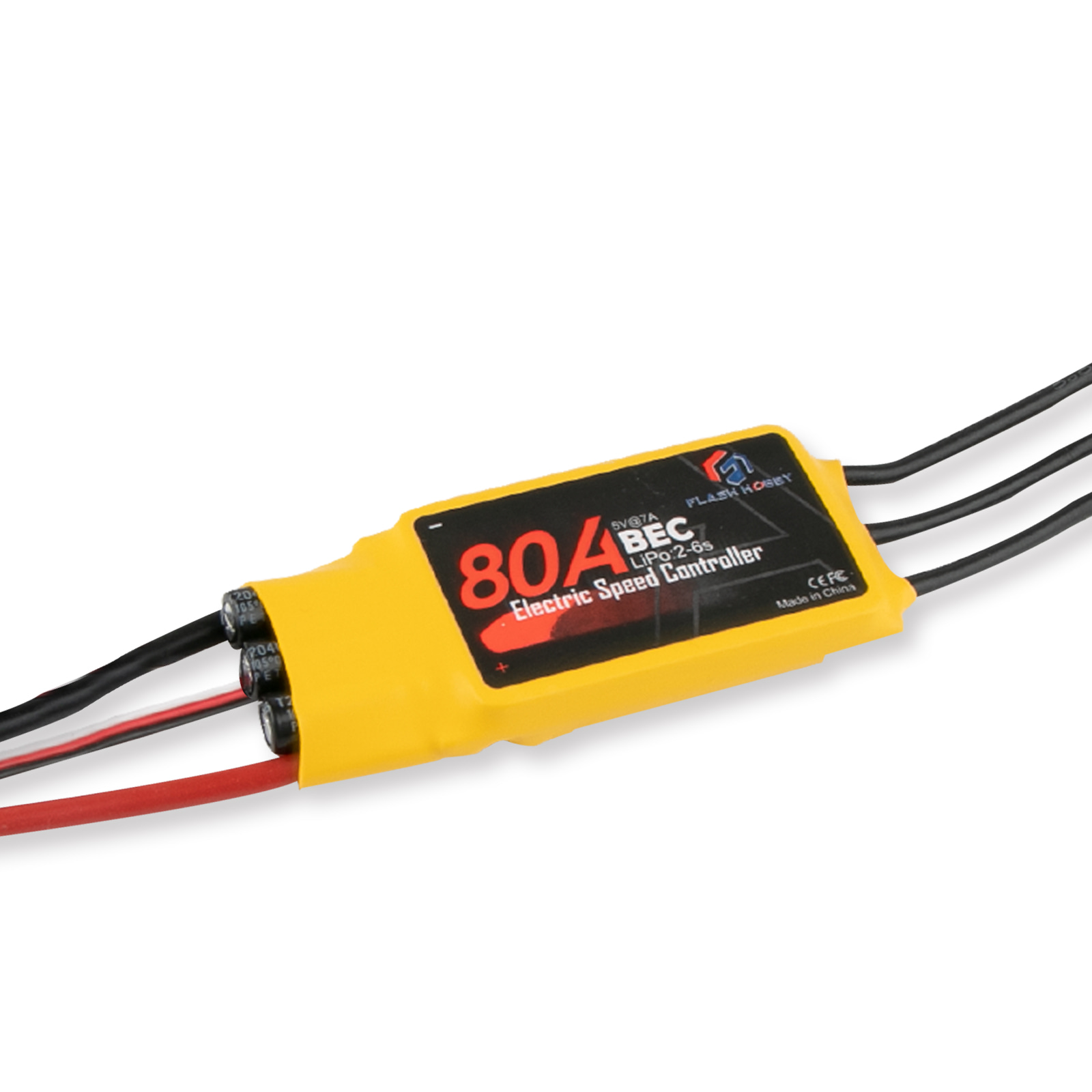
What Is an Airplane ESC?
An Airplane ESC (Electronic Speed Controller) is an electronic device used to regulate the speed of a brushless or brushed motor in RC airplanes. It acts as the communication bridge between the receiver, battery, and motor.
The ESC receives throttle signals from the transmitter and adjusts the motor speed accordingly. Without an ESC, the motor cannot operate safely or efficiently.
Main Functions of an Airplane ESC
- Motor speed control
- Voltage regulation
- Battery protection
- Heat management
- Brake functionality
- Stable power output
- Flight safety enhancement
A high-quality Airplane ESC ensures smoother acceleration, responsive throttle control, and longer motor lifespan.
Why Is Airplane ESC Important in RC Aircraft?
The performance of an RC airplane heavily depends on power delivery accuracy. A poor-quality ESC may cause overheating, unstable throttle response, or even sudden flight failure.
Key Benefits of Using a High-Quality Airplane ESC
| Feature | Benefit |
|---|---|
| Smooth Throttle Response | Better flight precision |
| Efficient Power Conversion | Longer flight time |
| Overheat Protection | Increased safety |
| Stable Current Output | Improved motor lifespan |
| Lightweight Design | Better aircraft balance |
| Fast Signal Processing | Quick pilot response |
An advanced Airplane ESC can dramatically improve the overall flying experience, especially for competitive pilots and FPV enthusiasts.
How Does an Airplane ESC Work?
The Airplane ESC controls motor speed by rapidly switching electrical pulses to the motor windings. The throttle signal from the receiver determines how much power the ESC delivers to the motor.
Basic Working Process
- Battery supplies power to ESC
- Receiver sends throttle command
- ESC interprets signal
- ESC adjusts motor speed
- Motor drives the propeller
Modern brushless Airplane ESC systems use advanced firmware algorithms for smoother startup, precise timing adjustment, and intelligent current management.
Brushless ESC vs Brushed ESC
Choosing the correct ESC depends on your motor type.
| Type | Brushless ESC | Brushed ESC |
|---|---|---|
| Efficiency | High | Moderate |
| Speed Control | Precise | Basic |
| Maintenance | Low | Higher |
| Lifespan | Longer | Shorter |
| Application | Modern RC aircraft | Entry-level models |
| Performance | Excellent | Standard |
Today, most RC airplanes use brushless systems because they provide higher efficiency and stronger performance.
What Features Should You Look for in an Airplane ESC?
Selecting the right Airplane ESC requires understanding your aircraft's power system and flying requirements.
Important ESC Features
1. Current Rating
The ESC must support the motor's maximum current demand.
Examples:
- 20A ESC for small park flyers
- 40A–60A ESC for sport airplanes
- 80A+ ESC for large aerobatic aircraft
2. Battery Compatibility
Most modern Airplane ESC products support:
- 2S LiPo
- 3S LiPo
- 4S LiPo
- 6S LiPo configurations
3. BEC Function
A Battery Eliminator Circuit (BEC) powers the receiver and servos directly from the flight battery.
4. Thermal Protection
High-performance ESC systems include:
- Overheat protection
- Low-voltage cutoff
- Over-current protection
5. Programmability
Advanced users prefer programmable ESCs for:
- Timing adjustment
- Brake settings
- Startup power
- Throttle curve customization
Applications of Airplane ESC
Airplane ESC products are widely used in different RC aircraft categories.
Common Applications
- RC trainer airplanes
- Aerobatic aircraft
- EDF jets
- FPV airplanes
- Gliders
- Scale model aircraft
- Long-range UAV platforms
Different aircraft require different ESC specifications depending on power demand and flight style.
Why Choose Flash Hobby Technology Co.,Limited?
As a professional RC electronics manufacturer, Flash Hobby Technology Co.,Limited focuses on delivering reliable and high-performance Airplane ESC products for global RC enthusiasts.
Advantages of Flash Hobby Technology Co.,Limited
- Advanced manufacturing technology
- Strict quality control
- Stable product performance
- Competitive pricing
- Professional technical support
- Wide product compatibility
- Continuous product innovation
The company provides ESC solutions suitable for beginners, hobbyists, and professional RC pilots.
How Can a Good Airplane ESC Improve Flight Performance?
A premium Airplane ESC directly improves multiple aspects of flight operation.
Flight Improvements Include
Faster Throttle Response
Quick acceleration allows better maneuverability during aerobatics and racing.
Better Energy Efficiency
Efficient ESC systems reduce power loss and increase flight duration.
Reduced Heat Generation
Lower operating temperatures improve system reliability.
Enhanced Flight Stability
Stable current output minimizes unexpected motor fluctuations.
Longer Equipment Lifespan
Motors and batteries experience less stress under optimized power delivery.
Common Problems Caused by Low-Quality ESCs
Using an inferior ESC may result in serious performance issues.
Common ESC Problems
- Motor stuttering
- Overheating
- Power interruption
- Poor throttle linearity
- Sudden shutdown
- Reduced battery efficiency
Choosing a trusted supplier like Flash Hobby Technology Co.,Limited helps reduce these risks significantly.
Maintenance Tips for Airplane ESC
Proper maintenance extends the lifespan of your Airplane ESC.
ESC Maintenance Checklist
- Keep ESC clean and dry
- Ensure proper airflow cooling
- Check solder joints regularly
- Avoid overload operation
- Use compatible batteries
- Update firmware when available
Regular inspection improves reliability and flight safety.
Future Trends of Airplane ESC Technology
RC aviation technology is evolving rapidly, and ESC systems are becoming smarter and more efficient.
Future Development Directions
- AI-assisted power management
- Intelligent temperature monitoring
- Higher switching frequencies
- Lightweight compact designs
- Advanced telemetry integration
- Improved efficiency for longer flights
Manufacturers are continuously optimizing ESC performance to meet the growing demands of modern RC pilots.
Conclusion
The Airplane ESC is one of the most critical components in any RC aircraft power system. It controls motor efficiency, flight stability, and overall aircraft responsiveness. Choosing a reliable ESC not only improves performance but also protects valuable RC equipment from electrical damage.
With advanced engineering, reliable manufacturing, and professional support, Flash Hobby Technology Co.,Limited continues to provide high-quality Airplane ESC solutions for customers worldwide. Whether you are building a beginner RC airplane or a high-performance aerobatic aircraft, selecting the right ESC is essential for achieving the best flying experience.
If you are looking for reliable and efficient Airplane ESC products for your RC aircraft projects, please contact us today to learn more about our latest solutions and professional support services.