

What Industry Standards Govern the Testing and Qualification of Flat Wire Ribbon Cable
2026-03-26
In the world of high-density electronic interconnects, reliability is non-negotiable. For engineers and procurement specialists, understanding the rigorous industry standards that govern the testing and qualification of Flat Wire Ribbon Cable is essential to ensuring system performance, safety, and longevity. At DAYA, we specialize in manufacturing Flat Wire Ribbon Cable solutions that not only meet but exceed these stringent requirements, delivering consistent quality for automotive, industrial, and consumer electronics applications.
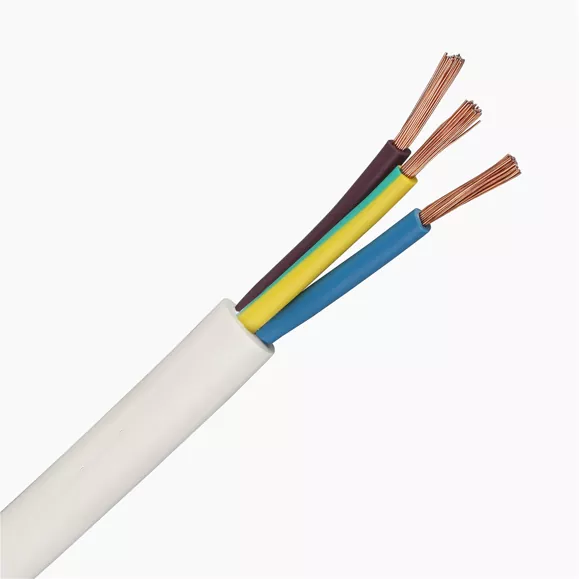
Key Industry Standards for Flat Wire Ribbon Cable
The qualification of Flat Wire Ribbon Cable involves a combination of material specifications, mechanical testing, electrical performance validation, and environmental compliance. Below are the primary standards that guide the industry.
| Standard | Scope | Key Testing Areas |
|---|---|---|
| IPC/WHMA-A-620 | Requirements and Acceptance for Cable and Wire Harness Assemblies | Mechanical crimping, soldering, dimensional integrity, and workmanship |
| UL 758 | Appliance Wiring Material | Flammability (VW-1), insulation resistance, dielectric voltage withstand |
| UL 1581 | Reference Standard for Electrical Wires, Cables, and Flexible Cords | Conductor resistance, aging tests, deformation under heat, cold bend |
| ISO 6722 | Road vehicles – 60 V and 600 V single-core cables | Thermal aging, abrasion resistance, fluid compatibility, short-circuit performance |
| MIL-DTL-49055 | General Specification for Flat Cable (Military Grade) | Flex endurance, temperature cycling, moisture resistance, vibration |
| IEC 60754 | Test on gases evolved during combustion of materials from cables | Halogen content, acidity, and smoke density |
Testing and Qualification Protocols
Compliance with these standards requires a systematic approach to testing. Flat Wire Ribbon Cable undergoes a battery of evaluations to validate its performance in real-world environments.
Electrical Testing
-
Continuity and Short-Circuit Testing: Ensures all conductors are intact with no unintended connections.
-
Dielectric Withstand Voltage (DWV): Confirms insulation integrity under high voltage stress.
-
Insulation Resistance: Measures resistance values under specified humidity and temperature conditions.
Mechanical Testing
-
Flexural Endurance: Simulates repeated bending to assess conductor fatigue life.
-
Tensile Strength and Elongation: Validates that the cable can withstand installation stresses.
-
Crimp Pull-Force: Ensures terminal connections meet minimum mechanical retention requirements.
Environmental Testing
-
Thermal Aging: Exposes the cable to elevated temperatures to predict long-term reliability.
-
Humidity and Temperature Cycling: Evaluates performance under rapid environmental changes.
-
Fluid Resistance: Tests resistance to oils, coolants, and solvents—critical for automotive applications.
Flat Wire Ribbon Cable FAQ
What are the most critical tests for Flat Wire Ribbon Cable in automotive applications?
For automotive environments, the most critical tests are defined under ISO 6722 and USCAR specifications. These include thermal aging at 125°C or higher to simulate under-hood conditions, fluid immersion tests to resist oil and gasoline, and abrasion resistance to ensure durability during vehicle assembly and operation. Additionally, short-circuit and overload testing validate that the cable can handle transient electrical events without insulation breakdown. DAYA designs its Flat Wire Ribbon Cable with cross-linked insulation materials to meet these rigorous demands.
How does UL certification impact the selection of Flat Wire Ribbon Cable?
UL certification is a critical safety benchmark. When a Flat Wire Ribbon Cable is UL listed under standards such as UL 758 and UL 1581, it means the cable has passed flammability tests like VW-1 (vertical wire flame test), as well as temperature rating verification and long-term insulation resistance testing. For manufacturers, using UL-certified cable simplifies compliance with end-product safety certifications (e.g., UL 60950 for IT equipment) and is often a mandatory requirement for electrical inspectors. DAYA offers a full range of UL-recognized Flat Wire Ribbon Cable to streamline customer approval processes.
What is the difference between military-grade and commercial-grade Flat Wire Ribbon Cable qualification?
Military-grade qualification, such as MIL-DTL-49055, imposes significantly tighter tolerances and more extreme test conditions than commercial standards. For example, military-grade cables must withstand a wider temperature range (typically -55°C to +125°C or beyond), higher flex cycle counts (thousands of cycles), and more rigorous moisture resistance testing including immersion and salt spray. Commercial-grade cables, while still reliable, are typically tested under less severe conditions suitable for indoor electronics and consumer devices. DAYA maintains separate production protocols for commercial and high-reliability Flat Wire Ribbon Cable to match the specific qualification needs of each market segment.
Why Compliance Matters
Selecting a Flat Wire Ribbon Cable that is fully compliant with applicable standards reduces field failures, simplifies regulatory approvals, and ensures compatibility with automated assembly equipment. Non-compliant cables may lead to intermittent connections, insulation breakdown, or fire hazards—risks that are unacceptable in mission-critical systems.
At DAYA, every Flat Wire Ribbon Cable is engineered with traceable materials, in-process inspections, and final verification to align with the standards outlined above. Our commitment to quality ensures that whether your application requires automotive-grade durability or high-density signal integrity, you receive a solution built for reliability.
Contact Us
Ready to specify Flat Wire Ribbon Cable that meets the highest industry standards for your next project? Contact DAYA today to speak with our engineering team, request sample kits, or discuss custom configurations tailored to your qualification requirements. Let us help you build with confidence.