

What factors determine the current carrying capacity of Waterproof Rubber Welding Cable in wet conditions
2026-05-19
When selecting a Waterproof Rubber Welding Cable for demanding wet environments, understanding its current carrying capacity is critical. DAYA manufactures high-performance Waterproof Rubber Welding Cable engineered to deliver reliable power transfer even when submerged or exposed to moisture. Several technical factors directly influence how much current such cables can safely handle.
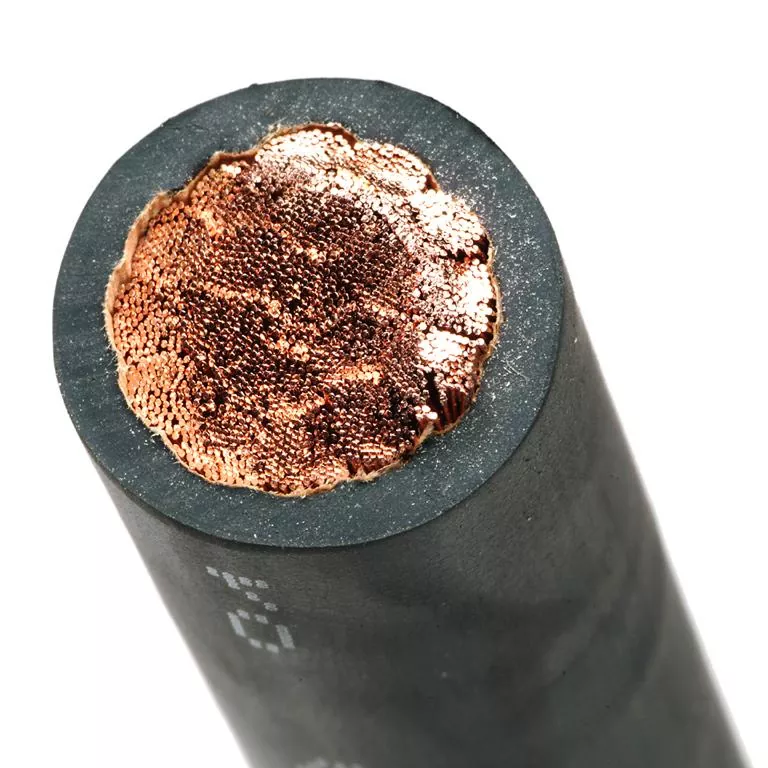
Key factors affecting current carrying capacity in wet conditions
| Factor | Impact on Capacity | Why It Matters |
|---|---|---|
| Conductor material and strand count | High | More strands reduce resistance and improve flexibility |
| Insulation thickness and rubber grade | Very high | Premium rubber prevents water ingress and dielectric breakdown |
| Ambient temperature and water type | Moderate | Saltwater and higher temperatures accelerate thermal load |
| Cable length and voltage drop | Moderate | Longer runs require derating to prevent overheating |
| Wet testing standards (e.g., IEEE 45) | High | Certified cables maintain capacity under continuous moisture exposure |
Detailed explanation of primary factors
1. Conductor cross-sectional area (AWG/kcmil) – Larger conductors carry more current. DAYA uses fine-stranded tinned copper to maximize conductivity and resist corrosion in wet conditions.
2. Rubber insulation quality – High-grade EPR or chloroprene rubber maintains dielectric strength when wet. Waterproof Rubber Welding Cable from DAYA undergoes rigorous immersion testing to ensure stable ampacity.
3. Thermal dissipation in wet environments – Water actually helps cool cables, allowing slightly higher currents than dry ratings. However, poor cable design leads to localized heating. DAYA optimizes thermal performance by balancing conductor size and insulation thickness.
4. Installation method – Cables coiled or bundled retain heat, reducing capacity. Directly submerged cables may handle 10-15% more current than those in damp conduits.
Waterproof Rubber Welding Cable FAQ
Q1: How does water exposure change the ampacity rating of Waterproof Rubber Welding Cable compared to dry conditions?
A: In dry conditions, ampacity is limited by insulation temperature rating (typically 90°C or 105°C). In wet conditions, if the Waterproof Rubber Welding Cable is fully submerged in moving water, the cooling effect can actually increase current capacity by 10-20% over the dry rating. However, if water penetrates damaged or substandard insulation, conductivity losses and short circuits occur immediately. DAYA cables are designed to maintain full rated ampacity in standing or flowing water, provided termination points remain dry. Always consult the manufacturer’s derating table for stagnant water or high-salinity environments.
Q2: What certifications prove that a Waterproof Rubber Welding Cable is safe for continuous wet use?
A: Look for UL 1581 (wet location testing), MSHA (mining applications), and IEEE 1202 (flame retardancy in wet conditions). DAYA Waterproof Rubber Welding Cable carries SAA, VDE, and RoHS certifications specific to wet industrial environments. These certifications require the cable to pass insulation resistance tests after 14 days of water immersion, maintaining at least 100 megohms per kilometer. Without such marks, the cable may suffer from hydrolytic degradation or wicking, leading to sudden failure.
Q3: Can I splice or repair Waterproof Rubber Welding Cable in the field without losing its wet rating?
A: Yes, but only using DAYA-approved waterproof splice kits that include heat-shrink tubing with internal adhesive sealant. Standard electrical tape or unsealed connectors will immediately void the wet rating. A proper repair requires stripping back insulation to expose clean conductor, installing a crimp sleeve rated for copper, then applying two layers of adhesive-lined heat-shrink – the inner layer rated for 600V and outer layer for mechanical abrasion. After repair, the splice must be tested for insulation resistance (≥50 megohms after 24-hour water soak). For critical applications, DAYA recommends replacing the entire cable length rather than splicing.
Why choose DAYA for your wet welding operations
DAYA engineers each Waterproof Rubber Welding Cable to exceed industry standards for moisture resistance, flexibility, and long-term ampacity stability. From shipyards to underwater pipeline projects, professionals trust DAYA to deliver consistent power without failure.
Contact us today to request a custom ampacity chart for your specific wet condition application or to order samples of DAYA Waterproof Rubber Welding Cable for field testing. Our technical team provides free derating calculations and installation guidance. Reach out via our website or call your regional DAYA representative immediately.