

What Engineering Standards Govern the Design of Ground Cables for Long Span Bridges
2026-04-02
When it comes to ensuring the safety and longevity of long span bridges, few components are as critical yet overlooked as the grounding system. Ground Cable For Bridge applications must withstand extreme environmental conditions, dynamic loads, and potential lightning strikes while maintaining continuous electrical conductivity. At Quande, we specialize in engineering grounding solutions that meet the most stringent international standards, ensuring that bridge infrastructure remains protected throughout its operational life.
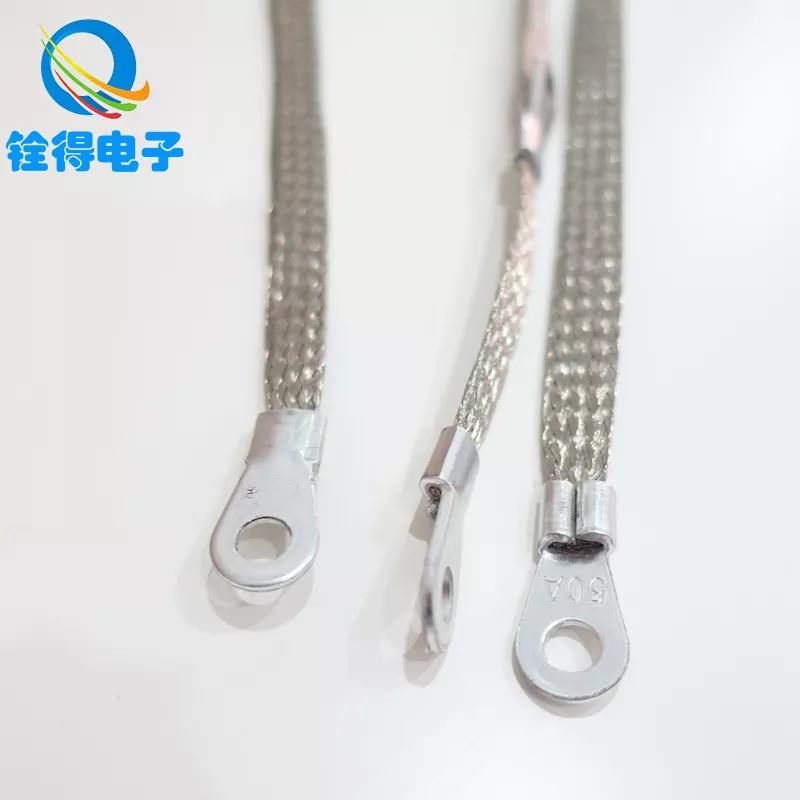
The Regulatory Framework for Bridge Grounding Systems
The design of grounding systems for long span bridges is governed by a comprehensive set of international and regional standards. These documents establish requirements for material selection, installation methods, testing protocols, and long-term performance monitoring. Below is an overview of the primary standards that engineers must consider:
| Standard | Scope | Key Requirements |
|---|---|---|
| IEEE 80 | AC substation grounding | Defines safety criteria for step and touch voltages, applicable to bridge substations and electrical equipment |
| IEC 62305 | Lightning protection | Specifies requirements for external lightning protection systems, including down conductors and earth termination networks |
| NFPA 780 | Lightning protection systems | Provides installation standards for structural lightning protection on bridges and other critical infrastructure |
| BS EN 50164 | Lightning protection components | Covers testing and performance criteria for conductors, connectors, and earth electrodes |
| AASHTO LRFD | Bridge design specifications | Includes provisions for electrical systems and grounding within bridge structural elements |
| IEEE 142 | Industrial and commercial power systems | Offers guidance on grounding methods for facilities and associated infrastructure |
Material and Installation Requirements
The selection of materials for Ground Cable For Bridge systems directly impacts long-term reliability. Standards mandate that conductors possess high corrosion resistance, mechanical strength, and thermal stability. Copper-clad steel and tinned copper are commonly specified for their ability to withstand both galvanic corrosion and mechanical stresses from bridge movement.
Installation practices are equally critical. Standards require that all connections be made using compression lugs or exothermic welding, as mechanical clamps can loosen under vibration. Quande adheres to these requirements by manufacturing grounding components that exceed the mechanical and electrical performance thresholds outlined in IEC 62561 and UL 467.
Testing and Maintenance Protocols
Compliance with engineering standards extends beyond initial installation. Periodic testing is required to verify continuity and earth resistance values. IEEE 81 outlines methods for measuring soil resistivity and grounding system impedance, while NFPA 780 mandates visual inspections at defined intervals. For long span bridges, where access is challenging, standards increasingly recommend remote monitoring systems that provide real-time data on grounding system integrity.
Ground Cable For Bridge FAQ
What are the primary risks if a long span bridge lacks a properly designed grounding system?
The absence of a properly designed grounding system exposes a long span bridge to multiple critical risks. First, lightning strikes can cause structural damage, including pitting of steel components, delamination of concrete, and damage to embedded sensors or expansion joints. Second, without effective grounding, stray currents from traction power systems or nearby electrical infrastructure can accelerate corrosion of reinforcing steel and structural cables, compromising the bridge’s load-bearing capacity. Third, step and touch voltages during fault conditions pose serious safety hazards to maintenance personnel and the public. In extreme cases, inadequate grounding can lead to catastrophic failure of monitoring equipment, leaving bridge operators blind to structural health conditions. A properly engineered system, such as those provided by Quande, mitigates these risks through redundant pathways, corrosion-resistant materials, and strict adherence to applicable standards.
How do engineers determine the appropriate size and configuration for grounding cables on a suspension bridge?
Engineers determine the size and configuration of Ground Cable For Bridge systems by analyzing several interdependent factors. The process begins with a site-specific soil resistivity survey to understand the earth’s conductivity at the bridge location. Next, fault current calculations are performed to establish the maximum potential current that the grounding system must safely dissipate. The configuration must account for the bridge’s structural geometry—suspension bridges often require continuous grounding conductors running the full length of the deck, with additional down conductors at towers and anchorages to create a distributed earth network. Standards such as IEEE 80 provide formulas for calculating conductor cross-sectional area based on fault current magnitude and fault duration. Engineers also evaluate mechanical loads, including wind-induced vibration and thermal expansion, to ensure that cable routing and support systems prevent fatigue failure. Quande assists in this design phase by providing detailed technical data on conductor ampacity, tensile strength, and corrosion performance under specific environmental conditions.
What certifications and testing should buyers look for when sourcing grounding cables for bridge infrastructure projects?
When sourcing Ground Cable For Bridge products, buyers should prioritize components that carry recognized third-party certifications and have undergone rigorous testing. Key certifications include UL 467 for grounding and bonding equipment, which verifies mechanical and electrical performance; IEC 62561 for lightning protection system components, which ensures suitability for external lightning protection applications; and ISO 9001 for manufacturing quality management systems. Testing documentation should include proof of tensile strength tests, salt spray corrosion resistance testing (typically ASTM B117), and thermal cycling tests to verify connection integrity under temperature variations. For projects requiring exothermic welding, certifications should confirm that the process meets IEEE 837 standards for permanent connections. Quande maintains full traceability on all products, supplying comprehensive test reports and certification documentation that align with the specific requirements of bridge engineering firms and government transportation authorities.
Conclusion
Selecting the right grounding system for a long span bridge requires a thorough understanding of applicable engineering standards, material science, and site-specific conditions. From IEEE 80 to IEC 62305, each standard contributes to a framework that ensures safety, reliability, and longevity. Quande brings decades of expertise in manufacturing and supplying Ground Cable For Bridge solutions that meet these rigorous requirements, with a commitment to quality that infrastructure projects demand.
Contact us today to discuss your bridge grounding requirements and request technical documentation tailored to your project specifications.