

What Are the Key Tolerances to Specify When Ordering Precision Machinery Spring Wire
2026-08-27
When sourcing Precision Machinery Spring Wire, the difference between a component that performs flawlessly for a decade and one that fails prematurely often comes down to a single document: the tolerance specification. For engineers, procurement specialists, and quality managers at Dingyan, understanding which dimensional, mechanical, and surface tolerances to define upfront is not just a technical exercise—it is a risk-mitigation strategy. The wrong tolerance on wire diameter, ovality, or tensile strength can lead to coiling rejects, inconsistent spring rates, and field failures that cost far more than the wire itself.
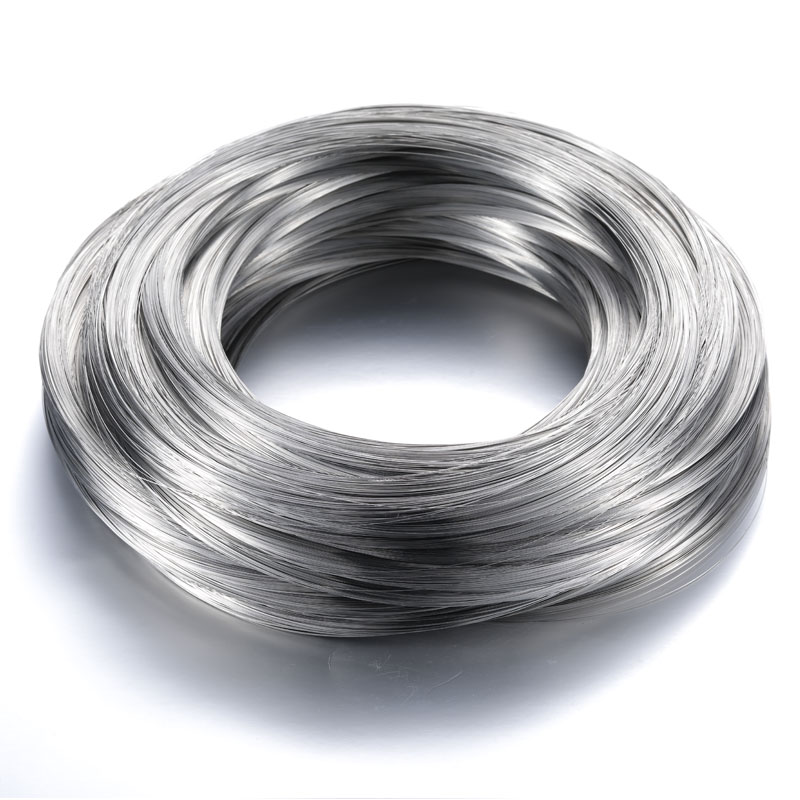
Why Tolerances Are the Backbone of Spring Performance
Precision Machinery Spring Wire is manufactured to exacting standards because it directly influences spring constant, load-deflection behavior, and fatigue resistance. Unlike standard commercial wire, precision grades demand tighter controls across multiple parameters. Below are the critical tolerance categories every buyer must specify.
1. Diameter Tolerance (Primary Dimension)
The most fundamental specification is the wire diameter, typically measured in millimeters or inches. For Precision Machinery Spring Wire, standard tolerances follow ISO 8458 or ASTM A227, but precision applications often require half or even quarter of these general ranges.
| Diameter Range (mm) | General Tolerance (mm) | Precision Tolerance (mm) | Typical Application |
|---|---|---|---|
| 0.10 – 0.50 | ±0.010 | ±0.004 | Medical springs, micro-actuators |
| 0.51 – 1.00 | ±0.015 | ±0.006 | Fuel injection components |
| 1.01 – 3.00 | ±0.020 | ±0.008 | Automotive valve springs |
| 3.01 – 6.00 | ±0.030 | ±0.012 | Industrial suspension systems |
Note: Dingyan recommends always requesting a statistical process control (SPC) report with CpK ≥ 1.33 for critical diameter tolerances.
2. Ovality (Non-Roundness)
Even if the average diameter is correct, ovality—the deviation from a true circle—can cause erratic coiling and variable stress distribution. For Precision Machinery Spring Wire, ovality should not exceed 50% of the diameter tolerance. For example, if your diameter tolerance is ±0.006 mm, the maximum ovality should be ≤0.003 mm.
3. Tensile Strength Range
Unlike structural steel, spring wire relies on controlled tensile strength to achieve the desired elastic limit. Specify both a minimum and a maximum, not a single target. A spread of 50–80 MPa is typical for precision grades, while wider spreads (150+ MPa) are acceptable for general use.
| Grade | Tensile Range (MPa) | Application Context |
|---|---|---|
| Music wire (SWP-B) | 2,100 – 2,180 | High-cycle fatigue springs |
| Oil-tempered (SAE 9254) | 1,850 – 1,920 | Automotive suspensions |
| Stainless 302 | 1,600 – 1,680 | Corrosive environments |
4. Surface Defect Depth and Decarburization
For Precision Machinery Spring Wire, surface integrity is non-negotiable. Specify maximum allowable defect depth (e.g., ≤0.02 mm) and decarburization depth (≤1% of diameter for carbon steels). Dingyan utilizes eddy-current testing to detect microscopic seams and laps that escape visual inspection.
5. Straightness and Cast
Cast refers to the wire’s tendency to form a coil when laid flat. While some cast is helpful for coiling, excessive cast complicates automatic feeding. Specify a maximum cast diameter (e.g., ≤1,000 mm) and straightness deviation (≤1 mm per 1,000 mm length).
6. Coating/Plating Thickness Tolerance
If your Precision Machinery Spring Wire is zinc-plated, phosphate-coated, or nickel-plated, define the coating thickness range (e.g., 5–8 µm) and adhesion test requirements. Variations in coating thickness can alter effective diameter by up to 0.02 mm, which is significant at precision scales.
Frequently Asked Questions About Precision Machinery Spring Wire
FAQ 1: What happens if I specify tolerances that are too tight for my application?
Overspecifying tolerances—for example, demanding ±0.002 mm on a 3 mm wire—dramatically increases cost and lead time because it requires specialized drawing dies, more frequent gauge changes, and 100% sorting. More importantly, it does not improve performance if your coiling equipment cannot hold that level of consistency. Dingyan always advises matching tolerance classes to your downstream forming capability. A practical rule: set your diameter tolerance at 5–10% of the spring’s allowable load variation. This ensures you pay only for what your manufacturing process actually needs.
FAQ 2: How do I verify that the delivered Precision Machinery Spring Wire meets the specified tolerances?
Verification requires a combination of incoming inspection methods. For diameter and ovality, use a laser micrometer with a rotating fixture, taking readings at four angular positions every 500 mm of coil length. For tensile strength, prepare three specimens per heat lot and test per ASTM E8. Surface defects demand either eddy-current arrays or a magnetic particle inspection for ferrous grades. Dingyan provides a certified test report (CTR) with each shipment, including raw data from every test station. We also recommend a first-article inspection (FAI) for new diameters—a one-time intensive validation that establishes baseline process capability.
FAQ 3: Can I combine multiple tolerance requirements into a single purchase order without confusing the mill?
Absolutely—but only if you structure your order using a clear technical datasheet. The datasheet should list diameter, ovality, tensile range, surface max defect depth, cast limit, and coating thickness in separate rows with unambiguous units. Avoid narrative paragraphs; use bulleted lists and tables. Dingyan offers a standardized tolerance worksheet that maps your spring drawing requirements directly to wire parameters, leaving no room for interpretation. When you submit that worksheet with your PO, the mill routes it to the same quality engineer who oversees setup, in-process checks, and final release—ensuring your combined tolerances are treated as a single, integrated specification.
Putting It All Together: A Practical Checklist
Before you finalize your next order for Precision Machinery Spring Wire, confirm that your specification covers:
-
□
Diameter tolerance (with upper/lower limits)
-
□
Ovality (as a separate line item)
-
□
Tensile strength range (min–max, not nominal)
-
□
Surface defect depth and decarburization (with test method)
-
□
Straightness and cast requirements
-
□
Coating type and thickness tolerance (if applicable)
-
□
Sampling plan (AQL level and lot size)
-
□
Documentation requirements (CTR, SPC charts, FAI)
Why Partner with Dingyan for Your Precision Wire Needs
With over a decade of metallurgical and coiling expertise, Dingyan does not simply supply Precision Machinery Spring Wire—we consult on tolerance optimization, conduct feasibility reviews, and share real-world coiling data from our own test lab. Our in-house drawing capabilities allow us to adjust diameter, ovality, and tensile properties in small batches before scaling to full production, saving you from expensive trial-and-error cycles.
Contact Us Today to Define Your Tolerance Blueprint
Every spring application has its own “critical few” tolerances—the ones that truly determine success. Dingyan is ready to review your current specifications, recommend tighter or looser ranges where sensible, and deliver Precision Machinery Spring Wire that fits your coiling line and your quality targets. Reach out to our engineering team with your spring drawing or existing PO requirements. Let us turn your tolerance table into a reliable, repeatable reality. Contact us now for a technical consultation and a no-obligation sample quote—your next precision project deserves a wire partner who speaks the language of micrometers.