

What are the key differences between EPDM and neoprene rubber insulated welding cable
2026-06-02
When selecting a Rubber Insulated Welding Cable for demanding industrial environments, understanding material science is critical. DAYA provides high-performance Rubber Insulated Welding Cable solutions that rely on two dominant elastomers: EPDM and neoprene. While both offer flexibility and durability, their chemical and physical properties determine suitability for specific welding applications.
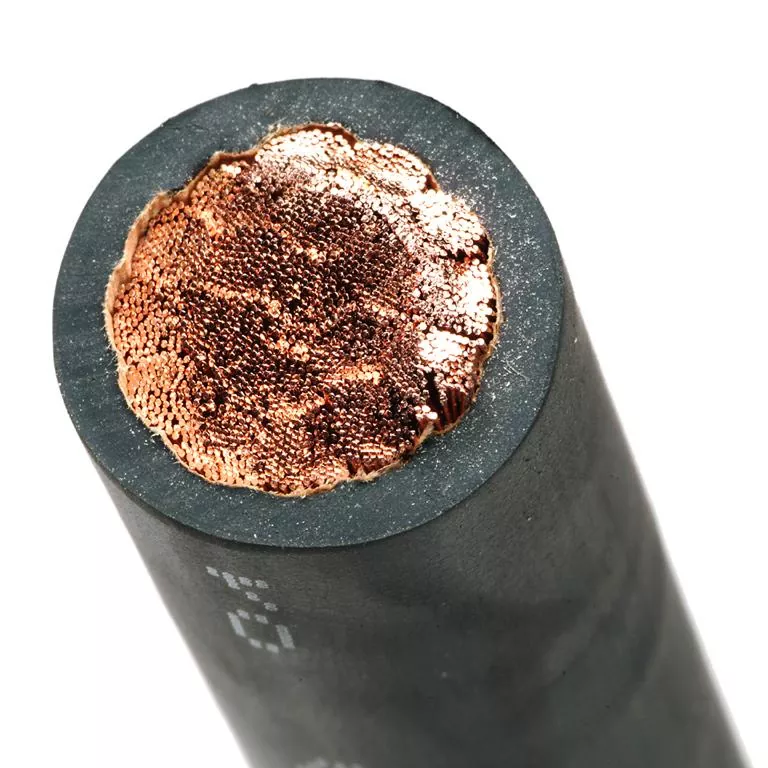
EPDM vs Neoprene: Technical comparison table
| Property | EPDM (Ethylene Propylene Diene Monomer) | Neoprene (Polychloroprene) |
|---|---|---|
| Temperature range | -40°C to +120°C | -35°C to +90°C |
| Ozone and UV resistance | Excellent | Moderate |
| Oil and fuel resistance | Poor | Good to excellent |
| Flame retardancy | Requires additives | Inherently self-extinguishing |
| Abrasion resistance | Good | Very good |
| Flexibility at low temperatures | Superior | Moderate |
| Water and steam resistance | Excellent | Good |
| Typical welding environment | Outdoor, wet, high-ozone areas | Workshop, oil-prone, high-wear zones |
EPDM insulated welding cable excels in outdoor construction sites, shipyards, and exposed locations where sunlight, ozone, and moisture dominate. Its resistance to weathering makes DAYA EPDM-based Rubber Insulated Welding Cable a reliable choice for extended outdoor use. Conversely, neoprene insulated welding cable performs better where contact with grease, hydraulic fluids, or fuel is unavoidable. Neoprene’s inherent flame resistance also adds safety in confined welding cells.
Mechanical and thermal behavior
Neoprene handles repeated drag and pinch better than EPDM, which is slightly softer. However, EPDM maintains flexibility far below freezing, preventing cable cracking in cold climates. For high-amperage welding generating conductor heat up to 90°C, both materials function safely, but EPDM provides a higher thermal margin. DAYA engineers select the jacket compound based on real-world failure data, ensuring each Rubber Insulated Welding Cable matches the hazard profile of your shop floor or field operation.
Frequently Asked Questions about Rubber Insulated Welding Cable
Q1: Can I use EPDM rubber insulated welding cable in environments with constant oil spray?
A1: No. EPDM has poor resistance to petroleum-based oils, greases, and solvents. Continuous exposure causes swelling, softening, and eventual jacket failure. For oily environments such as automotive assembly lines or hydraulic press areas, choose neoprene insulated Rubber Insulated Welding Cable. DAYA recommends verifying the specific oil type (mineral, synthetic, or biodiesel) before selection, as some synthetic oils may still degrade neoprene over extended contact.
Q2: How does UV exposure affect the service life of neoprene rubber insulated welding cable compared to EPDM?
A2: Neoprene degrades faster under direct sunlight and high-ozone conditions. Ultraviolet radiation breaks down the polymer chains, leading to surface cracking and loss of mechanical strength within 12–24 months of continuous outdoor exposure. EPDM resists UV and ozone intrinsically, maintaining flexibility and tensile strength for 5–7 years outdoors. For rooftop welding or coastal solar farms, DAYA always advises EPDM-jacketed Rubber Insulated Welding Cable to avoid premature replacement costs.
Q3: Is flame retardancy automatically guaranteed in all rubber insulated welding cable products?
A3: No. While neoprene is naturally flame-retardant and self-extinguishing, EPDM is inherently flammable. Manufacturers must add halogen-free flame retardant fillers to EPDM compounds to meet safety standards such as IEC 60332-1 or CSA C22.2. Always verify the specific certification on the Rubber Insulated Welding Cable datasheet. DAYA provides clearly marked flame test ratings for every cable type, ensuring compliance with OSHA and local electrical codes without assuming material properties.
Making the right selection
The decision between EPDM and neoprene for Rubber Insulated Welding Cable ultimately rests on your workplace chemistry and climate. EPDM suits outdoor, wet, high-UV, or cold storage environments. Neoprene fits indoor, oily, abrasive, or fire-risk areas. DAYA offers both formulations with identical copper stranding and voltage ratings, so changing the jacket material does not compromise electrical performance.
Contact us for a tailored recommendation on Rubber Insulated Welding Cable for your specific welding floor or field project. DAYA technical engineers provide free material selection guides, sample testing, and bulk quotation within 24 hours. Reach out today to secure the right cable for safety and longevity.