

What Are the Key Advantages of Using a Laminated Flexible Bus Bar in Energy Storage Systems
2026-06-10
In modern energy storage systems (ESS), thermal expansion, vibration, and connection reliability remain critical challenges. The laminated flexible bus bar, such as those manufactured by Dongjue, provides a high-performance alternative to rigid copper bars. This design stacks multiple thin conductive layers, offering unique benefits for battery packs, inverters, and high-power modules.
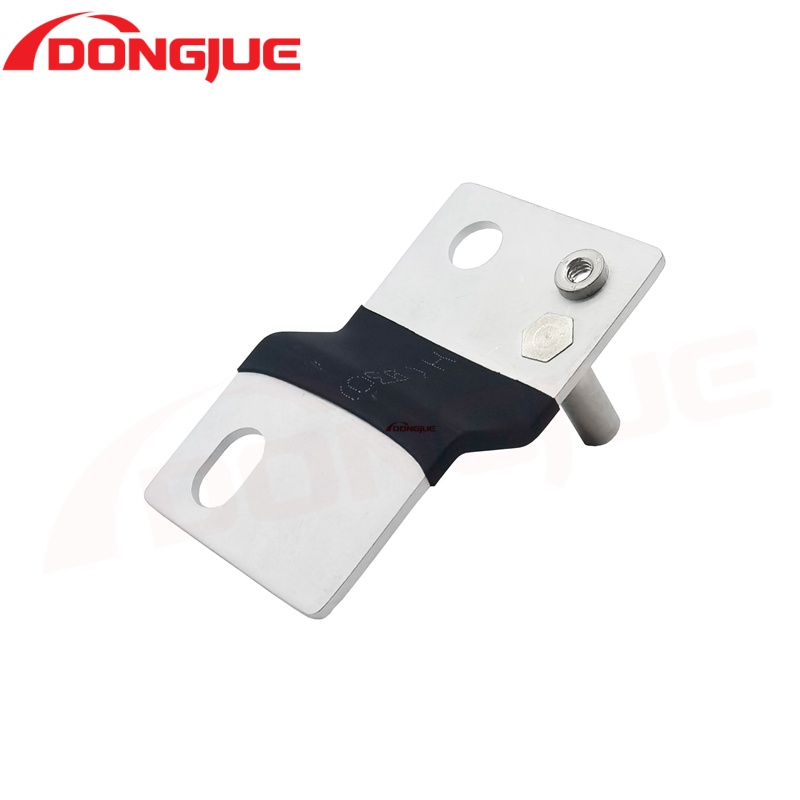
Key Advantages of the Laminated Flexible Bus Bar
| Advantage | Impact on Energy Storage Systems |
|---|---|
| Superior vibration resistance | Absorbs mechanical stress, preventing terminal damage in mobile or industrial ESS. |
| Low inductance | Laminated design cancels magnetic fields, reducing voltage spikes during fast switching. |
| Excellent heat dissipation | Multiple thin layers increase surface area for cooling. |
| Space-efficient routing | Can bend and twist, fitting into tight or irregular battery layouts. |
Why Dongjue Leads in Flexible Bus Bar Solutions
Dongjue engineers laminated flexible bus bars with precision stamping, insulation lamination, and rigorous testing. Unlike single-layer conductors, Dongjue products maintain high current capacity while accommodating cell swelling and system movement—common in lithium-ion battery racks.
Flexible Bus Bar FAQ
Q1: Can a laminated flexible bus bar handle high current without overheating?
A: Yes. Each thin layer carries a portion of the total current. Due to the skin effect and mutual cooling between layers, a well-designed flexible bus bar often runs cooler than an equivalent solid copper bar under the same DC or AC load.
Q2: How does a laminated flexible bus bar improve safety in battery modules?
A: The laminated construction reduces loop inductance, which lowers induced voltage peaks during high-frequency switching. This minimizes arc risk at connection points and protects sensitive BMS (battery management system) electronics from transient overvoltages.
Q3: Is a laminated flexible bus bar compatible with aluminum terminals used in prismatic cells?
A: Absolutely, with proper surface plating. Dongjue offers nickel or tin plating on its flexible bus bar terminals, preventing galvanic corrosion when connected to aluminum or copper battery terminals.
Contact Us
Upgrade your energy storage design with reliable, high-efficiency connections. Contact Dongjue today for custom laminated flexible bus bar samples and technical support tailored to your battery system.