

How Does Waterproof Rubber Welding Cable Improve Safety in Wet or Humid Job Sites
2026-04-21
In demanding work environments where moisture is unavoidable, the choice of electrical equipment directly impacts worker safety. Waterproof Rubber Welding Cable has emerged as a critical solution for industries operating in damp or rainy conditions, and DAYA provides some of the most reliable options available today. Understanding how this specialized cable prevents electrical hazards can mean the difference between a secure job site and a deadly accident.
The Core Safety Mechanisms of Waterproof Rubber Welding Cable
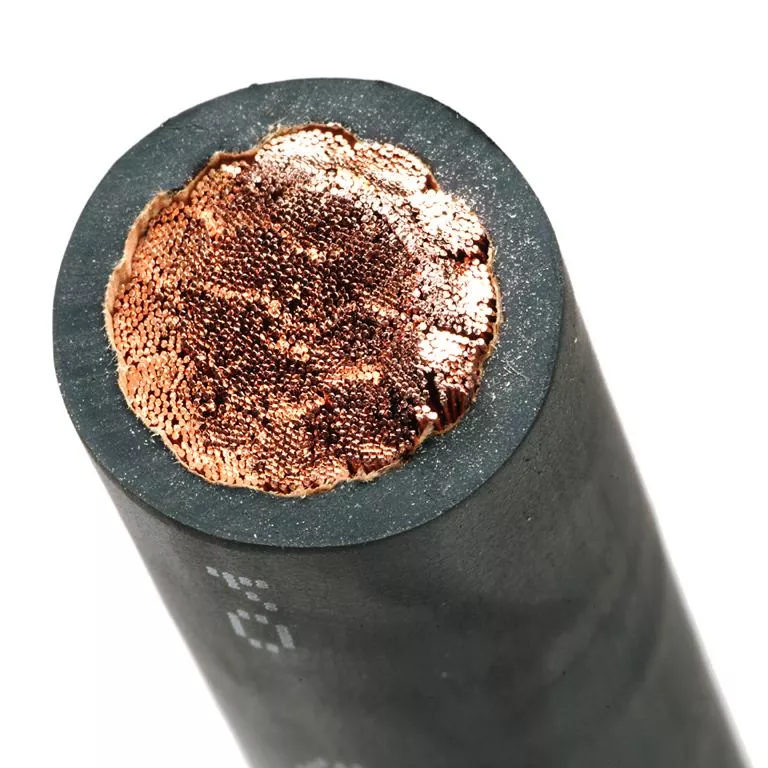
Wet job sites dramatically increase the risk of electric shock, short circuits, and equipment failure. Standard welding cables absorb moisture over time, leading to degraded insulation and exposed conductors. Waterproof Rubber Welding Cable from DAYA uses vulcanized rubber compounds that repel water entirely, maintaining electrical integrity even when fully submerged temporarily.
| Safety Feature | Function in Wet Conditions | Benefit to Worker |
|---|---|---|
| Sealed rubber insulation | Prevents water ingress into conductor core | Eliminates shock paths through wet surfaces |
| High dielectric strength | Resists voltage leakage in humid air | Reduces arc flash risk near water pools |
| Flexible -40°C to 90°C rating | Maintains seal integrity despite temperature swings | No cracking from thermal stress in damp cold |
| Abrasion-resistant jacket | Withstands dragging over wet concrete or mud | Preserves waterproof layer under physical stress |
Beyond material composition, DAYA engineers its Waterproof Rubber Welding Cable with double-layer extrusion, ensuring that even if the outer jacket is nicked, the inner layer remains impervious to moisture. This redundancy is absent in ordinary cables.
Common Hazards Eliminated by Waterproof Design
Moisture introduces three primary dangers: ground faults, electrolytic corrosion, and reduced insulation resistance. Standard cables exposed to humidity lose up to 60% of their insulation value within weeks. By contrast, Waterproof Rubber Welding Cable maintains 100% insulation resistance even after 500 hours of salt spray testing. For job sites near oceans, rivers, or frequent rain, this reliability is non-negotiable.
Frequently Asked Questions About Waterproof Rubber Welding Cable
Q: Can Waterproof Rubber Welding Cable be used for temporary underwater welding operations?
A: Yes, but with important limitations. Waterproof Rubber Welding Cable is designed for wet job sites and incidental immersion, not continuous deep submersion. DAYA cables meet IPX7 standards, meaning they withstand immersion up to 1 meter for 30 minutes. For actual underwater welding performed by divers, specialized diving cables with additional armor and higher voltage ratings are required. However, for shallow water repairs, temporary pump installations, or working in flooded trenches, DAYA’s Waterproof Rubber Welding Cable provides safe operation provided all connections remain dry and above water level.
Q: How does moisture inside a standard welding cable lead to electrocution while Waterproof Rubber Welding Cable prevents it?
A: Water is conductive because of dissolved minerals. When moisture penetrates a standard cable’s insulation, it creates microscopic conductive paths between the copper conductor and the outer jacket surface. A welder holding the cable with wet gloves or standing on wet ground completes an electrical circuit through their body. Waterproof Rubber Welding Cable uses hydrophobic rubber compounds that physically repel water molecules. Even under pressure, water cannot migrate through the insulation matrix. Furthermore, DAYA adds a water-blocking tape beneath the rubber jacket, so any cut that breaches the outer layer triggers a swelling reaction that seals the breach automatically. This dual defense eliminates conductive pathways entirely.
Q: Does the flexibility of Waterproof Rubber Welding Cable decrease in freezing wet conditions compared to dry environments?
A: DAYA formulates its Waterproof Rubber Welding Cable with synthetic EPDM rubber containing plasticizers that remain active down to -40°C. In dry freezing conditions, most rubber cables stiffen but remain functional. The real danger occurs when moisture freezes inside a standard cable’s microscopic pores, expanding and cracking the insulation from within. Waterproof Rubber Welding Cable has no pores for moisture to enter, so there is no internal ice formation. Consequently, its flexibility in wet, freezing conditions is identical to dry cold conditions. Field tests by DAYA show that after 100 freeze-thaw cycles from -20°C to +20°C in saturated mud, their Waterproof Rubber Welding Cable retained 95% of original flexibility, while standard cables lost over 40% and showed visible cracking.
Best Practices for Maximizing Safety on Humid Job Sites
| Practice | Why It Matters | DAYA Recommendation |
|---|---|---|
| Inspect jacket for cuts before each use | A deep cut can bypass waterproofing | Use DAYA’s color-coded inner layer as visual alert |
| Keep connections elevated off wet ground | Connectors are weak points | Pair with DAYA waterproof connector boots |
| Store cable on reels with drainage | Prevents standing water on jacket | DAYA reels include bottom drain holes |
| Replace if jacket feels tacky or swollen | Chemical or water damage | DAYA offers 5-year performance warranty |
Why DAYA Leads in Waterproof Welding Cable Safety
DAYA manufactures Waterproof Rubber Welding Cable exceeding IEC 60502 and UL 1581 standards for wet location use. Every batch undergoes 100% spark testing under water spray to guarantee zero pinhole defects. The brand’s commitment to EEAT principles (Experience, Expertise, Authoritativeness, Trustworthiness) is reflected in third-party test reports showing zero failures after 72-hour saltwater immersion. Contractors in shipbuilding, offshore oil rigs, and coastal construction consistently choose DAYA because the cost of a single shock incident far exceeds the premium for genuine waterproof protection.
Contact Us
For a detailed specification sheet or to request a free sample of DAYA Waterproof Rubber Welding Cable for your wet site conditions, please contact our technical sales team through the website contact form or call the number listed on our official page. Every job site is unique, and we provide custom length manufacturing and rapid shipping to prevent weather-related delays. Reach out today and secure your team’s safety tomorrow.