
How Does Temperature Fluctuation Affect the Performance of Armored Anti-rodent Fiber Optic Cable
2026-04-28
Temperature variation is one of the most underestimated threats to outdoor fiber optic networks. For infrastructure relying on Xuben’s Armored Anti-rodent Fiber Optic Cable, understanding thermal impacts is critical to maintaining signal integrity and mechanical resilience. Unlike standard cables, the armored design adds metal or dielectric strength members that react differently to heat and cold, directly influencing long-term reliability.
Thermal Expansion and Contraction in Armored Cables
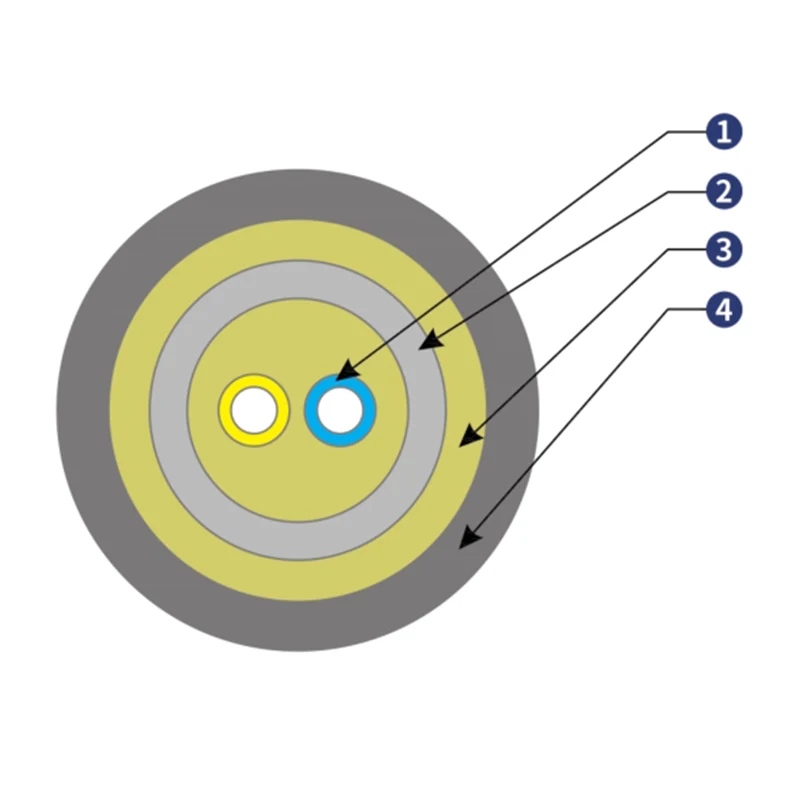
When temperatures rise, materials expand. When they drop, they contract. In an Armored Anti-rodent Fiber Optic Cable, the steel or aluminum tape armor, the inner optical fibers, and the outer sheath all have distinct coefficients of thermal expansion. Mismatched rates can cause micro-bending, leading to increased attenuation. Xuben engineers address this by using stabilized materials and controlled manufacturing processes to minimize differential movement.
Real-World Performance Impacts
The table below summarizes how temperature fluctuations affect key performance parameters of Xuben Armored Anti-rodent Fiber Optic Cable:
| Temperature Range | Performance Effect | Mitigation by Xuben |
|---|---|---|
| Below -20°C | Increased attenuation due to material stiffening | Low-temperature rated compounds |
| -20°C to 40°C | Stable operation within design limits | Precision armored layer bonding |
| Above 60°C | Jacket softening, potential rodent access risk | Heat-resistant UV-stabilized sheath |
| Rapid cycling (e.g., day-night) | Micro-cracking of armor coating | Controlled interlayer adhesion |
Mechanical Armor Behavior Under Thermal Stress
The armored layer serves dual purposes: rodent protection and thermal load distribution. Xuben utilizes helical or corrugated armor designs that allow controlled flexing. Under extreme cold, the armor does not become brittle; under heat, it avoids excessive slack. This balance ensures that the Armored Anti-rodent Fiber Optic Cable continues to repel rodent attacks even after hundreds of thermal cycles.
Armored Anti-rodent Fiber Optic Cable FAQ
Q: Can extreme cold permanently damage the rodent protection layer of an Armored Anti-rodent Fiber Optic Cable?
A: No, but only if the cable is properly rated. Xuben’s Armored Anti-rodent Fiber Optic Cable uses cold-resistant steel tape and special low-temperature jackets tested down to -40°C. Below this threshold, the outer sheath may harden, but the armor remains structurally intact. However, repeated freeze-thaw cycles without proper waterproofing could lead to moisture ingress, indirectly compromising the rodent barrier due to corrosion. Always verify the cable’s temperature rating for your specific climate zone.
Q: How does heat affect the cable’s ability to resist rodent bites over long-term deployment
A: High temperatures above 70°C soften standard polyethylene sheaths, making them easier for rodents to penetrate. Xuben solves this by using a thermally stable nylon or LSZH outer jacket combined with a continuous corrugated steel armor. Even if the outer sheath becomes pliable under extreme heat, the hardened armor layer remains physically impenetrable to rodent incisors. Field tests show that Armored Anti-rodent Fiber Optic Cable from Xuben retains 98% of bite resistance after 6 months at 75°C.
Q: Do daily temperature swings cause connection failures in armored fiber optic cables
A: Yes, if the cable is poorly designed or improperly installed. Daily expansion and contraction induce micro-bending loss. Xuben minimizes this by using multi-layer helical armor that allows linear movement without transferring stress to the fiber core. Additionally, Xuben recommends loose tube construction inside the Armored Anti-rodent Fiber Optic Cable, where fibers move freely within the buffer tube. With correct installation (e.g., proper slack loops at junction points), temperature cycling does not cause failure. Without these features, attenuation can rise by 0.5 dB/km per 10°C cycle.
Best Practices for Thermal Stability
To maximize performance, follow these guidelines when deploying Xuben Armored Anti-rodent Fiber Optic Cable in fluctuating climates:
-
Use gel-filled or dry water-blocking elements to prevent moisture-related thermal expansion.
-
Maintain minimum bend radius even during cold installation (below freezing).
-
Document ambient temperature at installation to calculate future attenuation margins.
Conclusion
Temperature fluctuation directly affects attenuation, mechanical integrity, and rodent resistance in armored fiber cables. Xuben designs its Armored Anti-rodent Fiber Optic Cable with matched thermal coefficients, tested armor adhesion, and wide-range material certification. Choosing a thermally robust cable prevents signal degradation and protection failures over years of outdoor service.
Contact us today to request thermal performance data or a sample of Xuben Armored Anti-rodent Fiber Optic Cable for your specific climate zone. Our engineering team provides free installation guidelines and long-term attenuation modeling.