

How Does Copper Braid Improve Electrical Connection Performance?
2026-07-27
Article Summary
Copper Braid is a flexible electrical connection solution widely used in power systems, industrial equipment, grounding applications, battery systems, and electronic devices. Its excellent conductivity, flexibility, vibration resistance, and heat dissipation capability make it an ideal choice for applications where traditional rigid conductors cannot provide reliable performance.
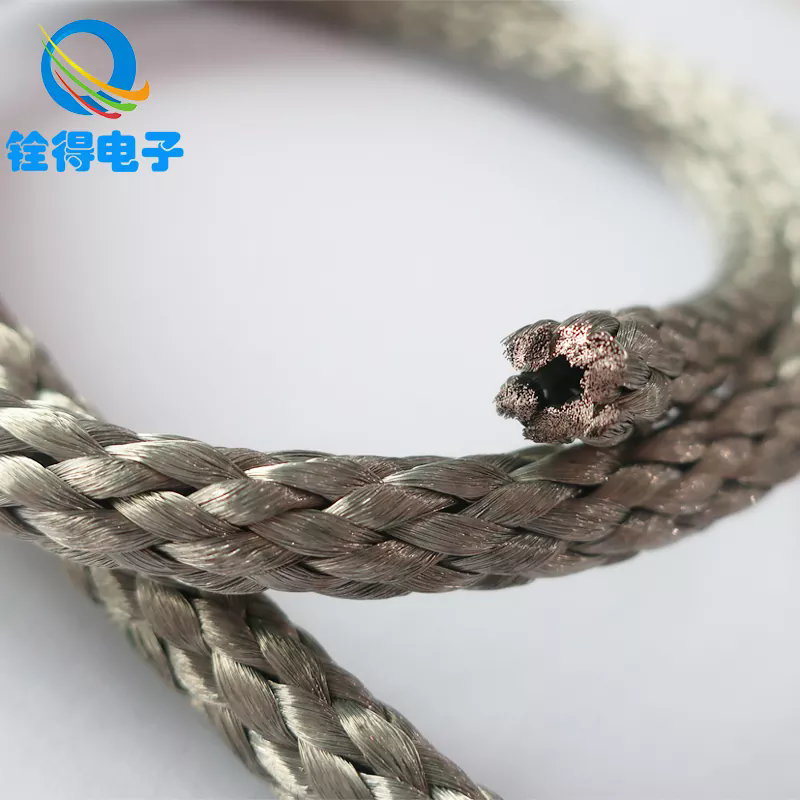
This article explains how Copper Braid works, why engineers choose it for demanding electrical environments, what problems it solves, how to select the right type, and how professional manufacturers such as Dongguan Quande Electronics Co., Ltd. help customers achieve safer and more efficient connection solutions.
Table of Contents
- 1. What Is Copper Braid?
- 2. How Does Copper Braid Work?
- 3. Why Is Copper Braid Important for Electrical Applications?
- 4. Where Is Copper Braid Commonly Used?
- 5. How to Choose the Right Copper Braid?
- 6. Common Problems Solved by Copper Braid
- 7. Installation and Maintenance Recommendations
- 8. Frequently Asked Questions
1. What Is Copper Braid?
Copper Braid is a flexible conductor made by weaving multiple strands of high-purity copper wires into a braided structure. Unlike solid copper bars or rigid cables, Copper Braid can bend, move, and absorb mechanical stress while maintaining excellent electrical conductivity.
The unique braided structure creates multiple current paths, reducing resistance and improving connection stability. Because copper naturally provides outstanding electrical and thermal conductivity, Copper Braid is widely selected for applications requiring reliable current transmission and long service life.
Dongguan Quande Electronics Co., Ltd. specializes in manufacturing high-quality braided copper products designed for various industrial connection requirements. Through precise weaving technology and strict quality control, the company provides flexible electrical connection solutions for customers worldwide.
Product Characteristics Overview
- High Electrical Conductivity: Copper material ensures efficient current transmission with low resistance.
- Excellent Flexibility: The braided structure allows repeated bending and movement.
- Strong Vibration Resistance: Suitable for equipment exposed to mechanical vibration.
- Good Heat Dissipation: The open braided structure helps release heat effectively.
- Long Service Life: Durable copper strands provide stable performance in demanding environments.
2. How Does Copper Braid Work?
Copper Braid works by providing a flexible pathway for electrical current between two connection points. When electricity flows through the braided copper strands, the current is distributed across numerous small wires instead of a single conductor.
This design reduces mechanical stress and improves electrical reliability. In applications where equipment movement, thermal expansion, or vibration occurs, rigid connections may experience cracking or loosening. Copper Braid helps prevent these issues by absorbing movement while maintaining continuous electrical contact.
Working Principles of Copper Braid
- Current Transmission: Multiple copper strands provide efficient electrical pathways.
- Mechanical Flexibility: Braided wires move together without damaging the conductor.
- Stress Reduction: The flexible structure minimizes pressure on connection points.
- Thermal Adaptation: Copper expansion caused by temperature changes can be better managed.
3. Why Is Copper Braid Important for Electrical Applications?
Electrical systems require stable connections to maintain safety, efficiency, and operational reliability. Poor connection design may lead to increased resistance, overheating, power loss, or equipment failure. Copper Braid addresses these challenges by combining conductivity with flexibility.
Key Benefits of Using Copper Braid
- Reduces Electrical Resistance: High-quality copper materials improve current flow efficiency and reduce energy loss.
- Handles Mechanical Movement: Flexible connections prevent damage caused by vibration and repeated movement.
- Improves Equipment Safety: Stable connections reduce overheating risks caused by poor contact.
- Supports Compact Designs: Copper Braid can fit into limited installation spaces where rigid conductors are difficult to use.
- Enhances System Reliability: Durable braided structures provide consistent performance over long operating periods.
4. Where Is Copper Braid Commonly Used?
Copper Braid is used across many industries because modern electrical equipment increasingly requires flexible and reliable connections.
- Power Distribution Equipment: Used for flexible connections in switchgear, transformers, and electrical cabinets.
- Battery Systems: Applied in energy storage systems and electric vehicle battery connections.
- Industrial Machinery: Helps connect moving components while reducing vibration damage.
- Electronic Equipment: Provides grounding and current transmission solutions.
- Renewable Energy Systems: Used in solar power equipment and energy management systems.
- Automotive Applications: Supports electrical connections requiring flexibility and durability.
5. How to Choose the Right Copper Braid?
Selecting the correct Copper Braid requires consideration of electrical requirements, environmental conditions, and mechanical factors. Choosing an unsuitable product may result in insufficient current capacity or reduced service life.
Important Selection Factors
- Current Capacity: Select a Copper Braid size according to the required electrical load.
- Wire Diameter: Different wire structures provide different levels of flexibility and strength.
- Length and Shape: Customized dimensions may be required for specific equipment designs.
- Operating Environment: Consider temperature, humidity, vibration, and installation conditions.
- Connection Method: Choose suitable terminals, welding methods, or fixing structures.
6. Common Problems Solved by Copper Braid
Many electrical failures originate from unsuitable connection methods. Copper Braid provides practical solutions for several common engineering challenges.
-
Problem: Rigid Conductors Crack Under Vibration
Solution: Copper Braid absorbs movement and reduces mechanical stress. -
Problem: Connections Overheat Due to High Resistance
Solution: High-conductivity copper improves current efficiency. -
Problem: Limited Installation Space
Solution: Flexible braided structures simplify installation in complex designs. -
Problem: Equipment Requires Frequent Movement
Solution: Copper Braid maintains electrical continuity during movement.
7. Installation and Maintenance Recommendations
Proper installation helps maximize the performance and lifespan of Copper Braid products.
- Ensure connection surfaces are clean before installation.
- Select appropriate terminals and fixing methods.
- Avoid excessive bending beyond the product design range.
- Regularly inspect connections in high-temperature or high-vibration environments.
- Replace damaged braided conductors promptly to maintain electrical safety.
Professional Copper Braid Solutions from Dongguan Quande Electronics Co., Ltd.
Dongguan Quande Electronics Co., Ltd. focuses on developing and manufacturing reliable Copper Braid products for industrial customers. With professional production technology and experience in flexible electrical connection solutions, the company supports customized requirements including different sizes, structures, and application conditions.
By combining quality copper materials, advanced manufacturing processes, and strict inspection procedures, Dongguan Quande Electronics Co., Ltd. helps customers improve connection reliability and reduce operational risks in various electrical systems.
8. Frequently Asked Questions
Q1: What makes Copper Braid different from copper cable?
Copper Braid uses multiple woven copper strands, providing higher flexibility and better vibration resistance compared with traditional rigid copper conductors.
Q2: Can Copper Braid be customized?
Yes. Copper Braid can be customized according to length, width, thickness, terminal design, and application requirements.
Q3: Is Copper Braid suitable for high-current applications?
Yes. Properly designed Copper Braid products can support high-current transmission while maintaining excellent flexibility.
Q4: How long can Copper Braid last?
Service life depends on operating conditions, current load, installation quality, and environmental factors. High-quality products can provide long-term stable performance.
Q5: Why choose Dongguan Quande Electronics Co., Ltd. for Copper Braid products?
Dongguan Quande Electronics Co., Ltd. provides professional manufacturing capabilities, customized solutions, and reliable quality control to meet different industrial electrical connection needs.
Conclusion
Copper Braid plays an essential role in modern electrical systems by combining excellent conductivity, flexibility, and mechanical durability. Whether used in power equipment, industrial machinery, battery systems, or electronic applications, it provides a reliable solution for improving connection performance.
If you need high-quality Copper Braid solutions designed for your specific application requirements, Dongguan Quande Electronics Co., Ltd. is ready to provide professional support. Please contact us for customized electrical connection solutions.