

How Does Carbon Content Affect the Strength of Carbon Steel Wire
2025-11-11
When selecting the right material for your project, understanding the role of carbon content is crucial. The amount of carbon in Carbon Steel Wire directly dictates its fundamental properties, including strength, hardness, and ductility. At Dingyan, we engineer a range of Carbon Steel Wire with precise carbon content to meet diverse industrial demands, ensuring optimal performance for every application.
Essentially, as carbon content increases, the wire's strength and hardness also increase, but its ductility (ability to be stretched without breaking) decreases. This is because carbon atoms interact with iron to form a strong, hard substance called iron carbide.
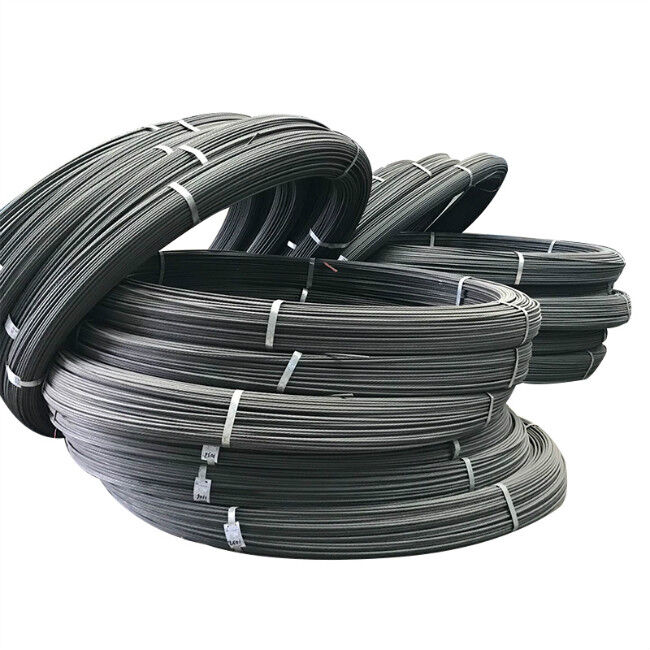
Dingyan Carbon Steel Wire Product Parameters
Our Dingyan Carbon Steel Wire is categorized based on carbon content to help you make the perfect choice:
-
Low Carbon Steel Wire (Mild Steel): Carbon content 0.05% - 0.25%
-
Ideal for: General fabrication, wire meshes, and applications requiring good formability and welding properties.
-
-
Medium Carbon Steel Wire: Carbon content 0.25% - 0.60%
-
Ideal for: Automotive components and structural parts that require a good balance of strength and ductility.
-
-
High Carbon Steel Wire: Carbon content 0.60% - 0.95%
-
Ideal for: Springs, high-strength cables, and cutting tools where superior strength and wear resistance are critical.
-
For a quick comparison, see the table below:
| Carbon Classification | Carbon Content (%) | Tensile Strength (Typical) | Key Characteristics |
|---|---|---|---|
| Low Carbon | 0.05% - 0.25% | Low to Medium | Excellent ductility, good weldability, highly formable |
| Medium Carbon | 0.25% - 0.60% | Medium | A balance of strength and flexibility, can be heat treated |
| High Carbon | 0.60% - 0.95% | High | Very high strength, excellent wear resistance, less ductile |
Carbon Steel Wire FAQ
What is the main disadvantage of high carbon steel wire
While high carbon steel wire offers superior strength, its main trade-off is reduced ductility. This makes it less suitable for applications requiring extensive bending or forming, as it can be more brittle and prone to fracture under impact compared to lower-carbon variants.
Can carbon steel wire be welded easily
The weldability of Carbon Steel Wire is highly dependent on its carbon content. Low carbon steel wire is generally very easy to weld using all standard methods. However, as carbon content increases, welding becomes more challenging, often requiring pre-heating and post-heat treatment to prevent cracking. For high carbon steel wire, welding is typically not recommended.
Why is galvanization often applied to carbon steel wire
Galvanization, the process of applying a protective zinc coating, is commonly used on Carbon Steel Wire to significantly enhance its corrosion resistance. This makes Dingyan's galvanized Carbon Steel Wire ideal for outdoor applications, fencing, and harsh environments where rust prevention is essential for longevity.
Choosing the right Carbon Steel Wire is pivotal to your project's success and longevity. The experts at Dingyan are ready to guide you to the optimal material that delivers the perfect synergy of strength, durability, and value.
Contact us today to discuss your specific requirements and request a quote for our high-performance Carbon Steel Wire solutions.