

How Does an MLE Flat Lead Cable Differ from Standard Round Lead Cable
2026-10-26
When engineers evaluate flexible power connections for industrial equipment, medical devices, and renewable energy systems, the choice between an MLE Flat Lead Cable and a conventional round lead cable often determines the overall reliability, space efficiency, and service life of the installation. Aote has manufactured both constructions for years, and the differences go far beyond external shape. This article breaks down the technical, mechanical, and regulatory distinctions so you can specify the right cable with confidence.
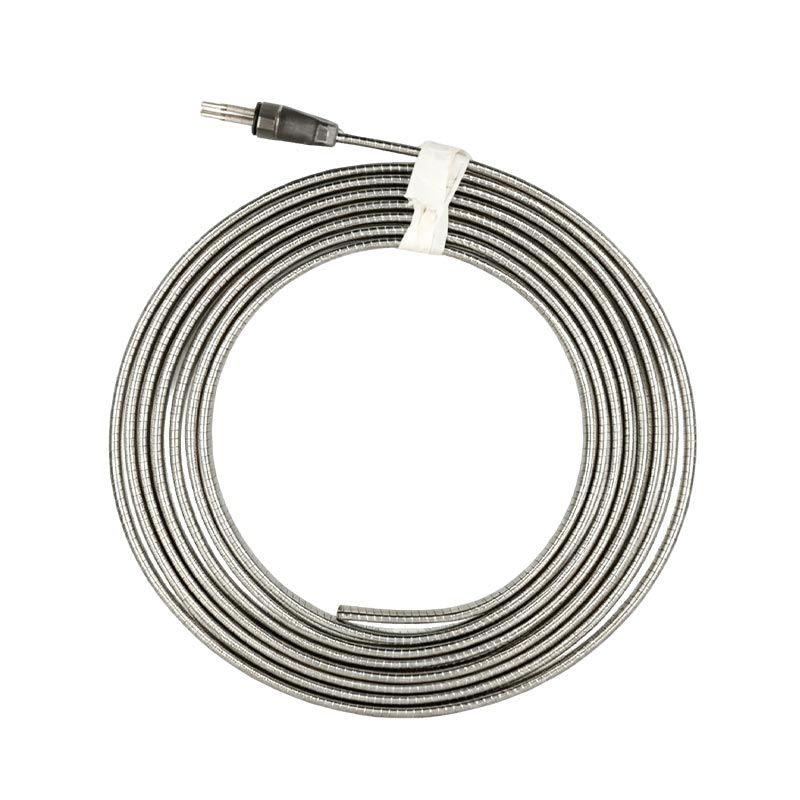
1. Construction and Conductor Geometry
The most visible difference lies in the cross-section. A MLE Flat Lead Cable arranges conductors in a parallel plane, which allows heat to dissipate across a wider surface area and permits tighter bending in confined spaces. Standard round lead cable bundles conductors in a circular core, which is simpler to terminate but consumes more volume.
| Feature | MLE Flat Lead Cable | Standard Round Lead Cable |
|---|---|---|
| Cross-section | Flat, parallel conductors | Circular bundle |
| Bending radius | Smaller, ideal for tight routing | Larger, requires more clearance |
| Heat dissipation | Higher surface-to-volume ratio | Lower, heat concentrated in core |
| Space efficiency | Excellent in flat channels and panels | Moderate |
| Termination | Requires flat-oriented connectors | Standard circular lugs |
2. Flexibility and Mechanical Performance
A MLE Flat Lead Cable typically uses fine-stranded copper conductors with a specially formulated insulation compound, giving it superior flex life in continuous-motion applications such as robotic arms and medical imaging tables. Round lead cable offers good general flexibility but tends to stiffen as conductor count increases. Aote engineers recommend flat constructions wherever repeated flexing, tight cable chains, or low-profile routing are involved.
3. Electrical Characteristics
Because conductors in a MLE Flat Lead Cable are separated by a consistent insulation thickness, capacitance and crosstalk between adjacent lines are more predictable. This makes the flat design attractive for signal-carrying leads in medical and instrumentation applications. Round cable, by contrast, can exhibit higher mutual capacitance when conductors are tightly bundled.
4. Environmental and Safety Ratings
Both constructions can achieve similar temperature and voltage ratings, but flat cable often gains an advantage in flame propagation and smoke density testing because of its lower surface area per conductor. Aote offers MLE Flat Lead Cable variants rated for high-temperature and halogen-free environments, supporting compliance with common industrial safety standards.
5. Installation and Maintenance
Flat cable simplifies identification and separation of individual leads during maintenance, reducing downtime. Round cable remains easier to pull through long conduits. The table below summarizes practical selection guidance.
| Application Scenario | Recommended Construction |
|---|---|
| Robotic and continuous-flex systems | MLE Flat Lead Cable |
| Medical imaging and patient-connected devices | MLE Flat Lead Cable |
| Long conduit runs in buildings | Standard round lead cable |
| High-density control panels | MLE Flat Lead Cable |
Frequently Asked Questions
Q: Can a MLE Flat Lead Cable replace a round lead cable without changing connectors?
A: In most cases yes, provided the conductor count, gauge, and voltage rating match. However, flat cable requires flat-oriented or low-profile connectors, so Aote recommends reviewing termination hardware before substitution.
Q: Is a MLE Flat Lead Cable suitable for high-temperature environments?
A: Yes. Aote supplies MLE Flat Lead Cable with insulation compounds rated for elevated temperatures, and the flat geometry actually improves heat dissipation compared with bundled round constructions.
Q: How do I verify that a MLE Flat Lead Cable meets my safety requirements?
A: Request the cable's certification documents, including flame, smoke, and temperature ratings, and confirm conductor stranding and insulation material. Aote provides full technical datasheets for every MLE Flat Lead Cable model.
Conclusion
Selecting between flat and round lead cable is a engineering decision driven by routing space, flex life, thermal performance, and termination requirements. Aote supports your specification process with detailed datasheets, sample evaluation, and application engineering guidance. Contact us today to discuss your MLE Flat Lead Cable requirements and receive a tailored recommendation from our technical team.