

Article Summary: Modern automation equipment is becoming smaller while sensors, actuators, inspection devices, and control systems continue to demand stable electrical connections. Choosing a connector that is electrically reliable but physically compact can therefore be challenging. The M5 Series Connector provides a practical solution for applications where installation space is limited and dependable low-power signal transmission is required. This article explains how M5 connectors work, what characteristics should be evaluated before purchasing, how they compare with larger circular connector formats, and how to avoid common selection and installation problems. It also examines waterproofing, contact performance, cable compatibility, customization, and typical industrial applications.
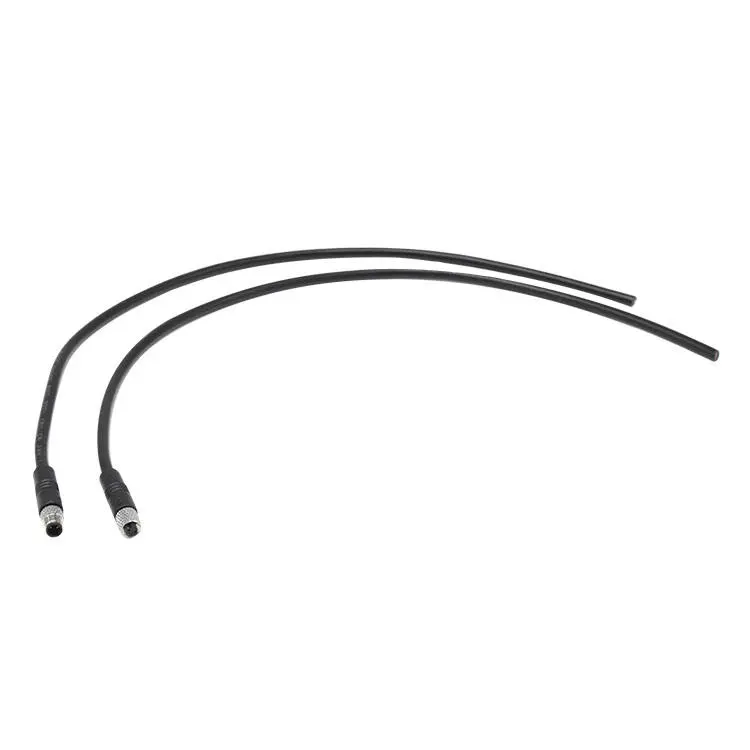
Table of Contents
- What Is an M5 Series Connector?
- How Does an M5 Series Connector Work?
- What Are the Key Features of an M5 Series Connector?
- How Can You Select the Right M5 Series Connector?
- How Does M5 Compare With M8 and M12 Connectors?
- Where Are M5 Series Connectors Used?
- How Does Waterproofing Improve M5 Connector Reliability?
- How Can You Prevent Common Installation Problems?
- How Can Custom M5 Cable Assemblies Solve Integration Problems?
- What Should Buyers Check Before Purchasing?
- Frequently Asked Questions
- Conclusion
Article Outline
- Understanding the purpose and structure of M5 connectors
- Evaluating size, contacts, current capacity, sealing, and cable compatibility
- Choosing between M5, M8, and M12 connector formats
- Applying M5 connectors to sensors, automation equipment, robotics, and instrumentation
- Reducing installation errors and long-term connection failures
- Understanding custom cable assembly and manufacturing requirements
- Using practical purchasing criteria to select a dependable supplier
What Is an M5 Series Connector?
An M5 Series Connector is a miniature circular electrical connector designed for compact equipment and low-power signal applications. Its small threaded interface makes it particularly useful when conventional industrial connectors are too large for the available installation space.
In modern automation systems, equipment designers are under continuous pressure to reduce cabinet size, sensor dimensions, cable routing space, and overall machine footprint. A connector that occupies only a small amount of panel or device space can make a significant difference during mechanical integration.
M5 connectors are commonly associated with miniature sensors, proximity switches, compact actuators, laboratory instruments, robotic equipment, and other low-power devices. Depending on the configuration, an M5 connector may use three or four contacts to provide power and signal paths for compact electrical components.
However, compact dimensions should not be confused with universal suitability. An M5 connector is generally intended for signal and low-current applications rather than demanding motor-power connections. The correct selection must consider current, voltage, wire size, cable diameter, environmental conditions, mating configuration, and installation requirements.
Shenzhen REUNION Electronic Co., Ltd. develops and supplies miniature connector solutions for applications where reliable electrical interconnection must coexist with strict space limitations. Its M5 product portfolio is designed around compact sensing, automation, and signal transmission requirements.
How Does an M5 Series Connector Work?
The operating principle of an M5 connector is straightforward: conductive contacts inside the connector establish an electrical path between a device and its cable or mating component, while the mechanical coupling system maintains alignment and connection stability.
The threaded coupling is particularly important in industrial environments. Instead of relying only on friction or a loose plug fit, the mating components are mechanically secured. Proper engagement helps prevent accidental separation caused by vibration, movement, or routine equipment operation.
A typical connection process includes the following stages:
- Contact alignment: The male and female contact positions are aligned before mating.
- Electrical engagement: Conductive contacts establish the required signal and power paths.
- Mechanical coupling: The threaded mechanism secures the connector halves.
- Environmental sealing: On sealed versions, sealing elements help prevent dust and moisture from entering the connection area.
- Strain management: The cable entry and housing help protect the termination from excessive mechanical stress.
For reliable operation, all five elements should work together. A connector may have excellent electrical contacts, for example, but still experience field problems if the cable is poorly terminated or the sealing structure is incorrectly installed.
What Are the Key Features of an M5 Series Connector?
When evaluating an M5 connector, buyers should look beyond the connector diameter. Several technical characteristics influence whether a particular model will perform reliably in a real machine.
1. Compact Mechanical Design
The primary advantage of the M5 format is its small footprint. It can be installed in areas where larger M8 or M12 connectors would consume too much space.
This is valuable for miniature sensors, dense sensor arrays, robotic end-effectors, compact inspection equipment, and devices where panel real estate is limited.
2. Multiple Contact Configurations
M5 products are available in configurations such as three-pin and four-pin arrangements. The appropriate contact layout depends on the electrical architecture of the connected device.
Before ordering, engineers should verify the pin assignment rather than selecting a connector based only on its external dimensions.
3. Low-Current Signal Capability
M5 connectors are well suited to low-power electrical circuits. Depending on the specific construction, current ratings may typically fall within approximately 1 A to 3 A per contact.
The actual permissible current should always be confirmed from the applicable product specification because conductor size, ambient temperature, contact construction, and cable configuration can affect electrical performance.
4. Threaded Connection
A threaded coupling provides a positive mechanical connection. This can be particularly useful on automated machinery where vibration, repetitive movement, and continuous operation may challenge less secure connection methods.
5. Environmental Protection
For equipment exposed to moisture, dust, cleaning procedures, or outdoor conditions, a sealed M5 configuration can provide substantially better protection than an unsealed connector.
Some M5 waterproof configurations can achieve an IP67 level when the complete assembly is correctly designed, mated, and installed. The protection level should always be evaluated as part of the complete connector-and-cable assembly rather than assumed solely from the connector name.
6. Gold-Plated Contacts
Gold-plated contact surfaces can help provide stable electrical performance and resistance to contact degradation. This is particularly relevant for low-level signals where a poor contact can cause intermittent readings or communication problems.
How Can You Select the Right M5 Series Connector?
Selecting a connector only because it physically fits the equipment is one of the most common purchasing mistakes. A better approach is to evaluate the entire operating environment before finalizing the specification.
| Selection Factor | What to Check | Why It Matters |
|---|---|---|
| Pin Count | 3-pin, 4-pin, or required configuration | Must match the device's electrical architecture |
| Current Rating | Required current per contact | Prevents overheating and electrical overload |
| Voltage | System operating voltage | Ensures electrical compatibility |
| Cable Size | Conductor and outer jacket dimensions | Supports correct termination and strain relief |
| Protection Level | Required IP rating | Determines suitability for dust and moisture exposure |
| Installation Space | Panel depth and connector clearance | Prevents mechanical interference |
| Cable Direction | Straight or angled configuration | Improves cable routing in confined spaces |
| Operating Environment | Temperature, vibration, moisture, chemicals, and movement | Determines material and sealing requirements |
A practical specification process should begin with the application rather than the catalog. First identify what the connector must electrically carry. Then determine the available physical space and environmental exposure. Finally, verify cable construction, mating requirements, and installation method.
How Does M5 Compare With M8 and M12 Connectors?
M5, M8, and M12 connectors belong to the same general family of circular industrial interconnection solutions, but they address different installation requirements.
| Characteristic | M5 | M8 | M12 |
|---|---|---|---|
| Physical Size | Very compact | Compact | Larger |
| Space Requirement | Very low | Low | Moderate |
| Typical Application | Miniature sensors and signals | Sensors and compact automation | Industrial sensors, automation, and higher-demand applications |
| Current Capability | Generally lower | Moderate | Generally higher depending on configuration |
| Installation Advantage | Best for extremely tight spaces | Good balance of size and capability | More room for contacts and cable management |
The smallest connector is not automatically the best connector. If a sensor requires only low-current power and signal transmission while the available mounting area is extremely restricted, M5 can be an excellent choice. If higher current, larger conductors, or more contact positions are required, moving to M8 or M12 may provide a better engineering margin.
Where Are M5 Series Connectors Used?
The compact nature of an M5 connector makes it particularly useful in applications where conventional industrial connectors create mechanical limitations.
- Factory automation: Connecting miniature sensors and compact control components.
- Robotics: Providing signal connections on robotic arms and end-of-arm tooling.
- Proximity sensing: Connecting compact proximity switches and detection devices.
- Miniature actuators: Supporting low-power actuator signal connections.
- Machine vision: Connecting compact cameras and related sensing equipment where space is restricted.
- Laboratory equipment: Supporting instrumentation that requires small and organized cable connections.
- Inspection systems: Connecting sensors in compact measurement and inspection assemblies.
- Embedded equipment: Providing external connections without significantly increasing device dimensions.
These applications share a common requirement: reliable signal transmission must be achieved without sacrificing valuable mechanical space.
How Does Waterproofing Improve M5 Connector Reliability?
Environmental exposure is a major source of connector failure. Moisture can reach contact surfaces, while dust and contaminants can interfere with mating surfaces or sealing interfaces. In demanding environments, a suitable waterproof design can therefore improve long-term connection reliability.
A waterproof M5 connector may incorporate sealing components around the mating interface and cable entry. When properly assembled, these components help prevent water and contaminants from reaching the electrical contacts.
For applications such as outdoor sensors, machine washdown areas, and exposed automation equipment, buyers should consider:
- The required IP protection level.
- The sealing structure of the connector.
- The cable jacket material.
- The cable entry and strain-relief design.
- Correct mating torque and assembly procedures.
- Temperature and chemical exposure.
- Whether the complete cable assembly has been tested under the intended conditions.
An IP rating should never be treated as a substitute for correct installation. Even a well-designed waterproof connector can lose protection if the cable jacket, sealing element, mating interface, or installation method is unsuitable.
How Can You Prevent Common Installation Problems?
Many connector failures are caused not by the basic connector design but by incorrect selection, assembly, or handling. A simple installation checklist can prevent unnecessary downtime.
- Verify the pin configuration: Confirm that the connector's contact arrangement matches the equipment wiring.
- Check the current requirement: Do not exceed the specified contact capacity.
- Match the cable correctly: Ensure the conductor size and cable outer diameter are compatible with the connector.
- Inspect contact surfaces: Check for contamination, deformation, or damage before mating.
- Engage the coupling correctly: Avoid forcing or cross-threading the connector.
- Protect the cable: Avoid sharp bends and excessive pulling near the connector body.
- Check sealing components: Make sure O-rings and other sealing elements are properly positioned.
- Test the finished assembly: Verify continuity and insulation performance before placing the equipment into service.
For high-volume equipment, standardizing these steps can significantly reduce assembly variation. It is also useful to establish a clear connector specification before mass production so that substitutions do not introduce unexpected differences in pin arrangement, cable size, or environmental protection.
How Can Custom M5 Cable Assemblies Solve Integration Problems?
Standard connector dimensions do not always match the practical requirements of a finished machine. Cable length, routing direction, jacket material, conductor size, and termination method can all affect installation efficiency.
Custom cable assemblies can address these problems by delivering a connector and cable combination prepared for the intended equipment.
Shenzhen REUNION Electronic Co., Ltd. supports customized M5 connector requirements, including cable length, connector configuration, angled housing options, and overmolded strain-relief solutions. In-house cable assembly capabilities can include wire cutting, stripping, soldering, and electrical testing.
Customization can be particularly valuable when:
- The installation space requires a specific cable direction.
- The standard cable length creates excessive slack.
- The machine requires a specific wire gauge.
- The cable must use a particular jacket material.
- The connector must withstand repeated movement.
- Production teams want to reduce on-site wiring operations.
- Multiple cable variants must be standardized for a production line.
A factory-assembled cable can also reduce the number of field termination steps. This can help improve consistency across production batches, provided the assembly supplier follows appropriate inspection and testing procedures.
What Should Buyers Check Before Purchasing?
For procurement teams, the lowest unit price is rarely the only factor that determines the actual cost of a connector. A more useful purchasing decision considers compatibility, consistency, documentation, production capability, testing, lead time, and after-sales support.
| Buyer Question | Recommended Evaluation |
|---|---|
| Does the connector match the application? | Confirm electrical, mechanical, and environmental specifications. |
| Can the supplier support customization? | Check cable length, pin configuration, housing, and strain-relief options. |
| Is production traceable? | Ask about material records, batch management, and production documentation. |
| Are finished assemblies tested? | Verify continuity, insulation, and applicable environmental testing. |
| Can the supplier handle volume requirements? | Review manufacturing capacity, equipment, and production planning. |
| Is technical support available? | Evaluate engineering communication and after-sales responsiveness. |
According to its product information, REUNION operates under ISO 9001 and ISO 14001 management systems, with ISO 13485 applied to relevant medical projects. The company also describes material sourcing, batch records, and electrical inspection processes as part of its manufacturing and traceability framework.
For customers purchasing connectors for industrial equipment, these factors can be important because connector quality affects not only the initial assembly but also maintenance, replacement, and long-term machine availability.
Frequently Asked Questions
What is an M5 Series Connector mainly used for?
An M5 Series Connector is mainly used for compact, low-power electrical and signal connections. Typical applications include miniature sensors, proximity switches, automation equipment, robotic devices, instrumentation, and compact inspection systems.
How much current can an M5 Series Connector carry?
Many M5 configurations are designed for approximately 1 A to 3 A per contact, although the exact rating depends on the connector design, contact configuration, conductor size, temperature, and applicable specification. Always verify the manufacturer's rating for the selected model.
Can an M5 connector be waterproof?
Yes. Sealed M5 configurations can be designed for applications requiring protection against dust and water. Some versions can achieve IP67 protection when the complete connector assembly is correctly configured and installed.
Is an M5 connector suitable for motors?
M5 connectors are generally intended for low-power signal and sensor circuits rather than high-current motor power. When an application requires substantially higher current or larger conductors, an M8, M12, or another power connector may be more appropriate.
What is the difference between M5 and M8 connectors?
The principal difference is physical size and application capacity. M5 connectors provide a smaller footprint and are particularly useful for miniature sensors and highly space-constrained equipment. M8 connectors provide a larger interface and can offer greater flexibility for applications requiring additional mechanical or electrical capacity.
Can M5 connectors be supplied with cables?
Yes. M5 connectors can be supplied as complete cable assemblies with specified cable lengths, wire gauges, jacket materials, and termination configurations. This approach can simplify equipment assembly and improve consistency.
What should I provide when requesting a customized M5 connector?
Provide the required pin count, electrical ratings, cable length, conductor size, cable jacket requirements, connector orientation, environmental conditions, protection level, mating requirements, and expected annual quantity. Detailed application information helps the manufacturer recommend an appropriate configuration.
Why is cable compatibility important for an M5 connector?
The small housing of an M5 connector leaves limited space for cable termination and strain relief. A cable that is too large, too rigid, or otherwise incompatible can make assembly difficult and may place excessive mechanical stress on the connection.
How can I reduce M5 connector failures in production?
Use a standardized specification, select the correct cable, control assembly procedures, inspect mating interfaces, verify sealing components, and test finished assemblies. Working with a supplier that provides consistent production and testing processes can further reduce variation.
Conclusion
The M5 Series Connector is designed to address one of the most common challenges in modern industrial equipment: achieving dependable electrical connections without consuming valuable installation space. Its compact form factor makes it particularly attractive for miniature sensors, automation devices, robotics, instrumentation, and other applications where every millimeter matters.
However, successful connector selection requires more than checking the connector size. Current capacity, pin configuration, cable dimensions, sealing performance, environmental exposure, mechanical coupling, installation space, and cable routing should all be evaluated before a final decision is made.
For applications that require greater customization, a complete M5 cable assembly can further simplify installation by combining the connector, cable, termination, and testing process into one controlled solution. This can be especially useful for OEM equipment manufacturers and automation integrators seeking consistent production results.
Shenzhen REUNION Electronic Co., Ltd. provides M5 connector and cable assembly solutions for compact industrial and signal connection applications. By combining miniature connector design with customization and manufacturing support, REUNION can help customers develop connection solutions that fit both their electrical requirements and their mechanical constraints.
Need a compact connector solution for your next project? Share your pin count, cable requirements, current and voltage specifications, environmental conditions, and application details with Shenzhen REUNION Electronic Co., Ltd. to discuss a suitable M5 configuration. Contact us today for professional M5 Series Connector support and a customized connection solution for your equipment.