

How Does Air Insulated Busway Improve Power Distribution Efficiency and Safety?
2026-06-10
Air Insulated Busway systems have become an increasingly popular choice for modern electrical power distribution projects. Whether in industrial facilities, commercial buildings, data centers, manufacturing plants, or infrastructure developments, these systems provide a reliable, compact, and efficient alternative to traditional cable installations.
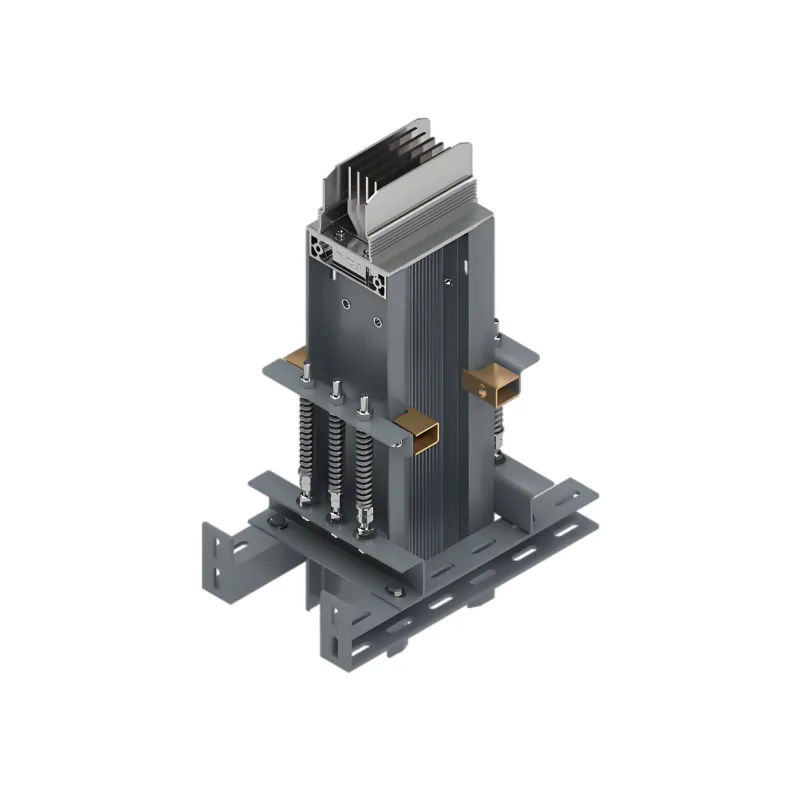
As power demands continue to increase, engineers and facility managers face challenges such as limited installation space, heat dissipation issues, maintenance complexity, and system expansion requirements. Air Insulated Busway solutions address these concerns by delivering higher current-carrying capacity, simplified installation, improved safety, and long-term operational reliability.
In this article, we will explore how Air Insulated Busway systems work, their advantages, applications, selection criteria, and why companies like Fenghua are helping businesses build more efficient power distribution networks.
Table of Contents
- What Is Air Insulated Busway?
- How Does Air Insulated Busway Work?
- Key Advantages of Air Insulated Busway
- Busway vs Traditional Cable Systems
- Common Applications
- How to Select the Right Air Insulated Busway
- Installation and Maintenance Considerations
- Future Trends in Busway Technology
- Frequently Asked Questions
What Is Air Insulated Busway?
An Air Insulated Busway is a power distribution system consisting of conductive busbars enclosed within a protective metal housing. The conductors are separated and insulated primarily through air gaps combined with insulating supports, ensuring safe electrical performance while maintaining efficient heat dissipation.
Unlike traditional cable systems that require numerous parallel cables to carry large currents, Air Insulated Busway systems consolidate power transmission into a compact structure. This design minimizes installation complexity while improving operational performance.
Modern Air Insulated Busway systems are engineered to support a wide range of current ratings and can be customized for various building layouts and electrical requirements.
How Does Air Insulated Busway Work?
The operating principle of an Air Insulated Busway is relatively straightforward. Electrical current flows through high-conductivity copper or aluminum busbars housed inside a rigid enclosure.
The surrounding air acts as the primary insulation medium between conductors. Carefully designed spacing, insulation supports, and enclosure construction ensure electrical isolation while allowing effective heat transfer.
The system typically includes:
- Conductive copper or aluminum busbars
- Metal enclosure for protection
- Insulating support structures
- Joint connections for modular assembly
- Tap-off units for flexible power distribution
- Protective grounding components
This modular design enables easy expansion and modification without extensive rewiring.
Key Advantages of Air Insulated Busway
1. Improved Space Utilization
Traditional cable installations often require large cable trays and multiple cable runs. Air Insulated Busway systems provide a much more compact solution, reducing installation space requirements significantly.
This advantage becomes especially valuable in:
- High-rise commercial buildings
- Data centers
- Industrial facilities
- Hospitals
- Transportation hubs
2. Higher Operational Reliability
The enclosed design protects conductors from dust, moisture, mechanical damage, and environmental contaminants. As a result, electrical faults caused by external influences can be reduced.
Stable conductor spacing also minimizes the risk of phase-to-phase failures.
3. Better Heat Dissipation
Air naturally circulates within the enclosure, helping dissipate heat generated during operation. Effective thermal management contributes to improved efficiency and longer equipment life.
4. Flexible Expansion Capability
As facilities grow, additional power distribution points may be required. Air Insulated Busway systems allow convenient expansion through modular sections and tap-off units.
This flexibility reduces downtime and avoids extensive reconstruction work.
5. Reduced Installation Time
Pre-engineered modular components simplify transportation, assembly, and installation. Compared with pulling and terminating large quantities of cable, busway installation is often faster and more predictable.
6. Enhanced Safety
Safety remains one of the primary reasons organizations adopt Air Insulated Busway systems.
Important safety benefits include:
- Enclosed conductor protection
- Reduced exposure to live components
- Improved grounding design
- Lower fire propagation risk
- Reliable short-circuit withstand capability
Busway vs Traditional Cable Systems
| Feature | Air Insulated Busway | Traditional Cable System |
|---|---|---|
| Space Efficiency | Excellent | Moderate |
| Installation Speed | Fast | Slower |
| System Expansion | Easy | Complex |
| Maintenance Access | Convenient | Limited |
| Current Capacity | High | Requires Multiple Cables |
| Safety Protection | Excellent | Depends on Installation Quality |
| Lifecycle Cost | Competitive | Potentially Higher |
Common Applications
Air Insulated Busway systems are widely used across multiple industries due to their versatility and dependable performance.
Commercial Buildings
Large office towers, shopping centers, and mixed-use developments require efficient vertical and horizontal power distribution.
Industrial Manufacturing
Factories often experience high electrical loads and changing production layouts. Busway systems provide adaptable power distribution that supports future expansion.
Data Centers
Data centers demand continuous power availability and high reliability. Busway systems help simplify power distribution while supporting equipment scalability.
Healthcare Facilities
Hospitals require stable and secure electrical systems to support critical medical equipment and emergency operations.
Transportation Infrastructure
Airports, railway stations, subway systems, and logistics hubs utilize busway systems for dependable power delivery across extensive facilities.
How to Select the Right Air Insulated Busway
Choosing the proper system requires careful evaluation of several technical factors.
| Selection Factor | Consideration |
|---|---|
| Current Rating | Match system capacity to load requirements |
| Voltage Rating | Ensure compatibility with facility voltage levels |
| Short-Circuit Strength | Verify fault withstand capability |
| Environmental Conditions | Consider humidity, dust, and temperature |
| Expansion Needs | Plan for future capacity increases |
| Installation Layout | Evaluate routing and space limitations |
Working with experienced manufacturers such as Fenghua can help ensure the selected busway solution aligns with both current operational requirements and future development plans.
Installation and Maintenance Considerations
Although Air Insulated Busway systems are designed for reliability, proper installation and maintenance remain essential.
Recommended practices include:
- Conducting professional load analysis before installation
- Following manufacturer installation guidelines
- Inspecting joint connections periodically
- Checking enclosure integrity
- Verifying grounding continuity
- Monitoring operating temperatures
- Performing scheduled preventive maintenance
Routine inspections help maximize service life and maintain optimal electrical performance.
Future Trends in Busway Technology
The power distribution industry continues to evolve toward smarter and more efficient systems.
Emerging developments include:
- Integrated monitoring systems
- Digital energy management platforms
- Real-time temperature monitoring
- Predictive maintenance capabilities
- Higher efficiency conductor materials
- Enhanced fire-resistant designs
These innovations will further improve reliability, operational visibility, and overall energy management.
Frequently Asked Questions
Is Air Insulated Busway suitable for high-current applications?
Yes. Air Insulated Busway systems are specifically designed to handle high current loads efficiently and are commonly used in industrial facilities, commercial buildings, and data centers.
What is the main advantage over traditional cables?
The primary advantages include improved space utilization, simplified installation, easier expansion, enhanced safety, and better maintenance accessibility.
Can Air Insulated Busway be expanded in the future?
Yes. Most systems feature modular designs that allow additional sections and tap-off units to be added as facility power demands increase.
How long does an Air Insulated Busway system typically last?
With proper installation and routine maintenance, a quality busway system can provide reliable service for decades.
Which industries benefit most from Air Insulated Busway?
Industries including manufacturing, commercial real estate, healthcare, transportation, utilities, and data centers commonly benefit from busway technology.
Conclusion
Air Insulated Busway has become an essential solution for modern power distribution systems due to its compact structure, high reliability, operational flexibility, and strong safety performance. Compared with conventional cable installations, it offers significant advantages in installation efficiency, future scalability, and lifecycle value.
As electrical infrastructure becomes increasingly complex, selecting a dependable Air Insulated Busway solution is critical for ensuring uninterrupted power delivery and long-term operational success. Fenghua continues to provide advanced busway solutions designed to meet the evolving needs of industrial, commercial, and infrastructure projects worldwide.
Looking for a reliable Air Insulated Busway solution for your next project? Contact us today to discuss your requirements and discover how Fenghua can help optimize your power distribution system with safe, efficient, and scalable busway technology.