

How Does a Starlink DC to Anderson Adapter Improve Marine Power Connectivity?
2026-09-04
Reliable internet connectivity has become increasingly important for boats, yachts, fishing vessels, workboats, RVs, and other mobile platforms. However, powering satellite communication equipment in a mobile environment is not always as simple as connecting a standard household power cable. Many vessels rely primarily on 12V or 24V DC battery systems, while different Starlink terminals and power supplies may use specific connectors and voltage requirements. This is where a Starlink DC to Anderson Adapter can provide a practical connection solution. By creating a convenient interface between a vessel's DC power system and compatible Starlink equipment, the adapter can simplify installation, improve wiring flexibility, and reduce unnecessary dependence on AC inverters. For marine applications in particular, customization for different vessel types can make the solution much more practical and installation-friendly.
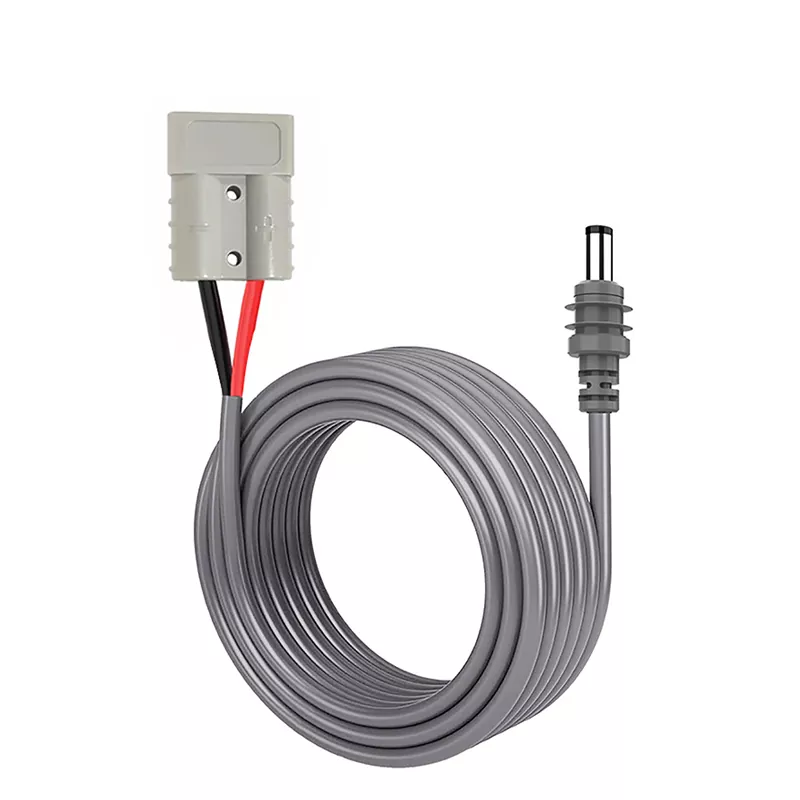
What Is a Starlink DC to Anderson Adapter?
A Starlink DC to Anderson Adapter is a power connection accessory designed to connect compatible Starlink DC-powered equipment with an Anderson-style power connection.
Anderson connectors are widely used in mobile power applications because they offer a robust, quick-connect interface suitable for batteries, portable power systems, vehicles, and marine electrical installations.
The basic purpose of the adapter is to bridge two different connection systems:
DC power source → Anderson connection → Adapter → Compatible Starlink power equipment
Starlink itself now offers DC power supply options for certain products. For example, Starlink states that its Standard DC-DC Power Supply is designed to power compatible Starlink Standard equipment directly from a DC source, eliminating the need for an inverter in applications such as boats, vehicles, RVs, and battery packs.
This creates an opportunity for specialized adapters that make the final connection more convenient for particular installation environments.
Why Is a DC-to-Anderson Connection Important for Boats?
Marine electrical systems are fundamentally different from household electrical systems.
A typical boat may depend on:
-
12V or 24V battery banks
-
Solar charging systems
-
Alternators
-
DC distribution panels
-
Portable power stations
-
Dedicated communication power circuits
Using an AC inverter simply to supply power to compatible DC equipment can introduce additional conversion losses, wiring complexity, and another potential failure point.
A suitable DC connection can instead help create a more direct power architecture.
For marine Starlink installations, this is particularly useful because connectivity may be required while the vessel is underway, anchored, fishing, cruising, or operating far from shore.
Starlink's marine installation guidance also emphasizes careful power and cable installation, appropriate connector orientation, protection from water ingress, and suitable mounting practices.
What Does a Starlink DC to Anderson Adapter Do?
The adapter primarily serves as a power-interface solution.
Its main functions include:
| Function | Practical Benefit |
|---|---|
| DC power connection | Connects compatible equipment to a vessel's DC system |
| Anderson interface | Provides a convenient quick-connect power interface |
| Installation flexibility | Simplifies wiring in confined marine spaces |
| Power-system integration | Helps integrate Starlink with existing battery systems |
| Replacement convenience | Makes disconnecting and servicing easier |
| Customization | Can be designed around different vessel and wiring requirements |
The adapter does not automatically convert every DC voltage into a suitable Starlink input. Voltage, current, polarity, connector configuration, cable size, and Starlink model compatibility must always be verified before installation.
What Are the Real-World Benefits?
1. Cleaner DC Power Integration
For vessels already equipped with a DC electrical system, a compatible adapter can help avoid unnecessary AC conversion.
This can make the installation cleaner and potentially reduce the number of components between the battery and communication equipment.
2. Faster Connection and Disconnection
Anderson-style connectors are popular in mobile electrical applications because they allow equipment to be connected and disconnected without repeatedly modifying permanent wiring.
This is particularly useful for boats where Starlink equipment may need to be removed for:
-
Maintenance
-
Storage
-
Seasonal use
-
Vessel transfer
-
Equipment replacement
-
System troubleshooting
3. Better Installation Flexibility
Marine spaces are often compact. A rigid standard cable configuration may not fit the available electrical layout.
A properly designed adapter can provide additional flexibility in routing and positioning the power connection.
4. Easier Maintenance
When communication equipment is integrated into a working vessel, downtime can be expensive.
A practical connector system allows technicians to isolate or disconnect the Starlink power circuit more efficiently during maintenance.
How Does It Perform on Different Types of Boats?
One of the most important advantages of working with a professional supplier is the ability to develop a custom Starlink DC to Anderson Adapter for different vessel types.
A fishing boat, yacht, catamaran, sailboat, patrol vessel, and workboat can have completely different electrical layouts and installation requirements.
Customization for Different Vessel Types
Fishing Boats
Fishing vessels may operate for long periods and require reliable communication equipment. A customized adapter can be designed around the vessel's existing battery system and available installation space.
Yachts
Yachts often have more sophisticated electrical systems with multiple battery banks and electronic devices. Customized cable lengths and connector configurations can help create a cleaner installation.
Sailboats
Space and cable routing can be challenging on sailboats. A customized solution can take mast, cabin, battery compartment, and equipment placement into consideration.
Catamarans
Catamarans often have distributed electrical systems across two hulls. Cable length and routing can therefore become particularly important.
Workboats and Commercial Vessels
Workboats may prioritize durability, easy maintenance, and rapid equipment replacement. A robust customized connection can support practical daily operation.
Why Choose Vessel-Specific Customization?
A major weakness of generic adapters is that they are normally designed around a single standard configuration.
However, vessels are not standardized.
Important differences can include:
-
Battery voltage
-
Cable length
-
Cable routing
-
Connector location
-
Available installation space
-
Power distribution structure
-
Environmental exposure
-
Mounting position
-
Service requirements
This is why TLD Electronics (HK) Co., Limited focuses on customized solutions rather than treating every marine installation as identical.
With vessel-specific customization, customers can discuss requirements such as cable length, connector configuration, wiring structure, application environment, and installation space before production.
This can be especially valuable for OEM projects, marine equipment integrators, distributors, and fleet operators that need the same solution adapted to multiple boat models.
What Should Buyers Check Before Ordering?
Choosing the correct Starlink DC to Anderson Adapter requires more than simply matching the connector.
Buyers should confirm:
-
Starlink model – Different generations and products can have different power architectures.
-
Input voltage – Confirm the acceptable DC voltage range of the equipment.
-
Current requirements – Select suitable wiring and connectors for the expected load.
-
Polarity – Incorrect polarity can damage electrical equipment.
-
Cable length – Long marine cable runs may require careful consideration of voltage drop.
-
Connector type – Confirm the exact Anderson configuration required.
-
Environmental conditions – Marine installations require attention to moisture, salt, vibration, and corrosion.
-
Vessel type – Cable routing and installation requirements can vary significantly.
-
Customization requirements – Determine whether OEM cable lengths, connectors, labeling, or packaging are needed.
Starlink's official specifications show that DC power products can have specific input ranges and output requirements. For example, its Standard DC-DC Power Supply is specified for 12–48V DC input and 30A input capability, while delivering 56V output at 3.57A. These specifications demonstrate why adapter selection should be based on the actual Starlink equipment rather than the connector alone.
Starlink DC to Anderson Adapter vs. Traditional AC Power Setup
For compatible installations, the difference can be summarized as follows:
| Feature | DC + Anderson Solution | Traditional AC Setup |
|---|---|---|
| Main power source | DC battery system | AC power |
| Inverter | Potentially unnecessary | Usually required for DC vessel systems |
| Wiring | Direct DC-oriented architecture | More conversion stages |
| Installation | Compact and flexible | Can require additional equipment |
| Maintenance | Easy connector-based service | More components to inspect |
| Marine customization | Highly adaptable | Depends on AC installation |
| Mobile applications | Very suitable | Less direct for DC-only systems |
The best solution ultimately depends on the Starlink model, vessel electrical system, and installation environment.
How Does TLD Electronics Support Custom Marine Applications?
For professional buyers, the biggest value is not simply obtaining an adapter—it is obtaining an adapter that fits the actual application.
TLD Electronics (HK) Co., Limited can position the Starlink DC to Anderson Adapter as a customized marine power accessory designed around different application requirements.
The company can support customization for different vessel types, helping customers address practical issues such as:
-
Different boat models
-
Different DC voltage systems
-
Different cable lengths
-
Different Anderson connector configurations
-
Different installation locations
-
OEM requirements
-
Bulk purchasing requirements
-
Private-label projects
This vessel-oriented customization is particularly useful for marine equipment distributors and system integrators that need a consistent product platform while adapting cable configurations to different customers.
What Makes a Good Marine Adapter?
A high-quality marine power adapter should combine electrical compatibility with mechanical reliability.
Important characteristics include:
Electrical Compatibility
The adapter should be designed according to the actual voltage, current, polarity, and equipment requirements.
Durable Construction
Marine equipment can encounter vibration, humidity, salt spray, temperature changes, and frequent handling.
Secure Connections
The connector should remain firmly connected during normal vessel operation.
Appropriate Cable Selection
Cable gauge and length should be selected according to the expected current and installation distance.
Custom Configuration
The ability to customize cable length and connector arrangement can significantly simplify installation.
Quality Control
For OEM and bulk projects, consistent assembly and inspection are essential for maintaining reliable product performance.
Where Can a Starlink DC to Anderson Adapter Be Used?
The application range extends beyond traditional cruising boats.
Typical applications include:
-
Yachts
-
Fishing boats
-
Sailboats
-
Catamarans
-
Workboats
-
Patrol vessels
-
Marine research vessels
-
RVs
-
Off-grid vehicles
-
Portable power systems
-
Battery-powered communication systems
The common requirement is straightforward: the user needs a reliable interface between a compatible Starlink DC power configuration and an existing DC power source.
The Importance of Professional Customization
As Starlink equipment continues to evolve, power connectors and system architectures can differ between product generations. Starlink currently provides several DC power options for selected products, making direct DC integration increasingly practical.
For this reason, professional customization is becoming more important.
Instead of purchasing a generic adapter and modifying it afterward, buyers can specify their requirements before production. This reduces unnecessary modification work and makes it easier to standardize products for fleet or OEM applications.
For marine customers, the ability to customize according to boat type, power system, cable length, connector configuration, and installation environment can be a decisive advantage.
Final Thoughts
A Starlink DC to Anderson Adapter can be a valuable component for integrating compatible Starlink equipment into DC-powered mobile and marine environments. It can simplify power connections, improve installation flexibility, facilitate maintenance, and help reduce unnecessary conversion steps.
However, the most effective solution is not necessarily the cheapest generic adapter. Electrical compatibility, connector configuration, cable specifications, environmental conditions, and vessel design all need to be considered.
For customers operating different types of boats, custom vessel-specific solutions can provide a significant advantage. With professional customization capabilities, TLD Electronics (HK) Co., Limited can help develop Starlink DC to Anderson Adapter solutions around different vessel configurations, cable requirements, and OEM applications.
Looking for a reliable Starlink DC to Anderson Adapter customized for your yacht, fishing boat, sailboat, catamaran, workboat, or other marine application? Contact us to discuss your voltage, connector, cable length, vessel type, OEM, and bulk-order requirements, and let TLD Electronics (HK) Co., Limited help you build a practical power connection solution for your application.