

How Do You Select the Correct Connector Type for an ESD Ground Cable in a Sensitive Assembly Area
2026-03-25
Selecting the correct connector type for an ESD Ground Cable is a critical decision in any sensitive assembly environment. A poorly chosen connector can compromise an entire static control program, leading to latent damage, product failures, and costly rework. At Quande, we understand that the interface between your grounding system and the workstation is where reliability is won or lost. The right connector ensures consistent electrical continuity, compliance with industry standards, and long-term durability in high-use settings.
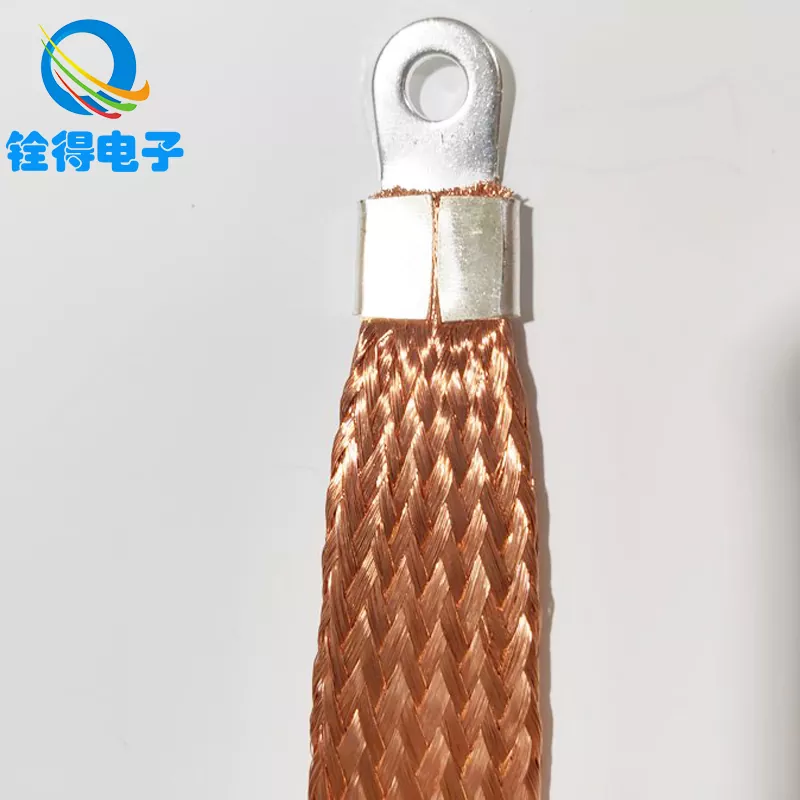
Understanding Connector Types for ESD Grounding
The choice of connector for an ESD Ground Cable depends on the application, the type of equipment being grounded, and the environmental conditions. Below is a comparison of common connector types used in sensitive assembly areas.
| Connector Type | Typical Application | Key Advantage |
|---|---|---|
| Banana Plug | Wrist straps, mats, portable workstations | Universal compatibility, quick disconnect |
| Ring Terminal | Permanent equipment grounding, workbench frames | Secure mechanical connection, vibration-resistant |
| Alligator Clip | Temporary grounding, field service kits | Easy attachment to various surfaces |
| Snap Stud | ESD mat grounding, common point grounding | Industry standard for mat-to-ground connections |
| 3.5 mm Mono Jack | Continuous monitors, automated systems | Enables constant monitoring of ESD Ground Cable integrity |
Key Selection Criteria
When selecting a connector type for an ESD Ground Cable, evaluate the following factors:
-
Mechanical Compatibility
Ensure the connector matches the receptacle on your workstation, mat, or continuous monitor. Quande offers a full range of pre-assembled ESD Ground Cable solutions with standardized connectors to eliminate guesswork. -
Electrical Integrity
The connector must maintain low resistance (typically <1 ohm) under normal working conditions. High-quality connectors with corrosion-resistant plating, such as gold or nickel over brass, ensure stable performance over time. -
Environmental Durability
In assembly areas with frequent movement, chemicals, or humidity, select connectors with robust strain relief and sealed housings to prevent premature failure.
ESD Ground Cable FAQ Common Questions
Q: Why is the connector type so important for an ESD Ground Cable in a sensitive assembly area?
A: The connector serves as the critical interface between the grounding point and the person or equipment being protected. If the connector is loose, corroded, or mismatched, it introduces intermittent or high-resistance paths that can defeat the entire grounding system. In sensitive assembly areas handling components like microprocessors or memory chips, even a momentary loss of continuity can result in latent ESD damage that only surfaces after the product reaches the customer. Quande designs connectors with precision tolerances and durable plating to maintain a reliable, low-resistance path in demanding manufacturing environments.
Q: How do I know if I need a ring terminal or a banana plug for my ESD Ground Cable installation?
A: The decision depends on whether your application requires permanent or flexible connectivity. Ring terminals are ideal for securing an ESD Ground Cable to a fixed point, such as a workbench leg or a common ground point, using a screw or bolt. This provides a semi-permanent, mechanically stable connection that is less likely to be accidentally disconnected. Banana plugs, by contrast, are preferred for personnel grounding (wrist straps) and portable equipment because they allow quick connection and disconnection without tools. For workstations requiring both permanence and flexibility, Quande offers combination solutions that integrate both connector types on a single cable assembly.
Q: Can I use a standard alligator clip as a permanent connector for an ESD Ground Cable?
A: No, alligator clips are generally not recommended for permanent or semi-permanent ESD Ground Cable applications. While they are convenient for temporary setups or field service, the spring tension in alligator clips can weaken over time, leading to high-resistance connections or accidental detachment. In a sensitive assembly area, this creates an unacceptable risk. For permanent installations, ring terminals or snap studs provide superior mechanical stability. If your workflow requires temporary connections, ensure the alligator clip is used only as a supplement to a primary grounding method. Quande manufactures ESD Ground Cable assemblies with industrial-grade clips designed for longevity, but for critical assembly areas, we always recommend a fixed connector solution.
Best Practices for Implementation
To maximize the effectiveness of your ESD Ground Cable, adhere to these professional guidelines:
-
Standardize connector types across all workstations to reduce maintenance complexity and ensure compatibility with continuous monitors.
-
Use color-coded connectors (e.g., blue for common point ground) to facilitate visual verification during audits.
-
Inspect connectors regularly for signs of wear, corrosion, or loose connections as part of your scheduled ESD program audits.
Why Partner with Quande
With years of specialized experience in static control solutions, Quande provides engineered ESD Ground Cable assemblies that meet ANSI/ESD S20.20 and IEC 61340-5-1 requirements. Every cable and connector is selected for optimal performance in high-reliability manufacturing environments. By standardizing on Quande solutions, assembly facilities reduce variability, simplify training, and achieve greater consistency in their ESD control measures.
Contact Us
Selecting the right connector for your ESD Ground Cable is just one part of a comprehensive static control strategy. Quande is ready to assist with customized cable assemblies, technical documentation, and on-site support to ensure your sensitive assembly area remains fully protected. Contact us today to discuss your grounding requirements and request a consultation with our engineering team.