

How Do You Choose the Right Carbon Steel Wire Grade for Automotive Applications
2025-12-03
Selecting the optimal Carbon Steel Wire is a critical engineering decision in automotive manufacturing, directly impacting safety, performance, and durability. From vital spring components to reinforcement cables, the wrong grade can compromise an entire assembly. This guide simplifies the selection process, highlighting how Dingyan provides tailored solutions that meet the stringent demands of the automotive industry.
The key to selection lies in understanding three core parameters: carbon content, tensile strength, and ductility. These factors determine the wire's suitability for specific auto parts.
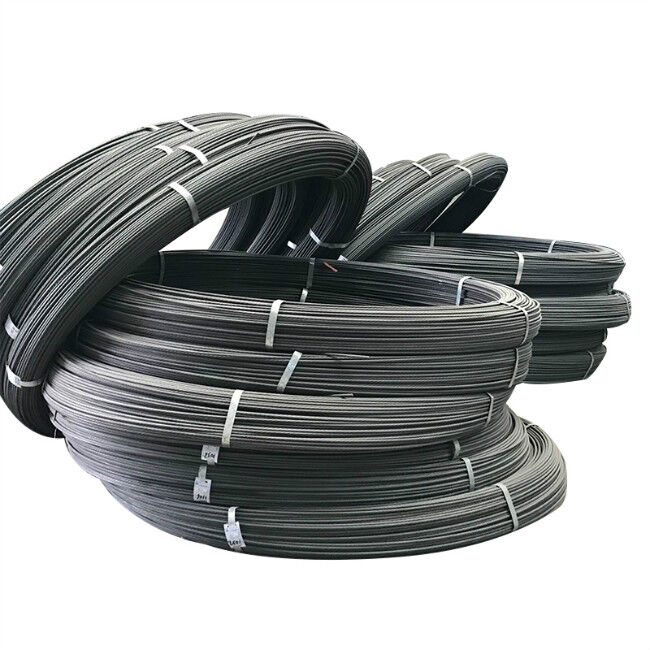
Critical Parameters for Selection:
-
Carbon Content: Defines basic strength and hardness. Low-carbon grades offer formability for brackets, while high-carbon grades provide the resilience needed for springs.
-
Tensile Strength: The maximum stress the wire can withstand while being stretched, crucial for components under constant load.
-
Ductility: The ability to deform without breaking, essential for wires that undergo shaping or need to absorb energy.
For a clear comparison, here are common Dingyan grades and their automotive uses:
| Dingyan Grade | Carbon Content | Tensile Strength Range | Typical Automotive Application |
|---|---|---|---|
| DY-LC1010 | Low (0.08-0.13%) | 350 - 500 MPa | Wiring harnesses, non-critical brackets, forming parts. |
| DY-MC1045 | Medium (0.42-0.50%) | 600 - 850 MPa | Clutch springs, stabilizer bar links, fastener assemblies. |
| DY-HC1075 | High (0.70-0.80%) | 1000 - 1300 MPa | Valve springs, suspension coil springs, high-strength cables. |
| DY-HC1095 | Very High (0.90-1.03%) | 1300 - 1650 MPa | Heavy-duty suspension components, critical reinforcement strands. |
Carbon Steel Wire FAQ
What surface finishes does Dingyan offer for automotive wire to prevent corrosion?
We provide several finishes, including galvanized, zinc-aluminum alloy coated, and drawn-galvanized (smooth zinc). The choice depends on the required corrosion resistance, paint adhesion, and final application environment, such as underbody components versus interior springs.
How does Dingyan ensure consistency in its Carbon Steel Wire for high-volume automotive production?
Dingyan employs rigorous Statistical Process Control (SPC) from melting to final drawing. Every batch is traceable and tested for chemical composition, mechanical properties, and dimensional tolerances, guaranteeing the repeatable performance automakers and Tier 1 suppliers require.
Can Dingyan develop a custom Carbon Steel Wire specification for a new automotive part?
Absolutely. Our engineering team specializes in collaborating with clients to develop custom grades and profiles. We adjust composition, processing, and heat treatment to achieve unique tensile-ductility balances or enhance fatigue life for innovative applications.
Choosing the right partner is as important as choosing the right grade. Dingyan combines advanced metallurgical expertise with a deep understanding of automotive challenges to deliver more than just wire—we deliver reliability engineered into every coil.
Contact us today to discuss your specific application. Our technical specialists will help you select the perfect Carbon Steel Wire grade to optimize performance, safety, and value for your automotive project.