

Can Rubber Covered Cable Be Used for High-Voltage Applications
2025-12-29
When specifying cabling for demanding projects, a critical question often arises: Can Rubber Covered Cable Be Used for High-Voltage Applications? The answer is nuanced and depends heavily on the specific construction, materials, and intended use. As a leading innovator in cable solutions, Yilan is committed to providing clarity and premium products for every electrical challenge. While standard rubber blends have limitations, advanced formulations make certain Rubber Covered Cable types a robust choice for a range of applications.
The suitability hinges on the cable's design. Not all rubber compounds are equal.
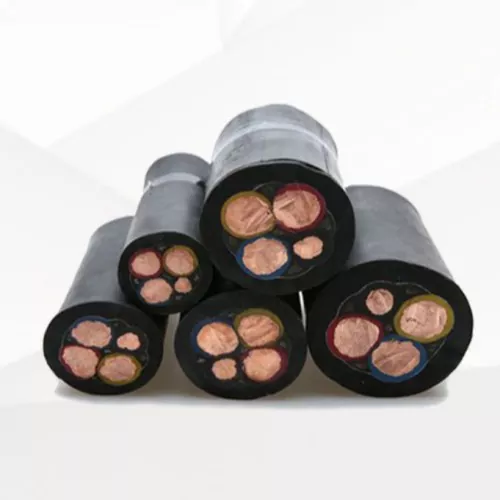
Key Factors Determining High-Voltage Suitability:
-
Insulation Material: Standard thermoset rubbers like SBR or Neoprene are excellent for flexibility and durability but are typically used for low to medium voltages. For higher voltages, Yilan utilizes advanced materials such as Ethylene Propylene Rubber (EPR) or Cross-Linked Polyethylene (XLPE), which offer superior dielectric strength.
-
Shielding: Effective high-voltage cables require conductive shielding to control electric field stress and prevent corona discharge. This is a critical component in Yilan's engineered high-performance lines.
-
Jacket Material: The outer Rubber Covered Cable jacket must provide environmental protection (oil, ozone, abrasion resistance) without compromising the insulation's integrity.
Comparison: Standard vs. High-Voltage Rubber Cable
| Feature | Standard Industrial Rubber Cable | High-Voltage Rated Rubber Cable (e.g., Yilan EPR Series) |
|---|---|---|
| Typical Voltage Rating | Up to 2kV | 5kV to 35kV and beyond |
| Primary Insulation | SBR, Neoprene, Natural Rubber | Ethylene Propylene Rubber (EPR), XLPE |
| Shielding | Often not present | Essential (semi-conductive layers) |
| Core Flexibility | High | Moderate to High |
| Best For | Tools, portable equipment, low-voltage power | Power distribution, mining, industrial feeders |
Rubber Covered Cable FAQ
Q: Is rubber cable always more flexible than PVC cable?
A: Generally, yes. The inherent properties of rubber compounds allow for excellent flexibility, especially at low temperatures, making Yilan Rubber Covered Cable ideal for moving applications or tight installations where PVC might become brittle.
Q: Can I use a standard rubber cable for temporary high-voltage power?
A: Absolutely not. Using an under-rated cable for high-voltage applications is extremely dangerous, posing severe risks of insulation breakdown, fire, and electric shock. Always specify cables that meet or exceed the required voltage rating for the application.
Q: How do I maintain a high-voltage rubber insulated cable?
A: Regular inspection is key. Check for cuts, abrasions, swelling, or cracking in the outer Rubber Covered Cable jacket. Ensure terminations are clean and secure. Follow Yilan's specific maintenance guidelines provided with the cable, which include recommendations for cleaning agents and inspection intervals to ensure long-term reliability.
In conclusion, while not every Rubber Covered Cable is designed for high-voltage use, specialized rubber-insulated cables from Yilan are expertly engineered to perform safely and reliably in medium to high-voltage scenarios. Their superior flexibility, environmental resistance, and proven dielectric properties make them a strategic choice for rugged industrial and utility applications.
Contact us today to discuss your specific voltage, flexibility, and environmental requirements. Let Yilan's technical experts guide you to the perfect Rubber Covered Cable solution that ensures safety, compliance, and uninterrupted performance.