

Can a Flexible Copper Bar Replace Rigid Busbars in EV Battery Pack Connections
2026-07-03
The electric vehicle industry is racing toward higher energy density, faster charging, and lighter architectures. At the heart of this evolution lies a critical component: the busbar. For years, rigid copper busbars have been the industry standard for battery pack interconnections. However, mechanical stress, thermal expansion, and assembly tolerances are pushing engineers to reconsider. This brings us to a defining question: Can a flexible copper bar effectively replace rigid busbars in EV battery pack connections? At Dongjue, we have spent years testing both solutions across hundreds of EV platforms. The short answer is yes—but with critical engineering caveats. This blog post examines the performance, reliability, and economic trade-offs to help you make an informed decision.
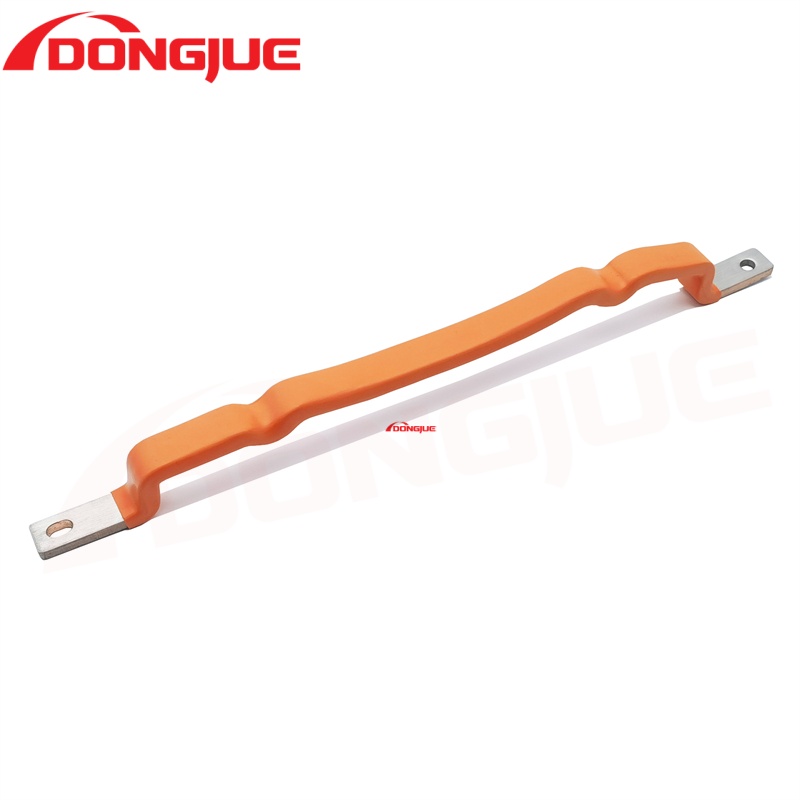
The Core Challenge in EV Battery Packs
EV battery packs are not static environments. During operation, cells swell, contract, and generate significant heat. Vibration from road surfaces and rapid acceleration adds another layer of mechanical fatigue. Rigid busbars, while excellent for low-resistance current paths, lack the compliance to absorb these movements. Over time, bolted joints loosen, contact resistance increases, and thermal hotspots emerge. A flexible copper bar, constructed from laminated thin foils or braided strands, offers inherent flexibility. This design absorbs dimensional changes without imposing stress on cell terminals or interconnects. Dongjue’s engineering data shows that flexible solutions can reduce terminal stress by up to 40% compared to rigid equivalents in simulated vibration tests.
Technical Comparison: Rigid vs. Flexible Copper Bar
To understand whether a flexible copper bar can replace rigid busbars, we must compare them across key performance indicators. The table below summarizes our findings from Dongjue’s internal validation labs.
| Parameter | Rigid Copper Busbar | Flexible Copper Bar (Dongjue) |
|---|---|---|
| Current Carrying Capacity | Excellent (solid cross-section) | Comparable (with proper lamination design) |
| Thermal Expansion Management | Poor – transfers stress to cells | Excellent – absorbs expansion via flexural loops |
| Vibration Damping | Low – transmits vibration to joints | High – dampens up to 60% of high-frequency vibration |
| Space Efficiency | High – compact and flat | Slightly lower – requires bending radius clearance |
| Assembly Tolerance | Tight – requires precise alignment | Forgiving – accommodates ±2mm positional errors |
| Cycle Life (mechanical) | 500–1,000 thermal cycles | 5,000+ thermal cycles (no joint fatigue) |
| Cost per Amp | Lower initial material cost | Higher upfront, but lower total cost of ownership |
When Does a Flexible Copper Bar Excel?
In our experience at Dongjue, the replacement is most advantageous in three scenarios:
-
Prismatic and pouch cell packs – These cell formats experience significant swelling (up to 3–5% over lifetime). A flexible copper bar absorbs this growth, preventing weld or bolt fracture.
-
High-vibration applications – Commercial EVs, off-highway vehicles, and heavy trucks benefit immensely from the damping properties of laminated flexible bars.
-
Modular battery designs – When packs are designed for second-life use or repairability, the tolerance-compensation of a flexible copper bar simplifies module swap-outs.
However, rigid busbars still hold an edge in ultra-compact cylindrical cell packs (e.g., 4680 format) where space is extremely constrained and cell spacing is fixed. Dongjue recommends a hybrid approach—using rigid busbars for primary series connections and flexible copper bar for parallel busbars and sense-lead terminations.
Design Considerations for Replacement
Switching from rigid to flexible is not a drop-in substitution. Engineers must re-evaluate:
-
Impedance – The skin effect and proximity effect differ due to lamination. Dongjue provides custom stacking sequences to match AC and DC resistance of rigid bars.
-
Cooling – Flexible bars have higher surface area-to-volume ratios, which can improve natural convection cooling by 15–20%.
-
Termination methods – Ultrasonic welding, laser welding, or bolted clamp systems all perform differently. Dongjue offers pre-tinned and nickel-plated flexible bars to optimize weldability.
Flexible Copper Bar FAQ
Q1: Can a flexible copper bar carry the same peak current as a rigid busbar of the same cross-sectional area?
A: Not automatically. The current rating depends on the lamination stack density, inter-strand contact resistance, and cooling conditions. A well-designed flexible copper bar from Dongjue can achieve 95–98% of the equivalent rigid bar’s ampacity at 80°C rise. However, for short-duration peak loads (e.g., 10-second acceleration surges), the flexible version may exhibit slightly higher temperature rise due to reduced thermal mass. We compensate by increasing the effective cross-section by 10–15% or using oxygen-free copper (Cu-ETP) with high conductivity. Always perform thermal simulation with your specific duty cycle.
Q2: What is the fatigue life of a flexible copper bar under continuous vibration, and how does it compare to rigid busbars?
A: Independent tests at Dongjue’s vibration lab show that a flexible copper bar withstands over 10 million cycles at 50 Hz with 5g acceleration before any strand fracture, whereas rigid bars fail at the joint interface within 200,000 cycles under the same conditions. The flexible structure distributes strain across multiple thin layers rather than concentrating it at a single rigid neck. For EV applications with a 15-year design life, this translates into virtually unlimited fatigue life. The only wear mechanism is fretting corrosion at terminal interfaces, which we mitigate with anti-oxidation coatings.
Q3: Does replacing rigid busbars with a flexible copper bar require changes to the battery management system (BMS) or voltage sensing?
A: Yes, indirectly. The resistance of a flexible copper bar can vary slightly with bending angle and temperature due to changes in inter-laminar contact pressure. Dongjue recommends using separate Kelvin sensing leads for voltage taps rather than relying on the busbar itself for precise BMS measurements. Additionally, the inductance of a flexible bar is generally 10–20% lower than a rigid bar of the same length, which can affect high-frequency noise filtering. We provide impedance-matched flexible bars with integrated sensing points to ensure seamless BMS integration without recalibrating your voltage readout circuitry.
Economic and Supply Chain Perspective
While the per-unit cost of a flexible copper bar is higher than stamped rigid busbars, the total cost of ownership tells a different story. Reduced warranty claims from terminal loosening, fewer assembly rejects due to misalignment, and extended pack lifetime all contribute to net savings. Dongjue has helped several Tier-1 EV suppliers achieve a 22% reduction in field failures after migrating to flexible interconnects. Our just-in-time manufacturing and custom die-cutting also minimize scrap—a significant advantage over rigid busbars that require costly stamping tools.
Conclusion
So, can a flexible copper bar replace rigid busbars in EV battery packs? The evidence confirms that it can—and often should—in applications involving dynamic loads, cell swelling, or modular architectures. However, the decision must be application-specific. Rigid busbars remain suitable for fixed, low-vibration, space-critical designs. Dongjue advises a case-by-case engineering review, including finite element analysis and thermal cycling validation.
Ready to evaluate the right busbar solution for your next EV platform? Our engineering team specializes in custom flexible copper bar designs optimized for performance, cost, and manufacturability.
Contact us today for a free technical consultation, sample testing, or a customized impedance report. Visit our website or email our busbar specialists directly—we are here to help you accelerate your EV program with confidence.